At the Mapo Station branch of Boseung Hoegwan, a 24-hour gukbap spot near Exit 3, I ordered pork jowl gukbap and pork jowl hangover ramyeon side by side to compare the broths. I've also rounded up the menu, prices and parking.
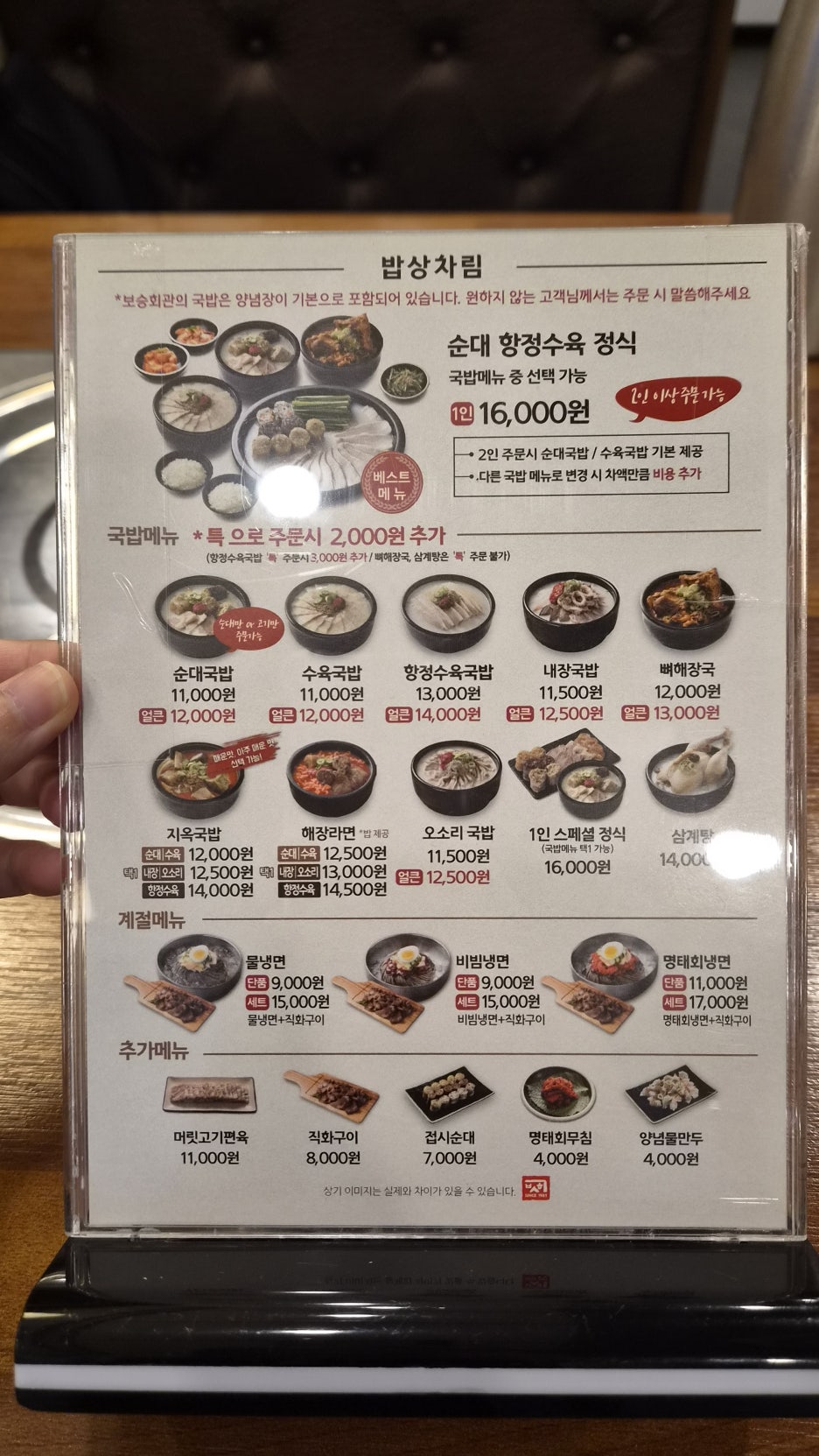
| Gukbap (rice in hot soup) (순대국밥) | ₩11,000 |
|---|---|
| Gukbap (rice in hot soup) (수육국밥) | ₩11,000 |
| Gukbap (rice in hot soup) (항정수육국밥) | ₩13,000 |
| Gukbap (rice in hot soup) (내장국밥) | ₩11,500 |
| Haejangguk (hangover soup) (뼈해장국) | ₩12,000 |
In this article Show
- A gukbap spot near Mapo Station Exit 3 that's open 24 hours
- A tidy wood-toned interior and tablet ordering
- From sundae-gukbap to hot pots, a wider menu than expected
- Ordering two pork jowl dishes side by side
- Thinly sliced pork jowl in milky broth
- Noodles and meat together in red broth
- How to enjoy it with kimchi, kkakdugi and salted shrimp
- A place to remember when you crave gukbap late at night
A gukbap spot near Mapo Station Exit 3 that's open 24 hours
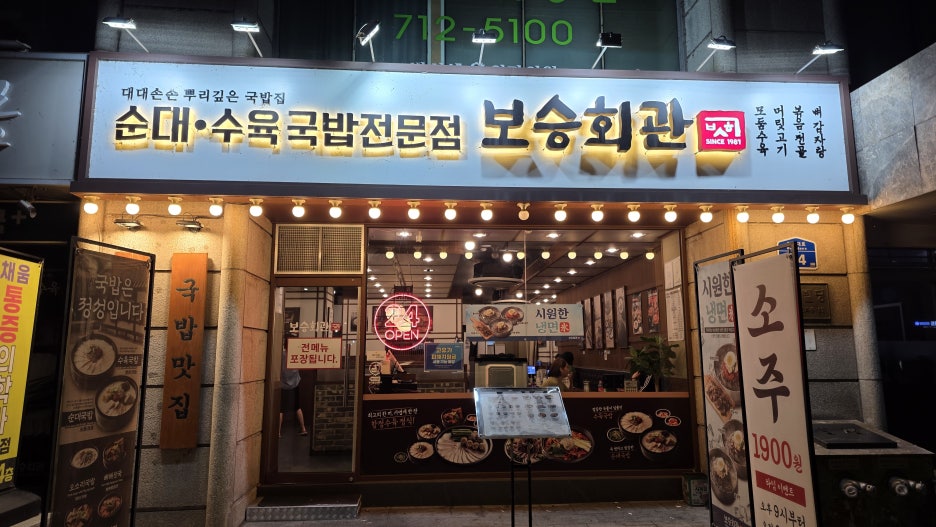
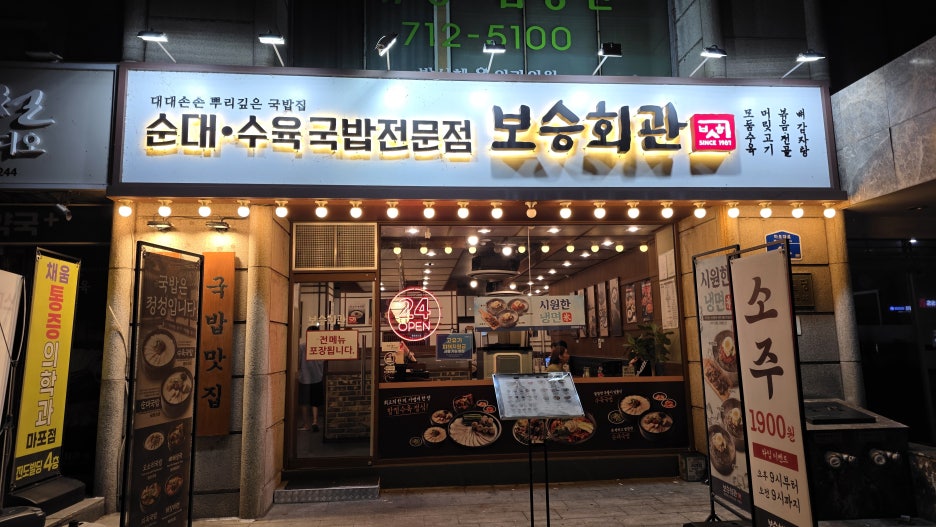
On days when mealtimes get thrown off, a gukbap (Korean rice soup) place that's open whenever you show up is more welcome than you'd think. This time I went to the Mapo Station branch of Boseung Hoegwan (보승회관), where you can get a hearty meal near Mapo Station even late at night.
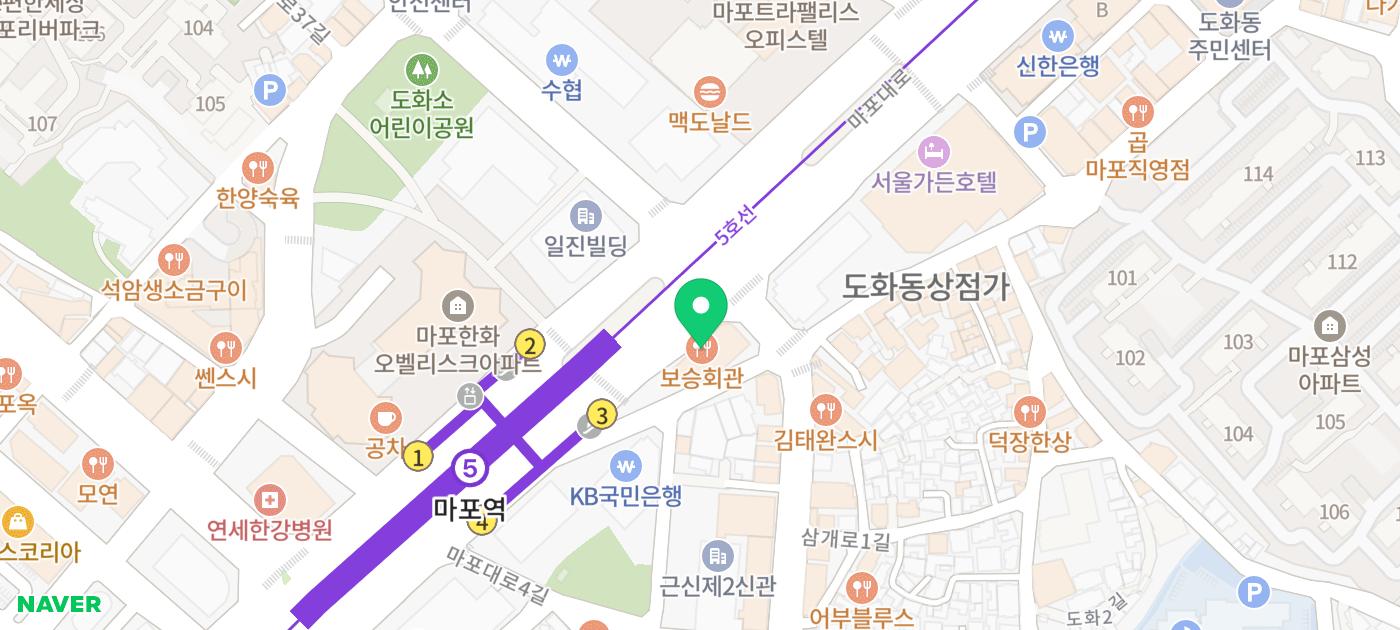
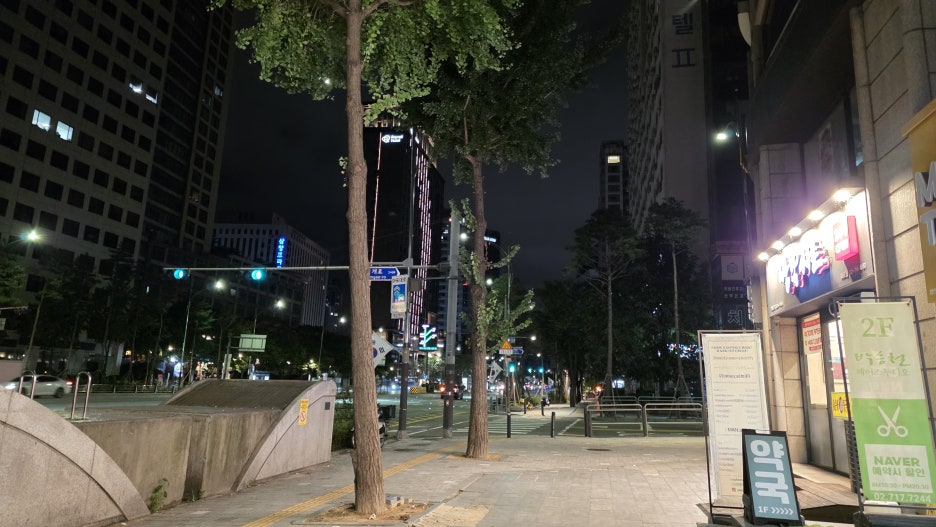
The restaurant is on the 1F of 44 Mapo-daero, Mapo-gu, Seoul. It's a short walk from Mapo Station Exit 3, so it's easy to reach by subway, and the official store information also confirms the Mapo Station branch at 44 Mapo-daero.
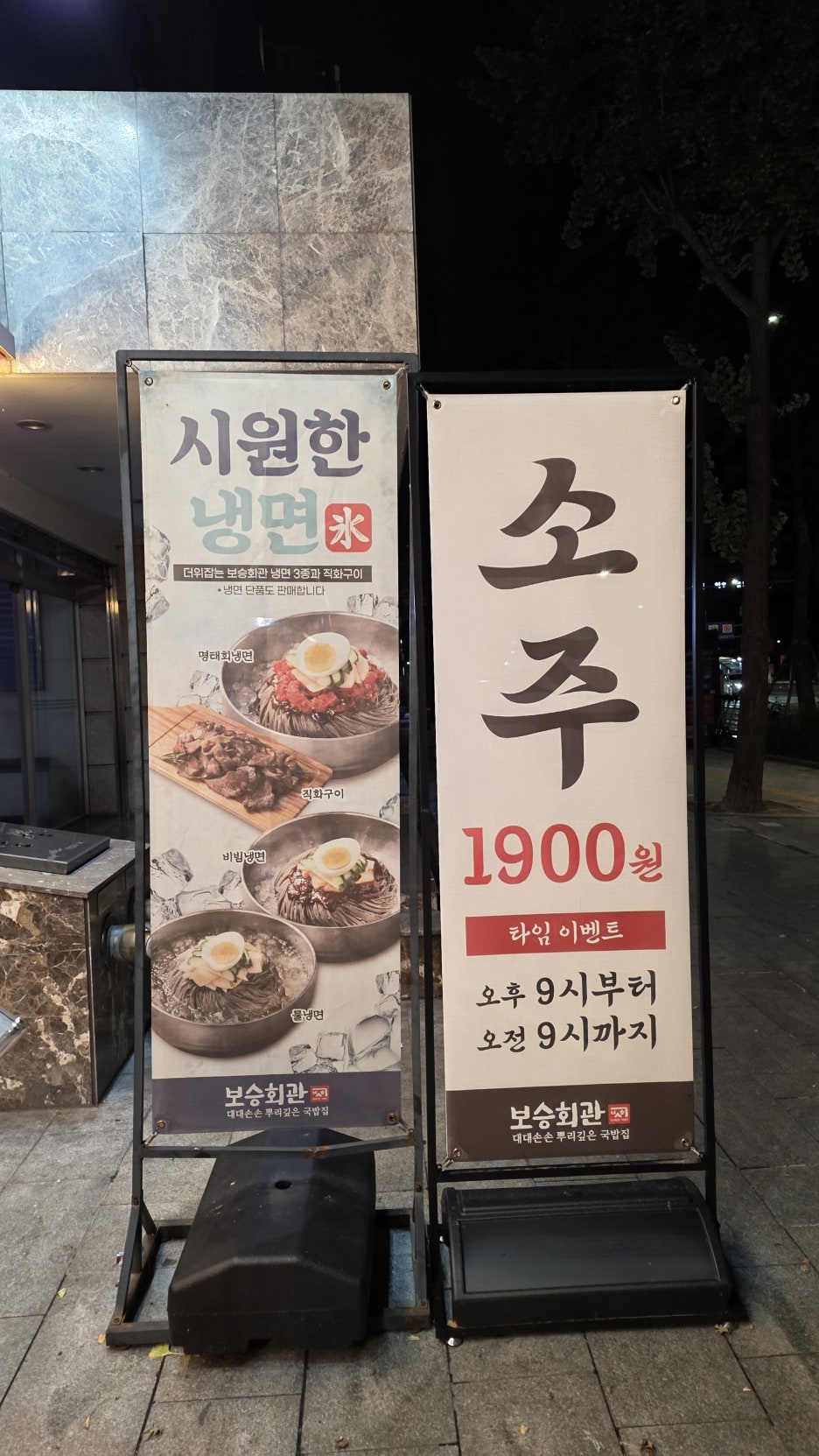
Its biggest advantage is that it's open 24 hours. These days it's harder than it used to be to find restaurants in Seoul that stay open all night, but at the time of my visit, this place listed its hours as 00:00 to 24:00 every day. A big '24 OPEN' sign is also posted on the exterior, giving the impression you can walk in without hesitation late at night or early in the morning.
If you drive, you can use the parking lot behind the building. Recent store information says 30 minutes of free parking is provided, so it's safest to double-check at the restaurant after you park.
Being open 24 hours means a lot in practice. It means you can get a warm bowl of gukbap at times when ordinary restaurants are on a break or not yet open, like that awkward window between lunch and dinner, late nights after working overtime, or early mornings before work. It's an especially welcome perk on days when your schedule is hard to pin down.
A tidy wood-toned interior and tablet ordering
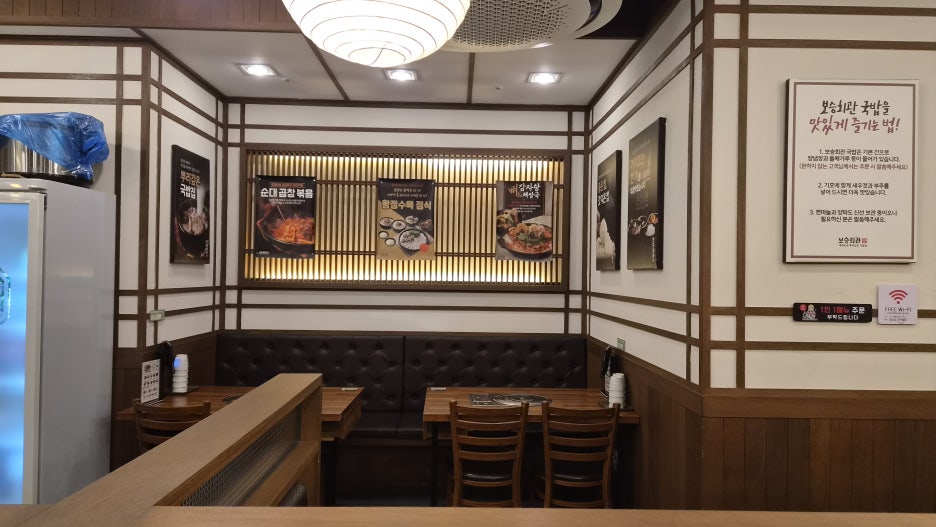
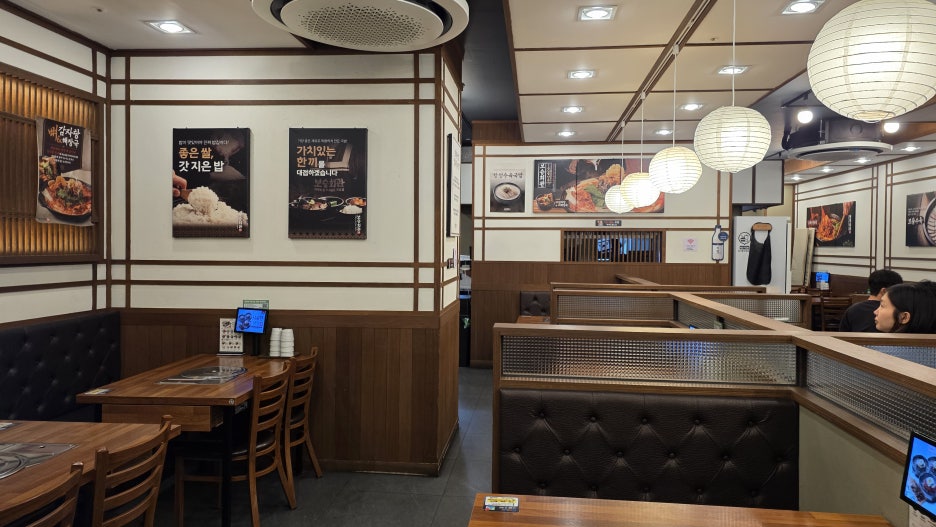
Inside was much neater than it looks from outside. With wood tones throughout, it felt closer to a well-kept Korean restaurant than the rough-and-ready gukbap joint you might picture.
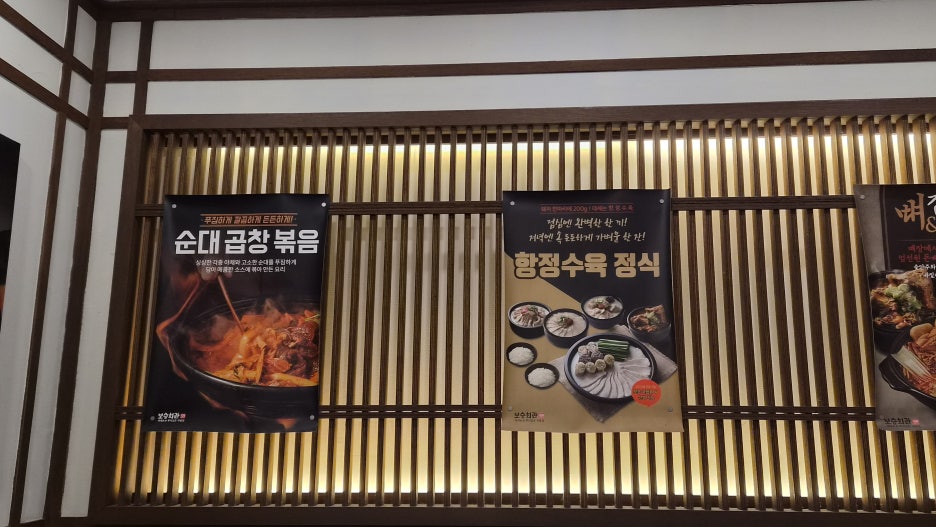
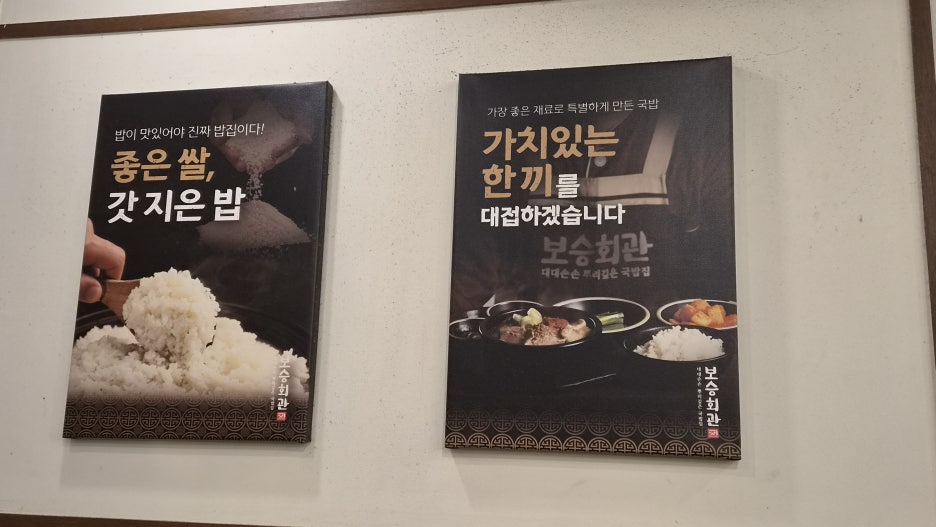
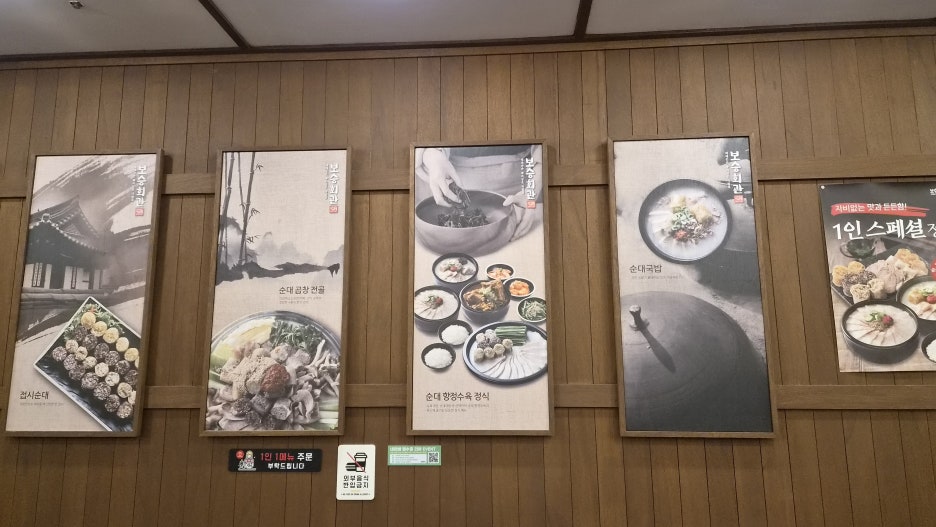
Large photos of signature dishes like sundae-gukbap (blood sausage and rice soup), the hangjeong suyuk (boiled pork jowl) set meal and sundae gopchang bokkeum (stir-fried blood sausage and intestines) hang on the walls. Even first-timers can get a sense of what will come out just by scanning the photos, so choosing a dish was easy.
The seating is a mix of booth-style seats and regular tables. It's set up to fit everyone from solo diners quietly having a bowl to groups coming in together.
The area around Mapo Station has lots of offices, so office workers crowd in at lunchtime. Recent reviews also describe it as having everything from two-person tables to seats where a group can gather around. Each table had a tablet for ordering right from your seat, and not having to call over the staff was convenient.
You roughly pick something from the photos on the wall, check the price and what's included on the tablet, and place your order right away, so even at busy times there's less waiting to order or raising your hand to find a server. When I wanted to come alone, eat quietly and leave, this system actually felt more comfortable.
From sundae-gukbap to hot pots, a wider menu than expected
Open the menu and there's a huge selection. As of my visit, the core lineup was sundae-gukbap 11,000 won, suyuk-gukbap (boiled pork soup) 11,000 won, hangjeong suyuk gukbap (pork jowl soup) 13,000 won, naejang-gukbap (offal soup) 11,500 won and ppyeo-haejangguk (pork bone hangover soup) 12,000 won, followed by dishes like osori-gukbap, jiok-gukbap ('hell' gukbap) and haejang ramyeon (hangover ramyeon).
There are also combinations like the sundae and hangjeong suyuk set meal, which pairs gukbap with boiled pork or blood sausage, and a single-person special set. With dishes made for sharing like sundae gopchang jeongol (blood sausage and intestine hot pot), gamjatang (pork bone stew) and an assorted boiled pork platter, there were far more choices than you'd expect from a place where you just grab a bowl of gukbap for breakfast or lunch.
When I visited, there was also a seasonal menu pairing naengmyeon (cold noodles) with flame-grilled meat, and a notice for a soju discount event from 9 p.m. to 9 a.m. Seasonal menus and promotions like these can change over time, so just check the notices in the restaurant on the day you go.
The menu makes it easy to put together a meal for your group size and situation. Alone, you can have a bowl of gukbap or the single-person special set; as two, you can share two different gukbap or add a set meal; and as a group, you can put a sundae gopchang hot pot or assorted boiled pork in the middle and add gukbap. It gives you more reasons to come back than a place selling only one kind of gukbap.
Ordering two pork jowl dishes side by side
That day I tried something a little different and chose two dishes: hangjeong suyuk gukbap for 13,000 won and hangjeong suyuk haejang ramyeon (pork jowl hangover ramyeon) for 14,500 won. The total was 27,500 won. Both have the same boiled pork jowl, but one is gukbap and the other is ramyeon, so the broths were completely different, and it was fun to compare them by going back and forth.
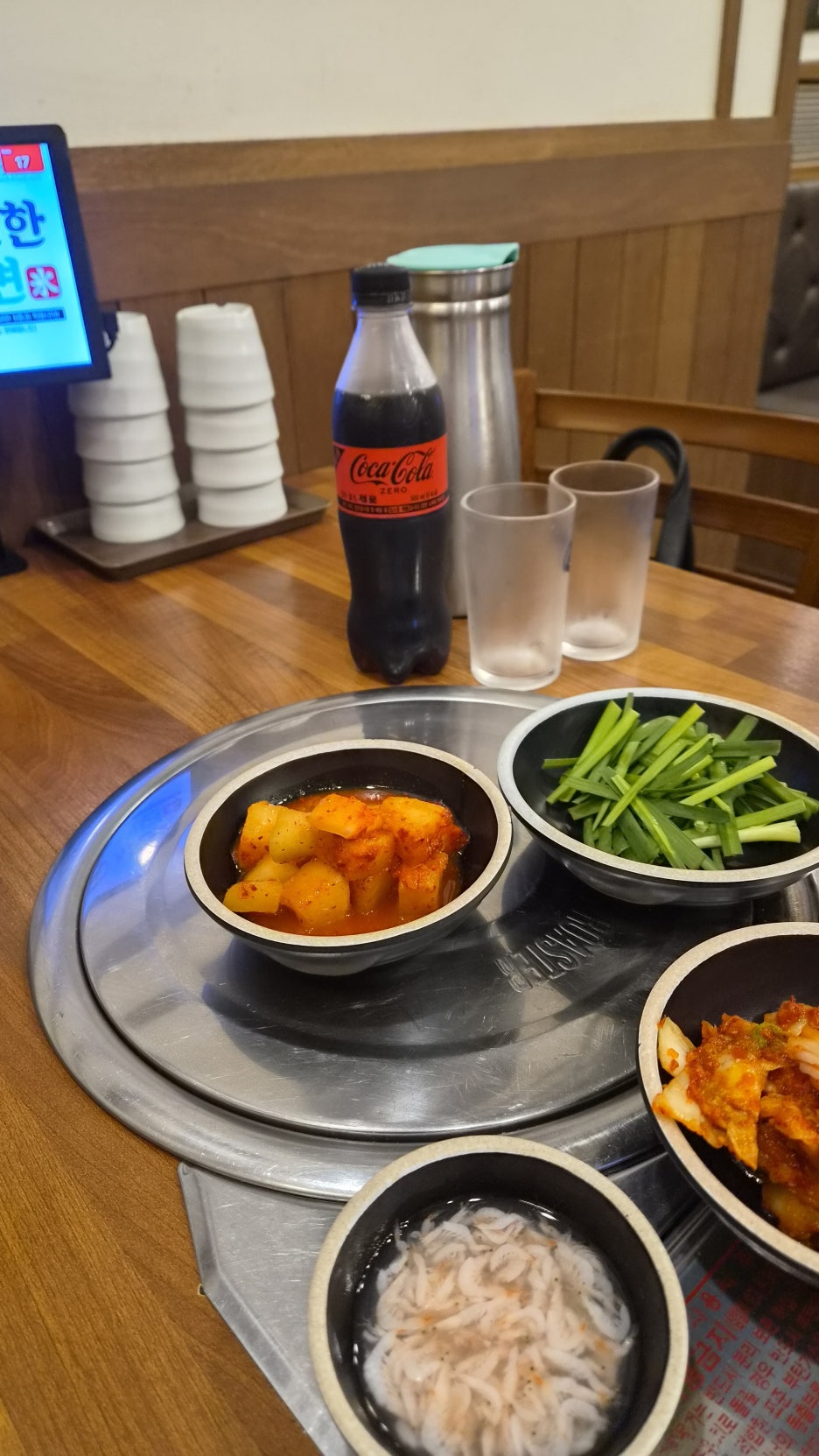
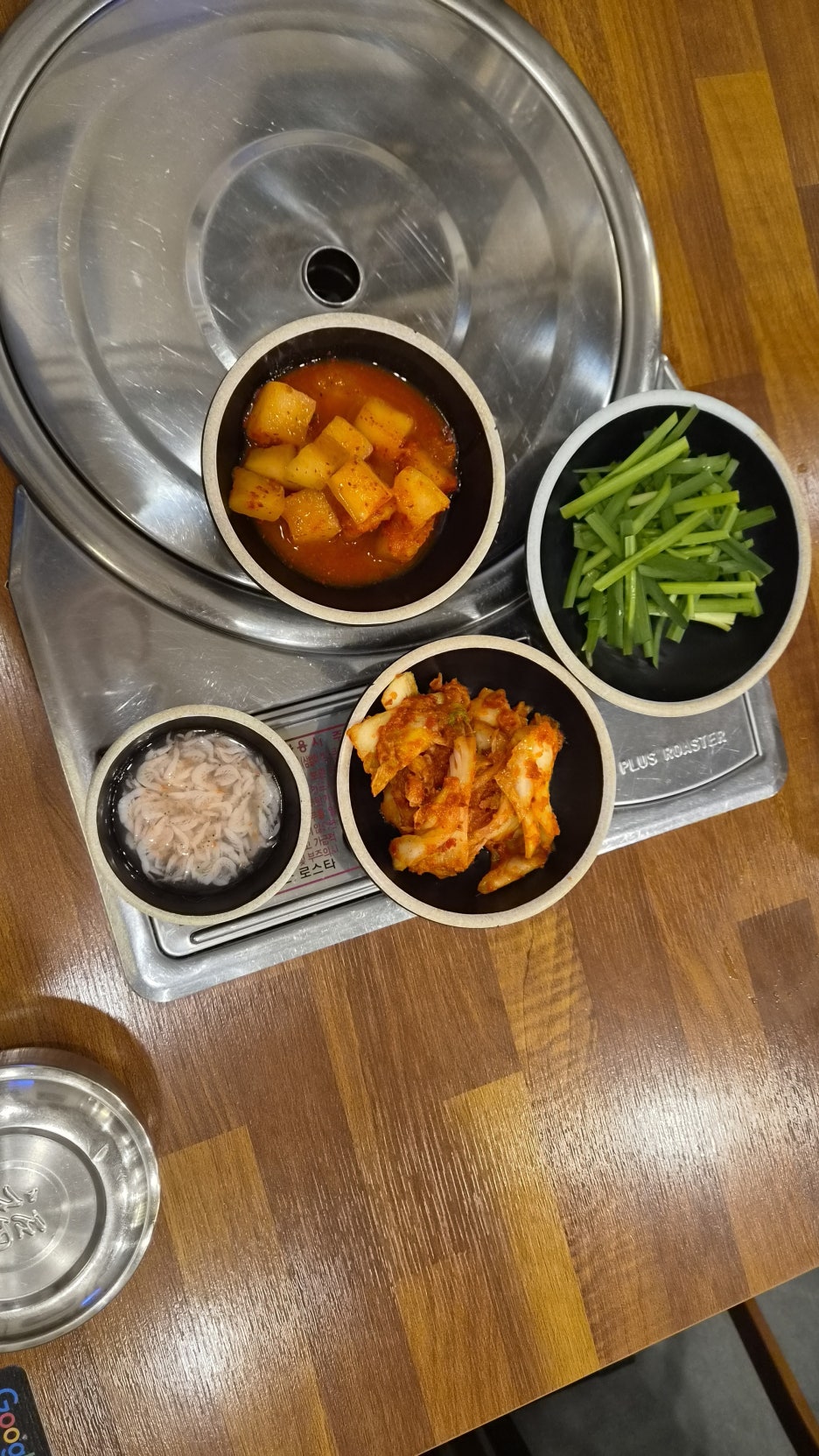
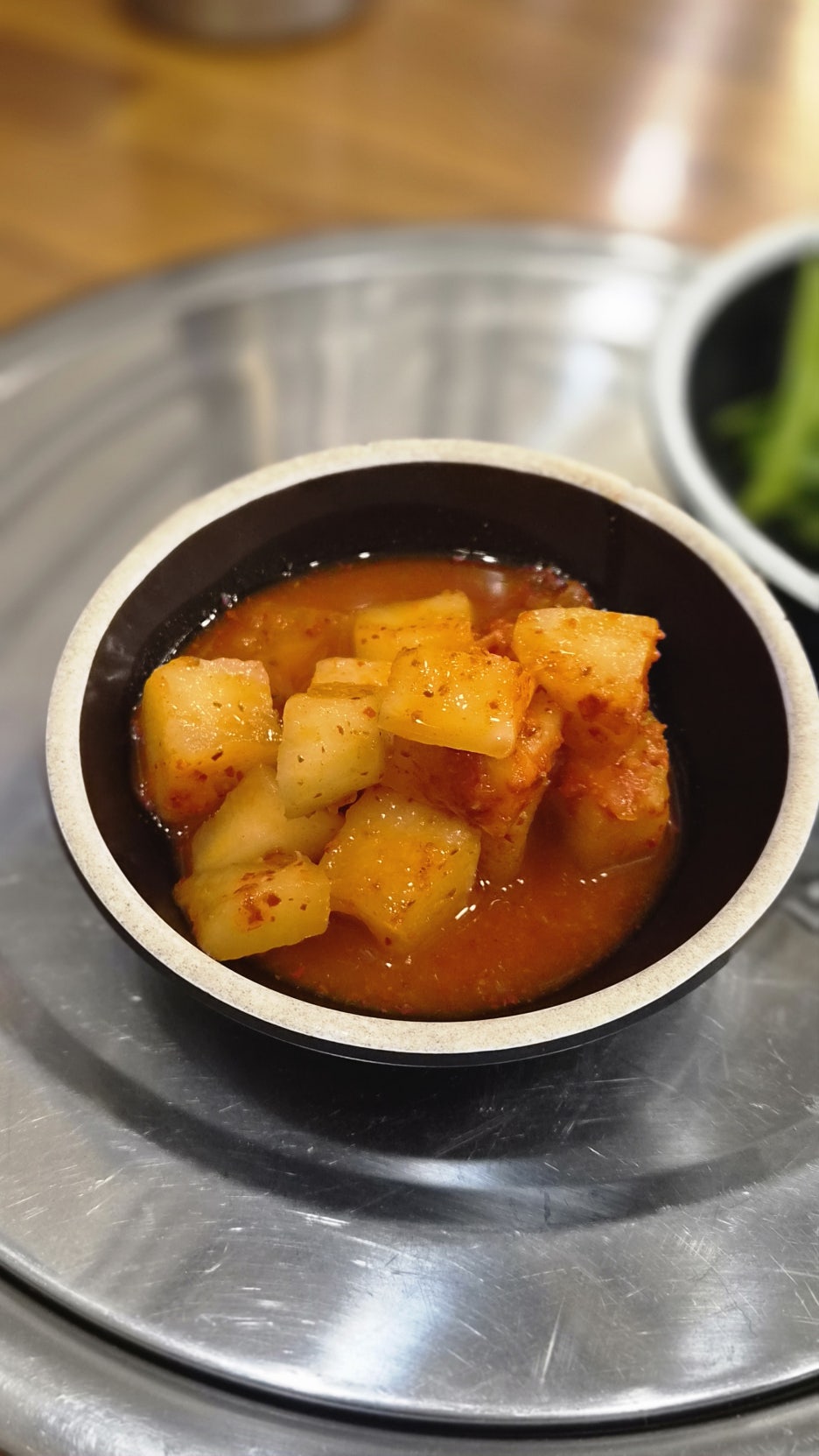
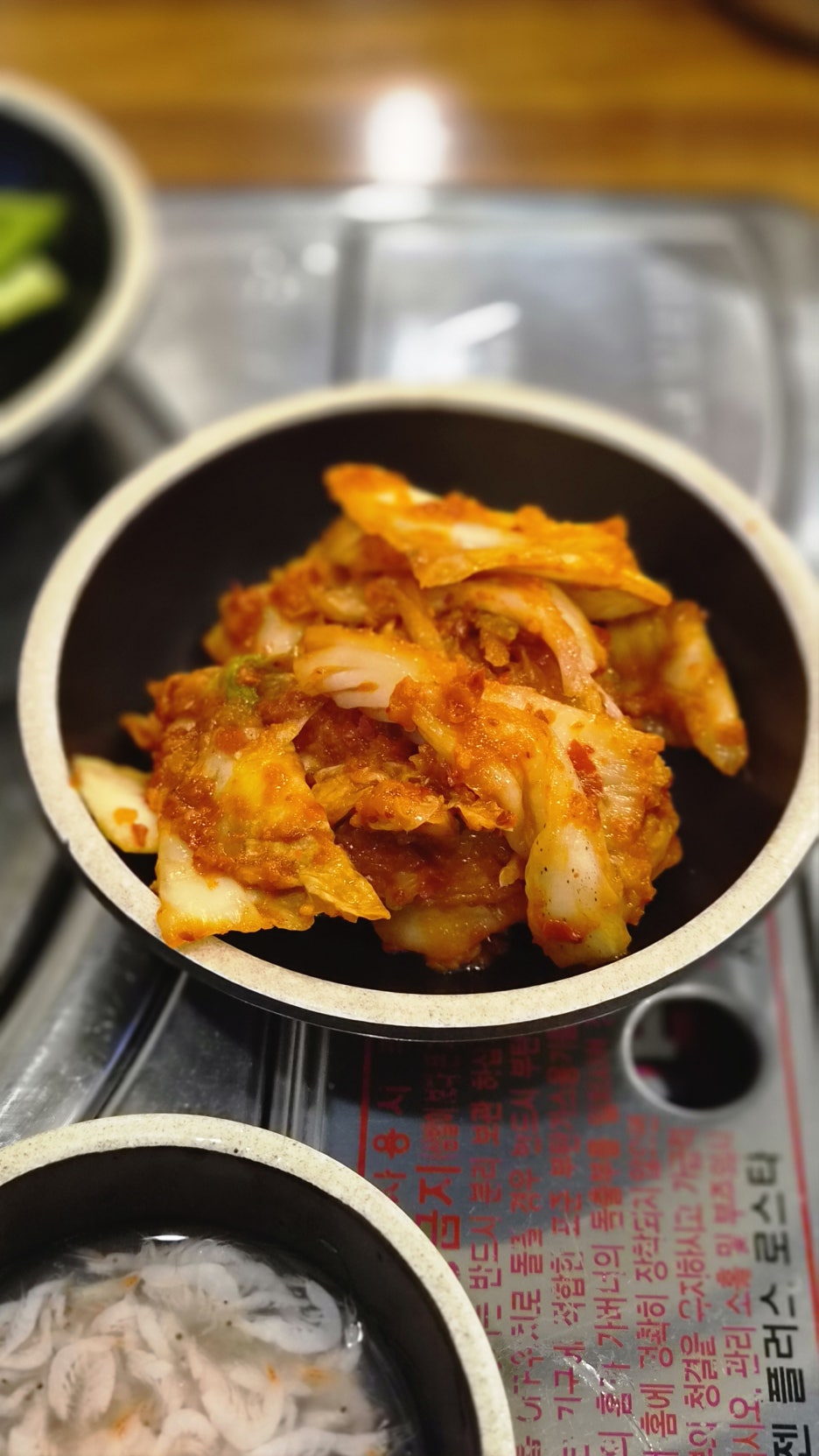
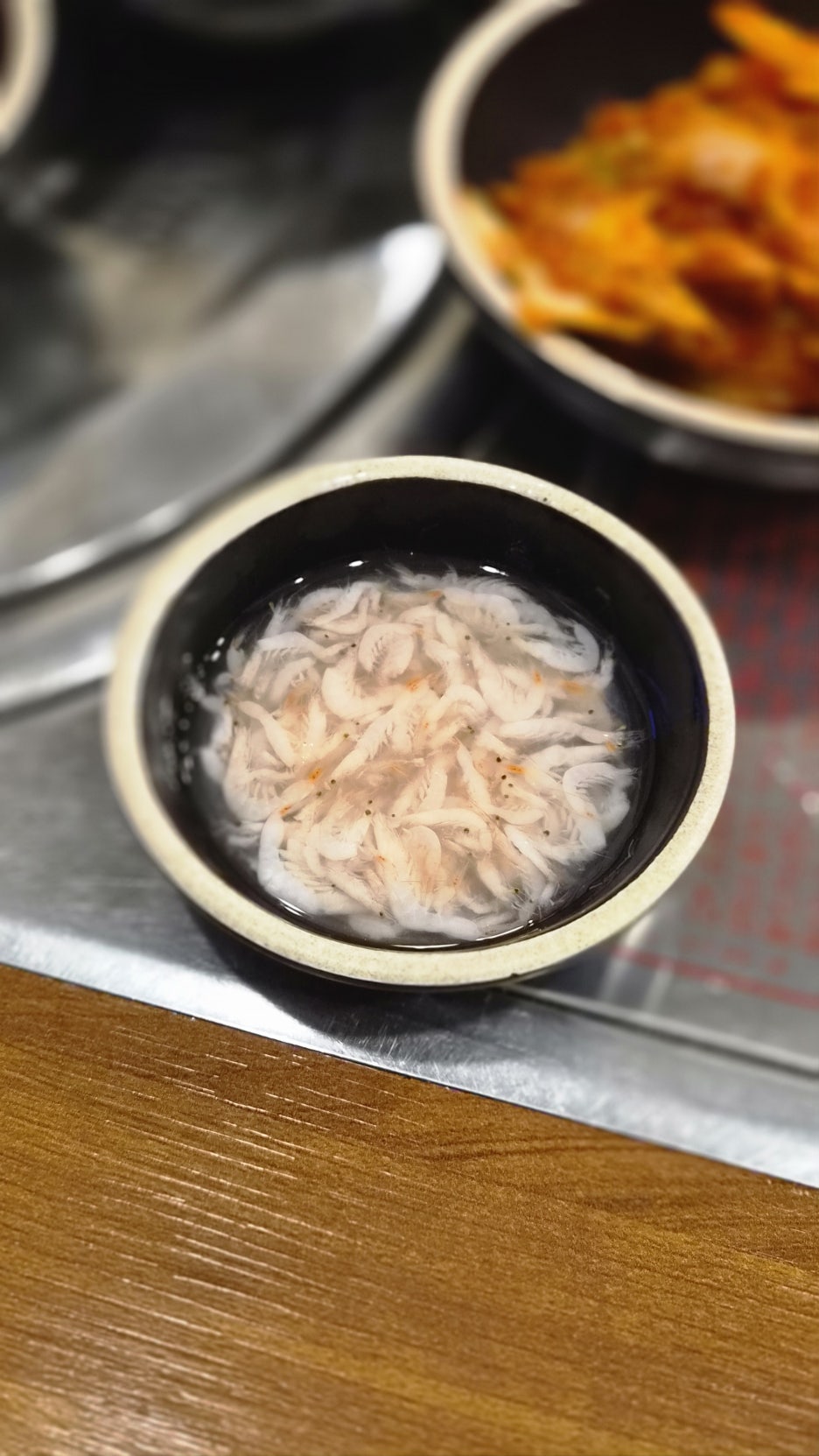
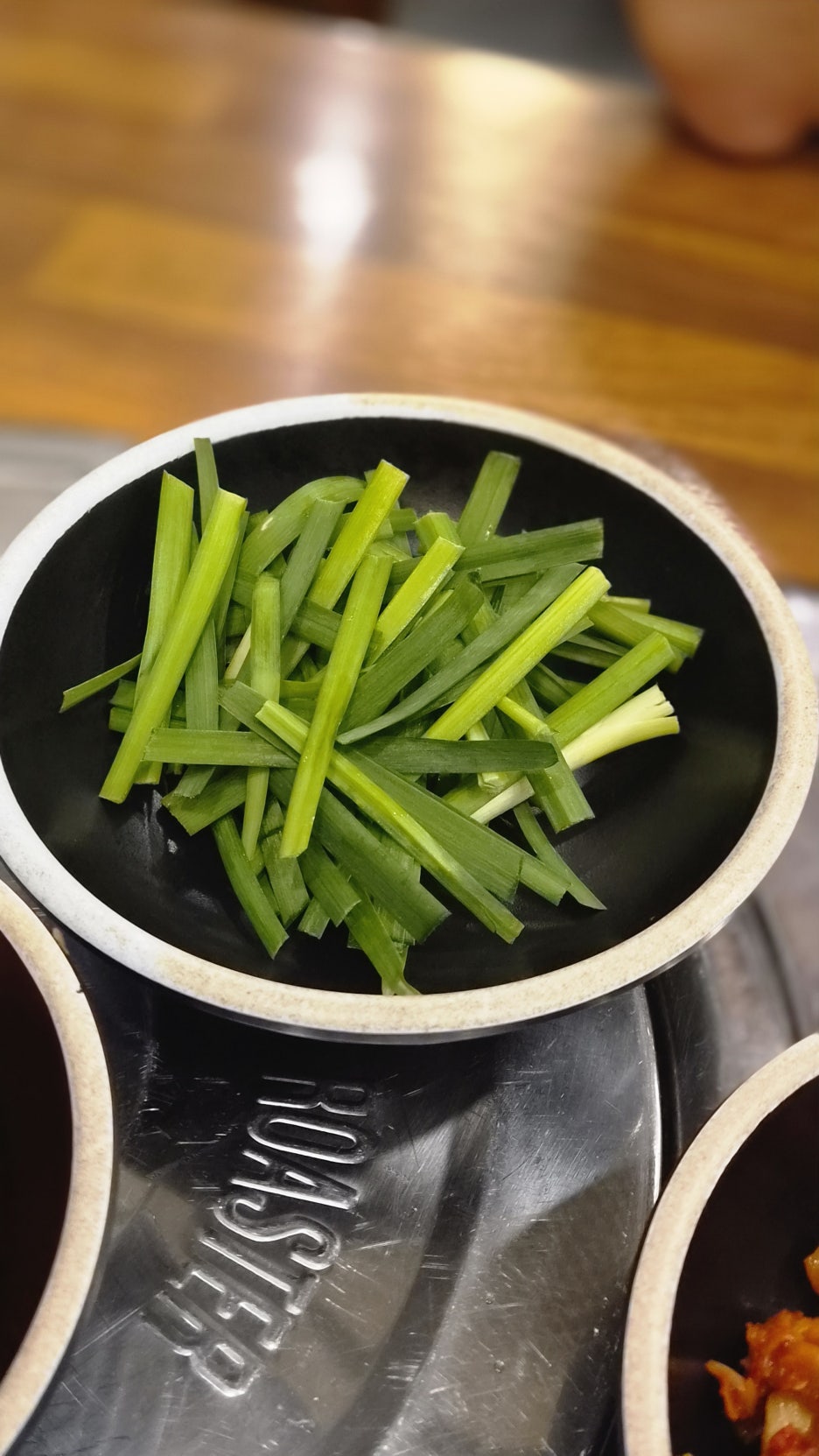
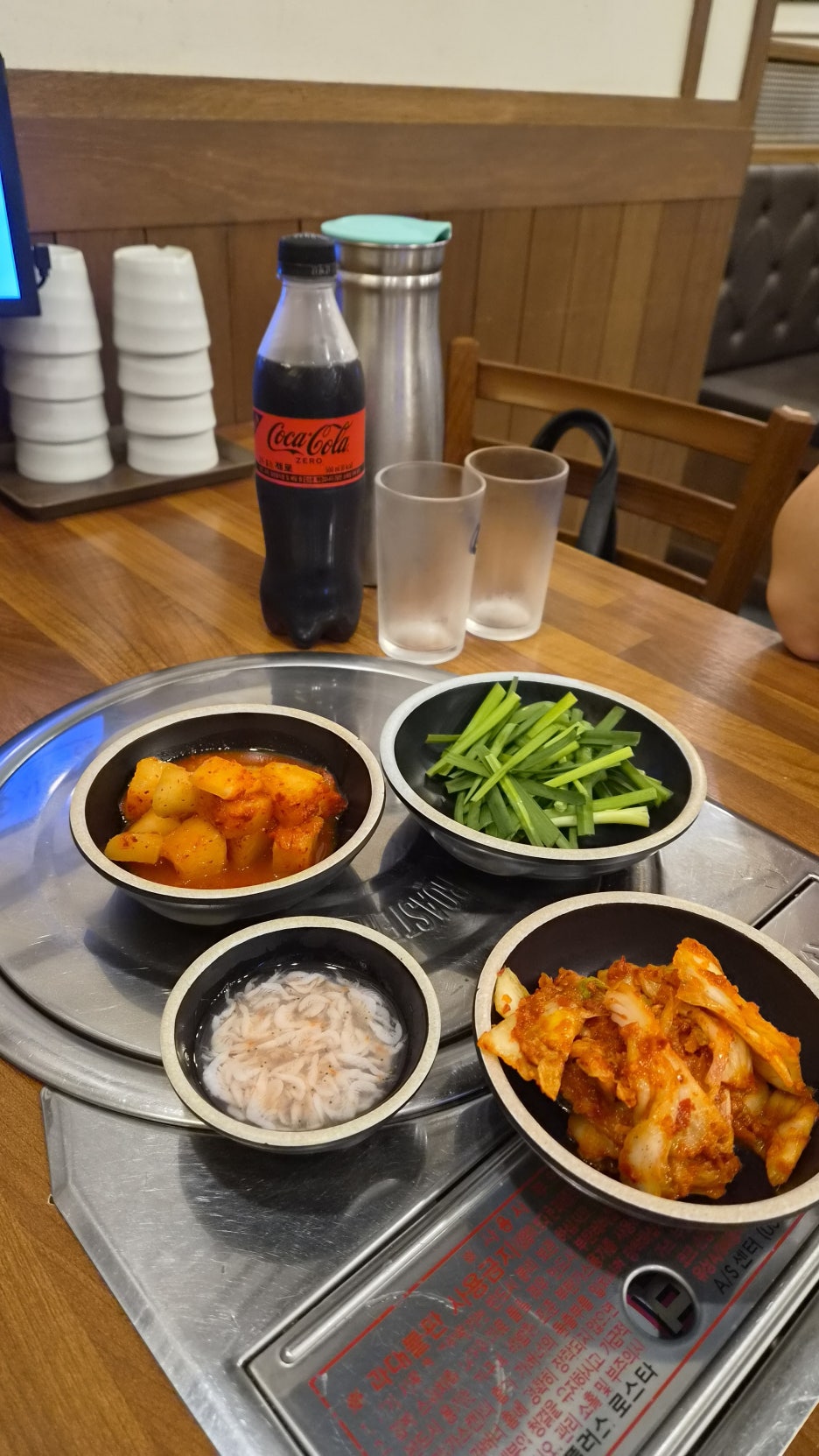
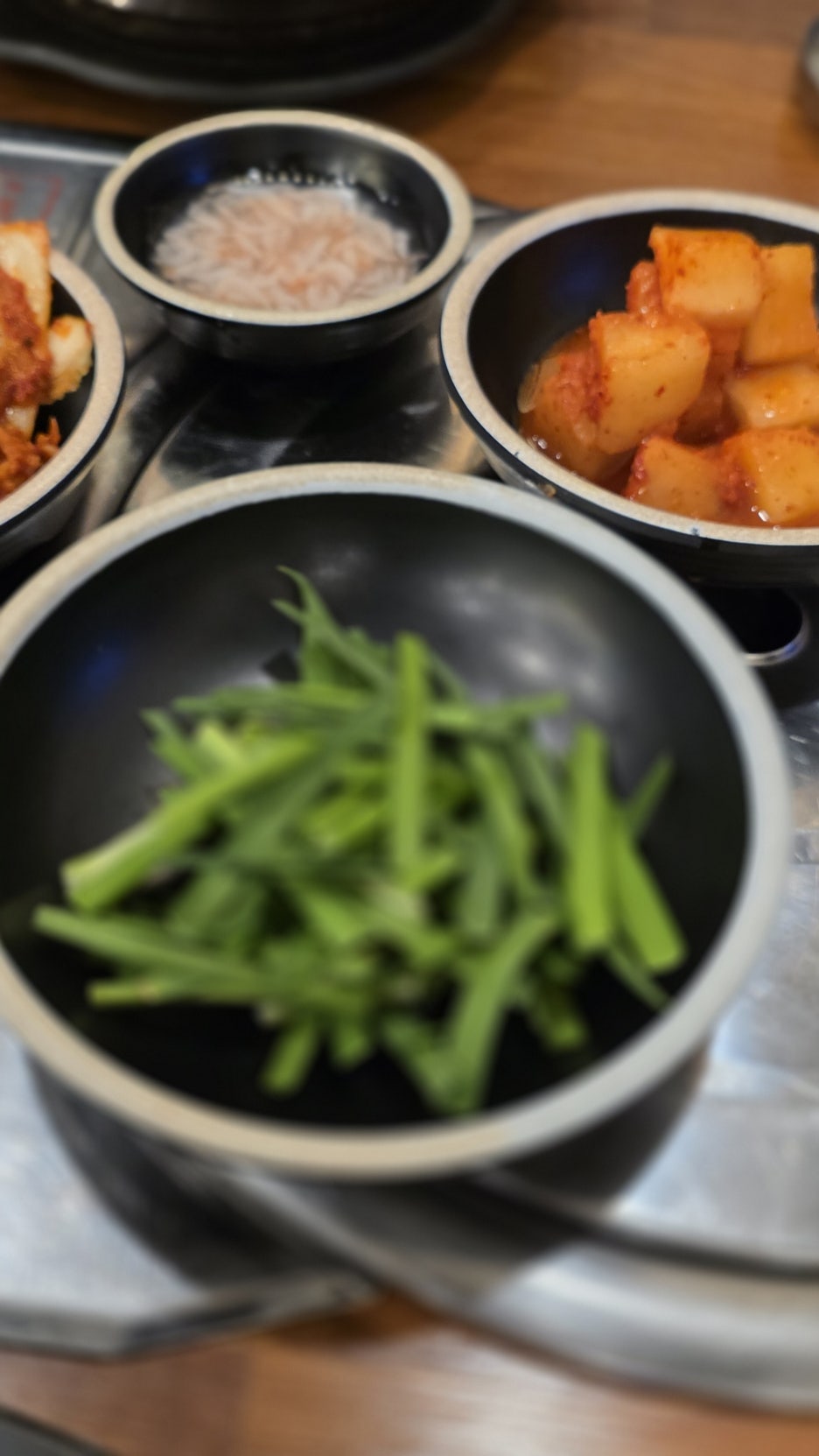
The basic banchan (side dishes) are kimchi, kkakdugi (radish kimchi), chives and saeujeot (salted shrimp), served simply. I think gukbap side dishes don't need to be fancy, and if the kimchi and kkakdugi are good, you're halfway there. The table setting was exactly that, with nothing unnecessary.
Trying the same meat two ways turned out to be a better choice than I expected. The pork jowl in milky broth and the pork jowl in red ramyeon broth were the same ingredient but felt different in the mouth, so every time I switched from one bowl to the other, it was like tasting something new.
Thinly sliced pork jowl in milky broth: hangjeong suyuk gukbap
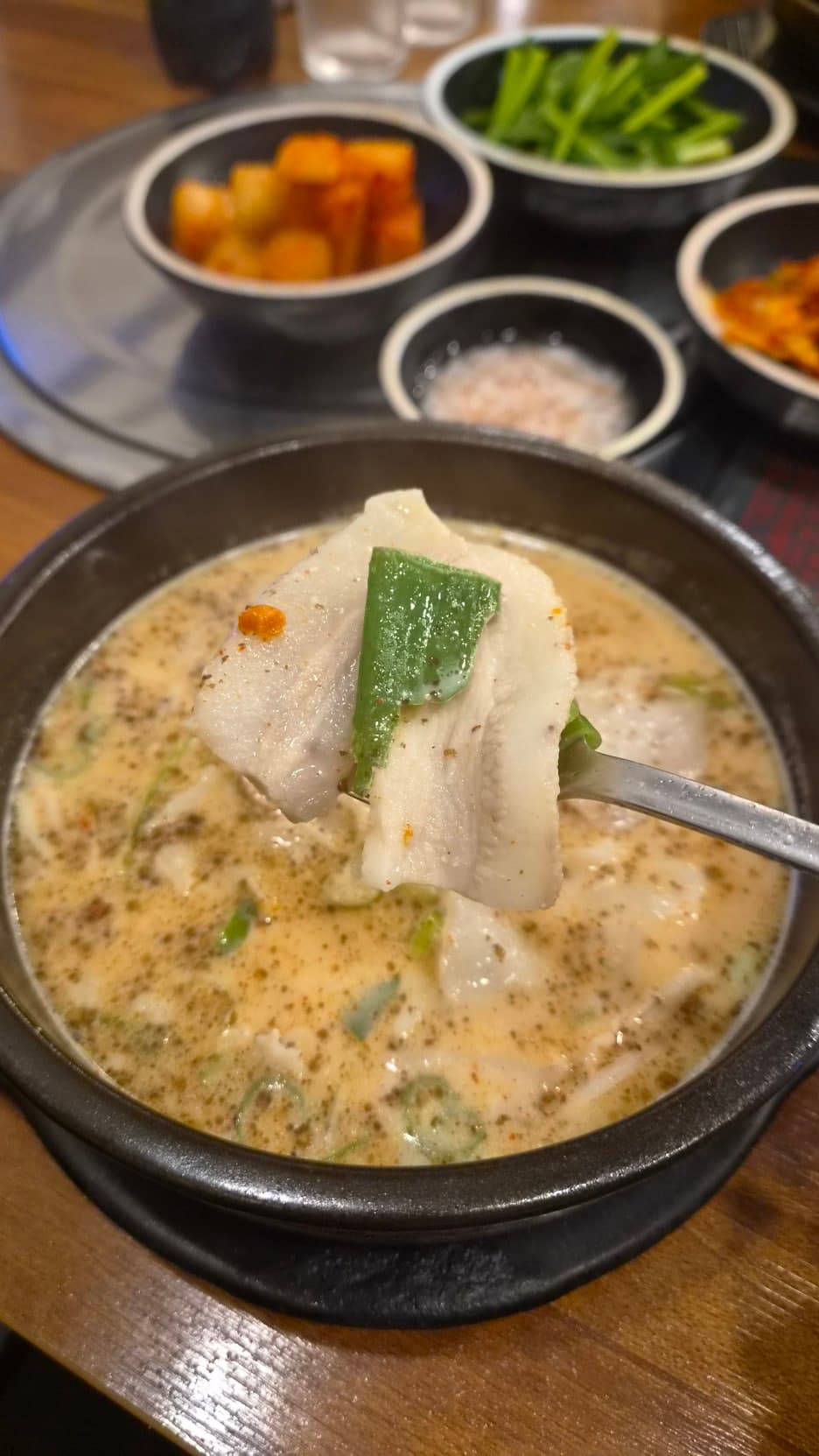
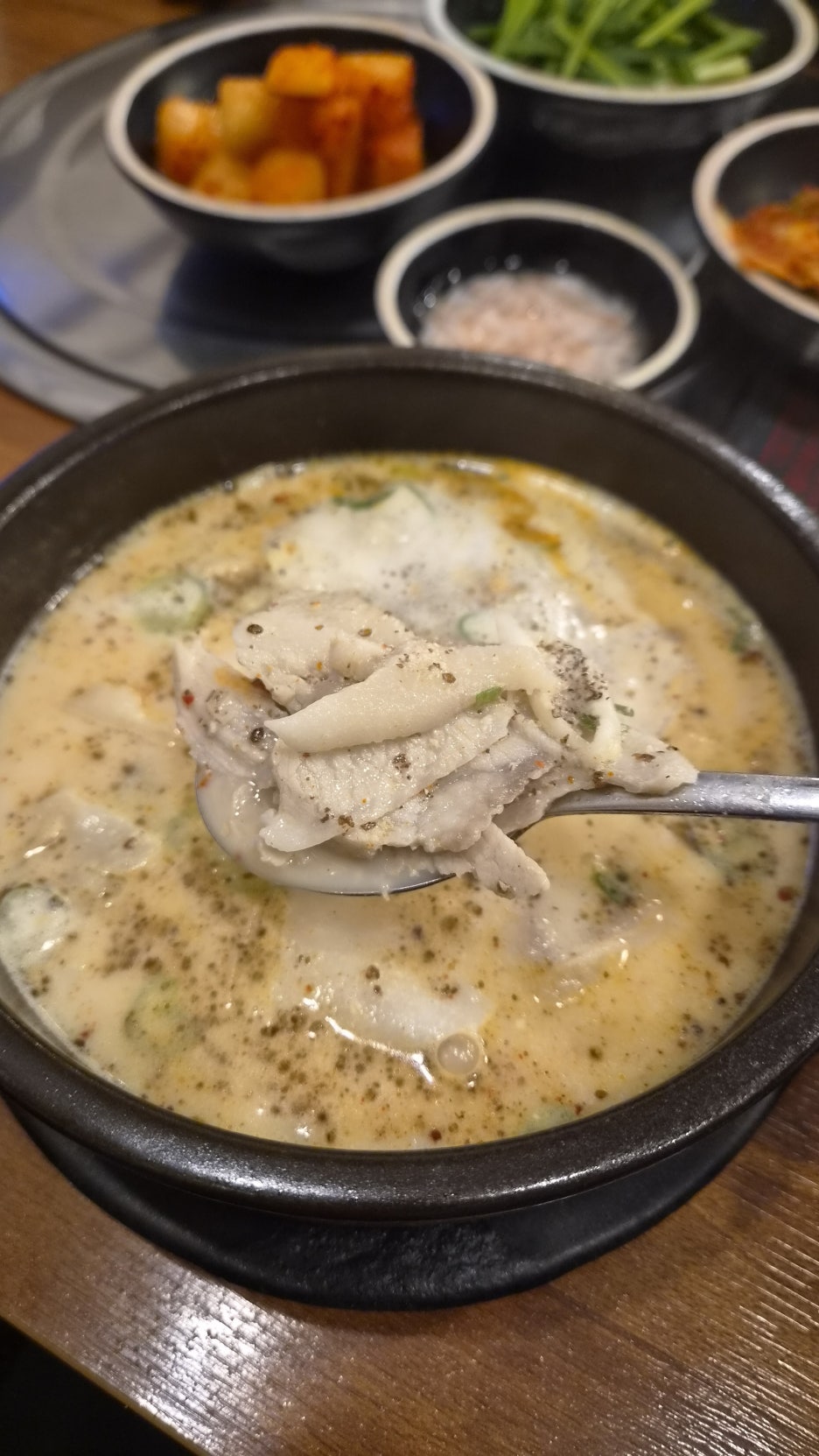
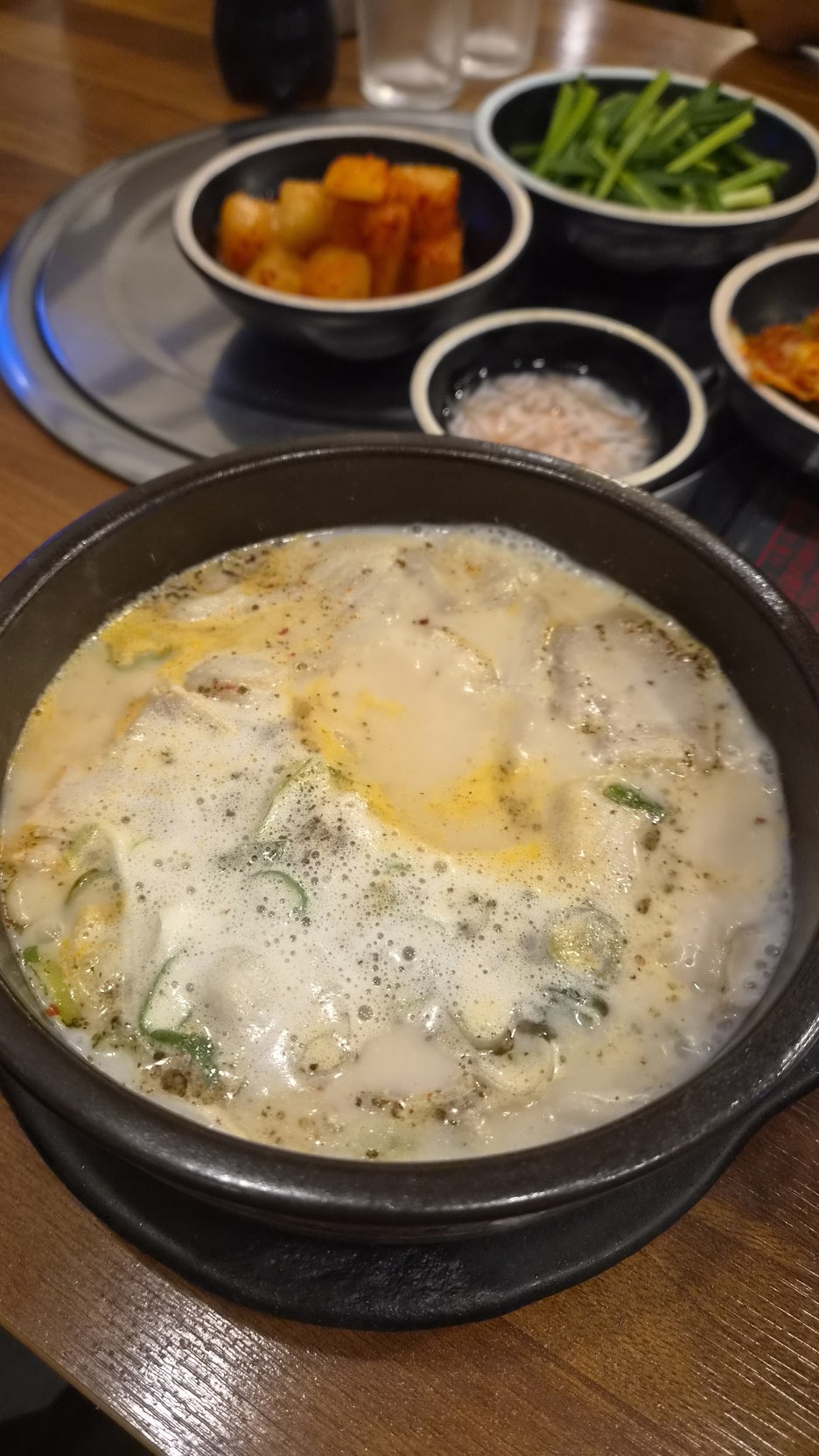
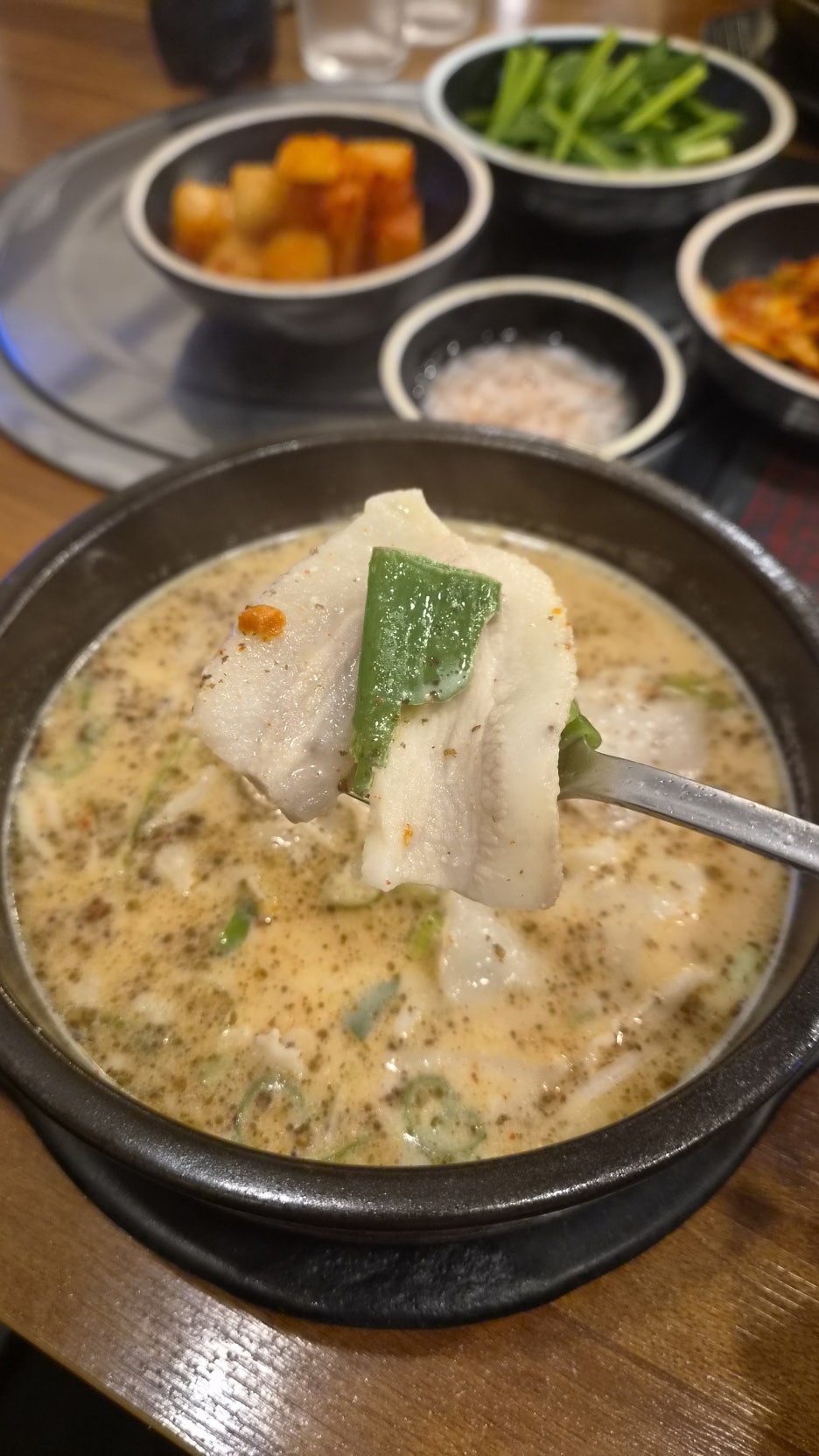
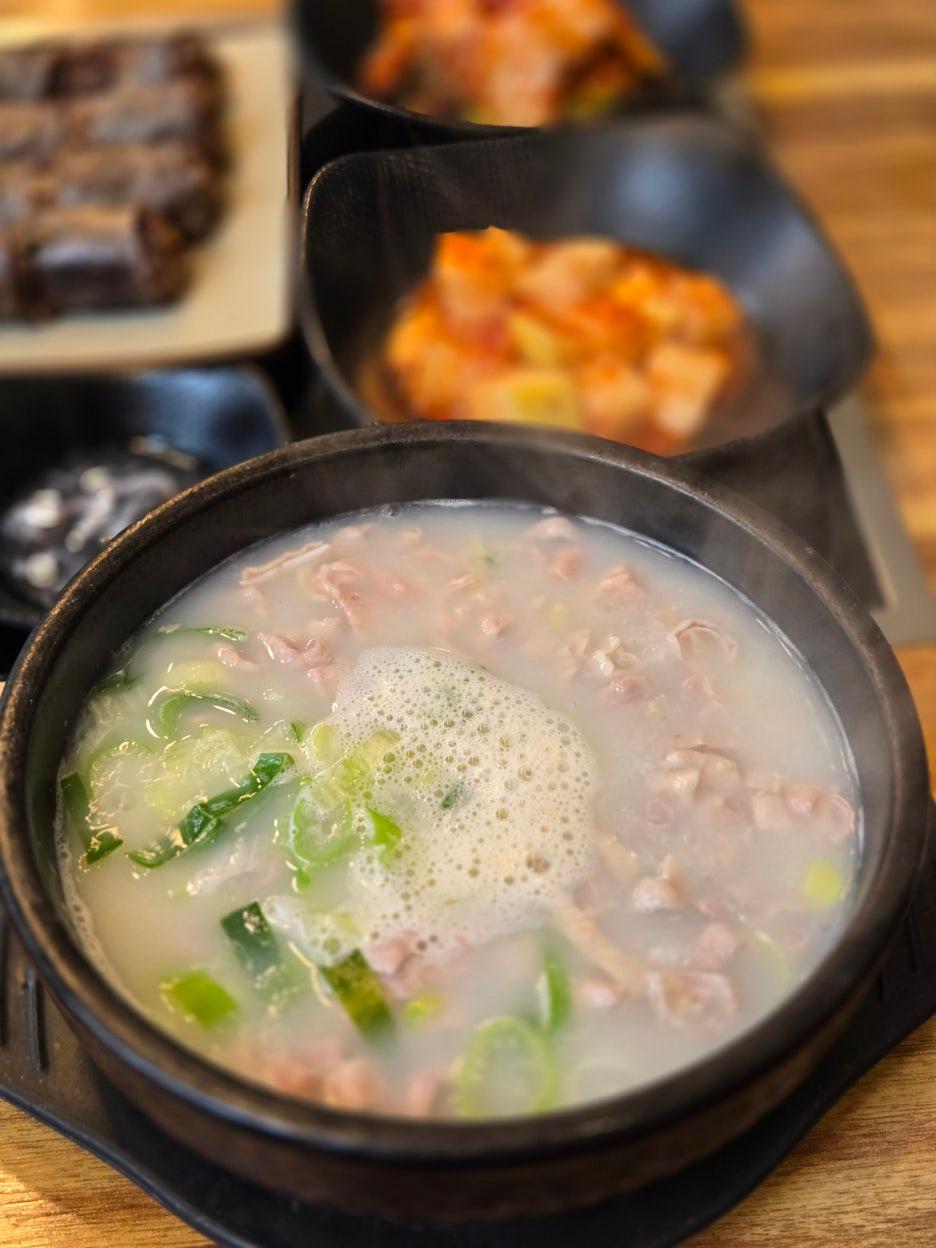
First, the hangjeong suyuk gukbap. It arrives bubbling in a hot earthenware pot, and the broth is milky white with pepper and seasoning on top, so you could guess at the rich flavor just by looking. When I stirred it once with my spoon, there was a fairly generous layer of pork jowl underneath.
Since it's pork jowl, I expected it to be fatty, but it was thinly sliced, so eating it with the broth was less heavy than I thought. The meat was tender and pleasantly savory, and having the broth come along with it made it taste different from eating the boiled pork on its own.
At first I tasted the broth as is, then started adding chives little by little partway through, and I personally liked it better that way. Adding a touch of salted shrimp made the flavor of the meat even more distinct.
Adding the chives gives the broth a light aroma and makes the rich flavor feel cleaner and fresher. Scooping the meat and chives together in one spoonful also changes the texture, so it was like eating a different gukbap from the first few spoonfuls.
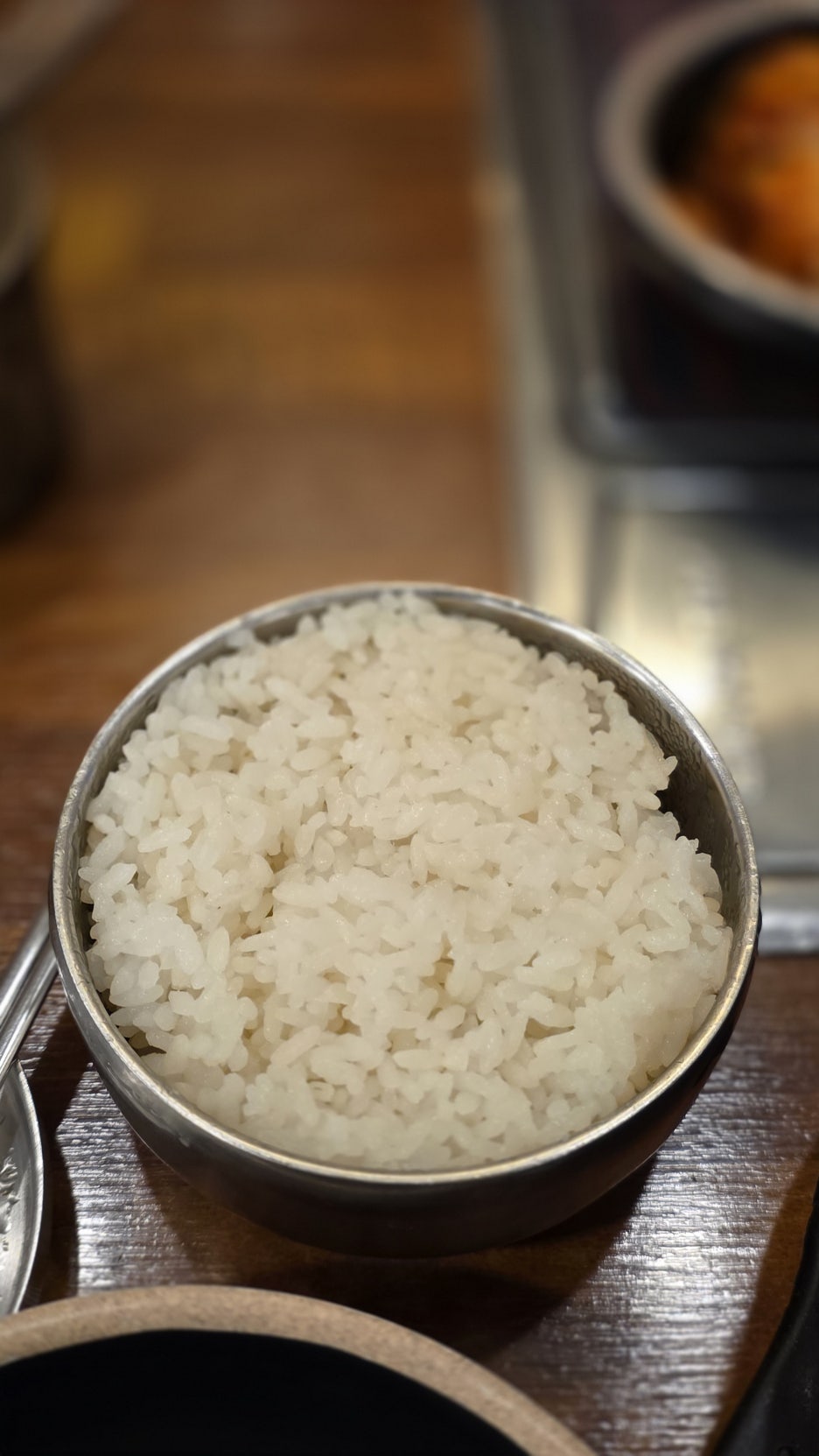
Finish by mixing the rice into the soup and it's the kind of dish that leaves you truly full from one bowl. It's a taste I can see myself thinking of again when I need a proper meal near Mapo Station.
Noodles and meat together in red broth: hangjeong suyuk haejang ramyeon
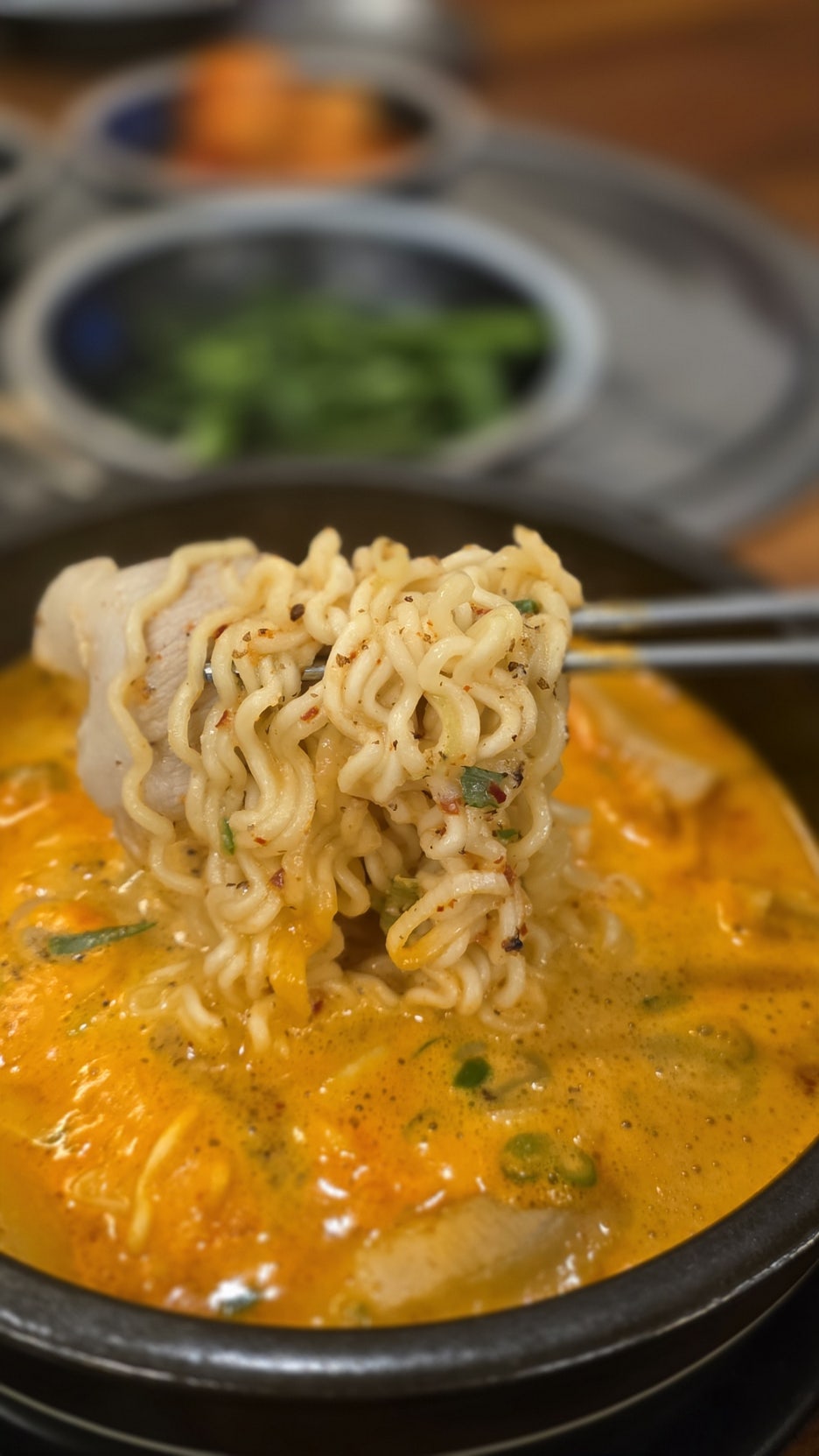
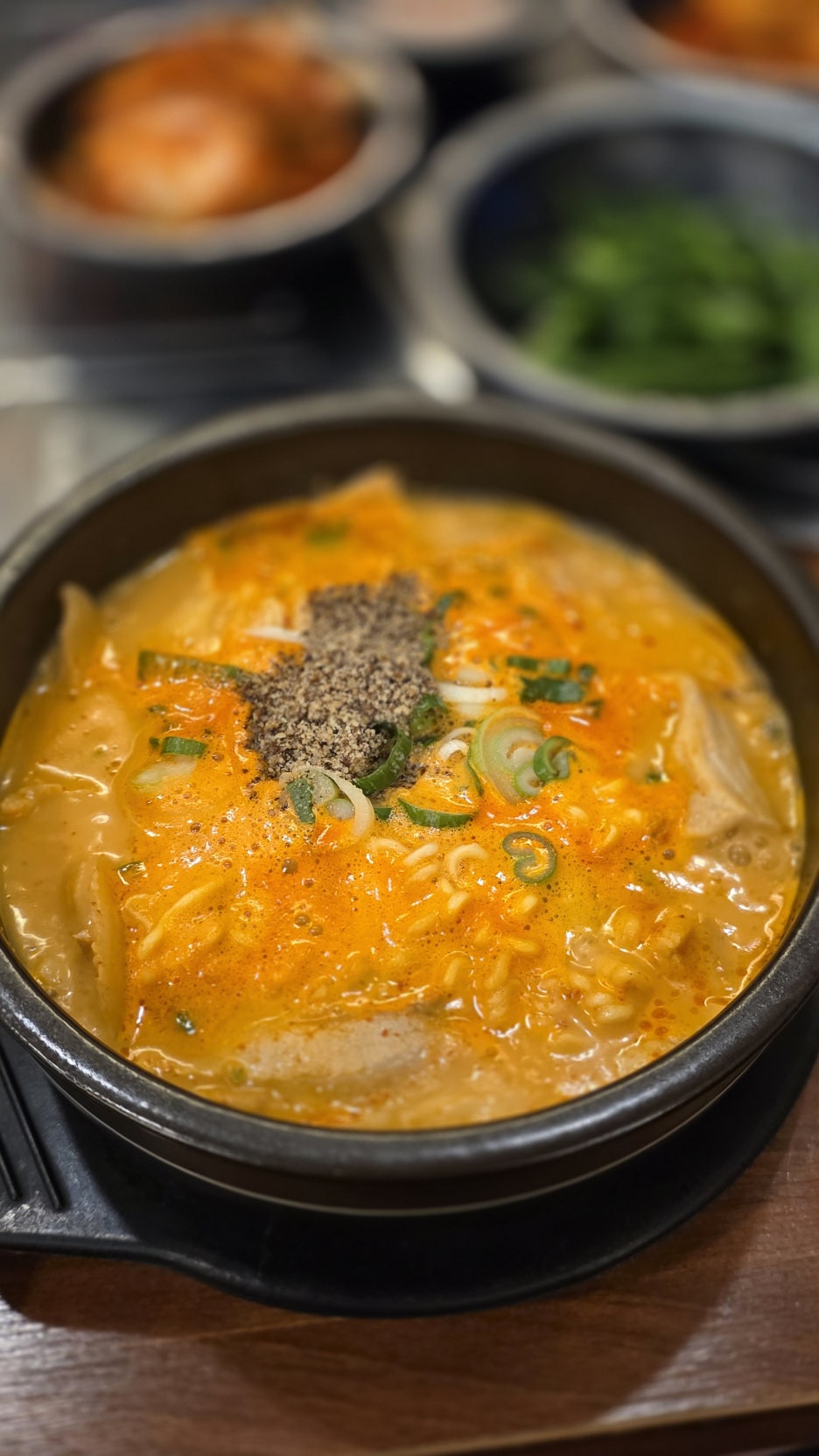
The dish I was personally more curious about was the hangjeong suyuk haejang ramyeon. It was 14,500 won as of my visit. Ramyeon, meat and green onions sit in a reddish broth, and it comes out boiling hard in the earthenware pot, so it instantly looked like a hangover dish.
It was quite different from the ramyeon you'd eat at a snack shop. It was closer to ramyeon cooked in the rich stock used for the gukbap, so the broth itself was much heavier, and with the pork jowl in it, a bowl of ramyeon became a full meal.
If the gukbap goes in a milky, nutty direction, the hangover ramyeon goes in a spicy, hearty direction. Even with the same pork jowl, in the red broth the sharp spiciness of the soup came through before the savoriness of the meat, which made the contrast even clearer when alternating between the two bowls.
I especially liked fishing out the noodles first and picking up a piece of meat with them now and then. According to the current menu information, the hangover ramyeon also comes with rice, so after finishing the noodles you can add the rice to the leftover broth for a very filling meal.
If you had a drink the night before, I thought this would suit you perfectly as a hangover dish, just as the name says.
How to enjoy it with kimchi, kkakdugi and salted shrimp
When eating gukbap, the kimchi and kkakdugi are what you keep reaching for. The kkakdugi was cut into big bite-size pieces, so it was easy to have one with each spoonful of gukbap, and the kimchi was easy to pick up a little at a time. Eating them in between whenever the broth felt rich helped clear the palate.
Rather than stirring the salted shrimp straight into the gukbap, I'd recommend picking up a piece of pork jowl and putting a little on top. That way the nutty flavor of the pork jowl stays intact while just a bit of seasoning is added, and the balance was good.
There aren't many side dishes, but they went well with both the gukbap and the hangover ramyeon, so I kept going back to the kimchi and kkakdugi until the meal was over.
A place to remember when you crave gukbap late at night
The Mapo Station branch of Boseung Hoegwan was a practical place from its location to how it operates. Its biggest strength is that it's close to the station and open 24 hours, so you can go without worrying much about the time, from breakfast before work to lunch, dinner and late-night hangover meals.
The gukbap lineup doesn't stop at sundae-gukbap either; with suyuk-gukbap, hangjeong suyuk gukbap, naejang-gukbap, osori-gukbap, ppyeo-haejangguk and even hangover ramyeon, it's fun to choose according to your mood that day. Of the two dishes I had this time, go for the hangjeong suyuk gukbap if you want a rich, nutty gukbap, and the hangjeong suyuk haejang ramyeon if you want spicy broth with noodles too.
If you go as two, I think ordering one each and sharing, like I did, works quite well. If you're looking for a hearty meal near Mapo Station, or need a 24-hour restaurant for a late-night hangover meal, it's worth keeping in mind. Next time I'd like to try the signature sundae and hangjeong suyuk set meal.
Check opening hours and closing days on the map before you go.
Contains affiliate links. Your price stays the same.
This box contains affiliate links. If you book through them, Mudung may earn a commission at no extra cost to you.
 Read nextSame neighborhoodMapo Coffee-e-Grida | Aerocano and Dubai Chewy Cookie₩4,000Read →
 Read nextSame dish · GukbapSomunnan Gukbap in Daejeon | Return Visit for KRW 9,000 Sundae Gukbap with Offal and a Plate of SundaeRead →
 Read nextSame neighborhoodCentral Site Mapo Review | Two Single-Origin Hand Drips and a RooftopRead →