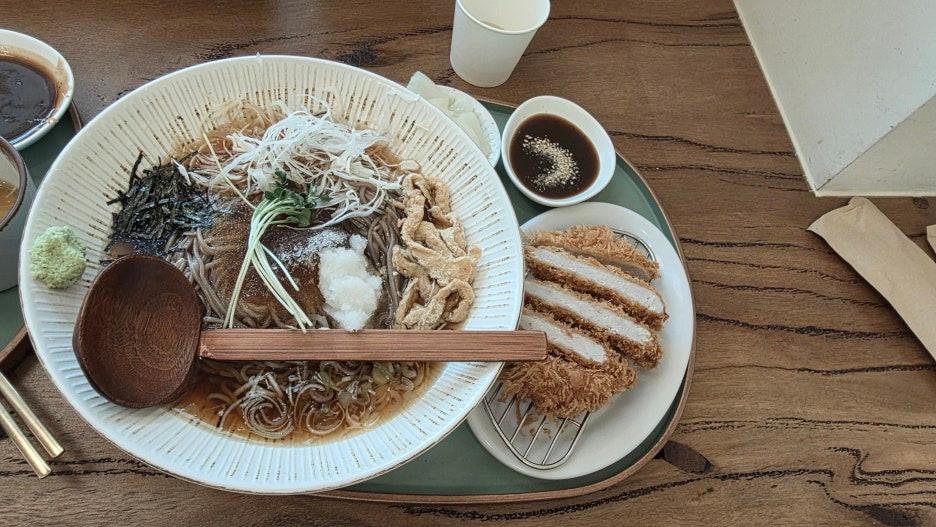
At Gomemui Songpa Munjeong in the basement of Terra Tower by Munjeong Station, we had the icy cold soba and katsu set plus a rosu katsu. Here is how to get there, the menu, prices as of my visit and how both dishes tasted.
In this article Show
- Munjeong Station on a hot day, for cold soba and katsu in one meal
- Terra Tower B1 at Munjeong Station
- An ivory front with arched brick details, next to Mega Coffee in G115
- Tablet ordering, the menu, and prices as of my visit
- Cold soba and katsu set
- Rosu katsu
- Cold noodles and hot katsu, each filling in for the other
- Wrap-up
Munjeong Station on a hot day, for cold soba and katsu in one meal
When the temperature rises, cold noodles come to mind before hot soup. Still, a bowl of noodles alone feels a little lacking, and it only feels like a proper meal once you add some crispy fried pork katsu.
So this time I went to Gomemui (고메무이) Songpa Munjeong, near Munjeong Station, where you can have cold soba and katsu together. There were two of us, and we ordered one cold soba and katsu set and one rosu katsu (pork loin cutlet).
To jump to the conclusion, alternating between the cold soba and the thick katsu worked much better than I expected. Below I go through the location and atmosphere, the menu and prices, and how the two dishes tasted, in that order.
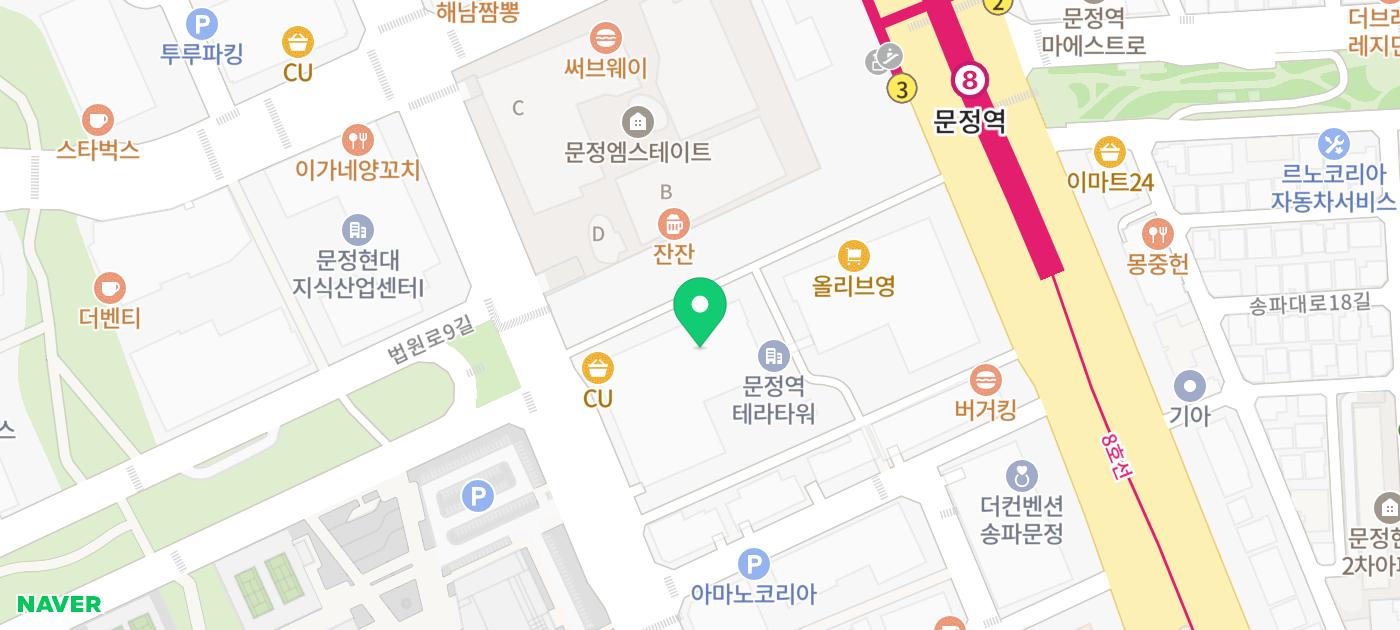
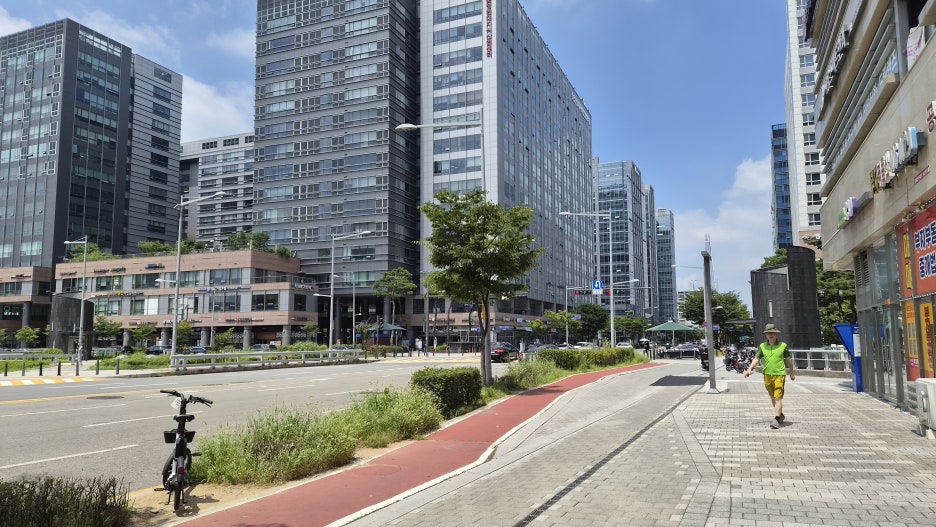
Terra Tower B1 at Munjeong Station: underground from Exit 3
Gomemui Songpa Munjeong is at Unit G115, B1, Tower A, Munjeong Station Terra Tower, 167 Songpa-daero, Songpa-gu, Seoul. It is inside the Terra Tower shopping arcade, so once you find the building the route is easy.
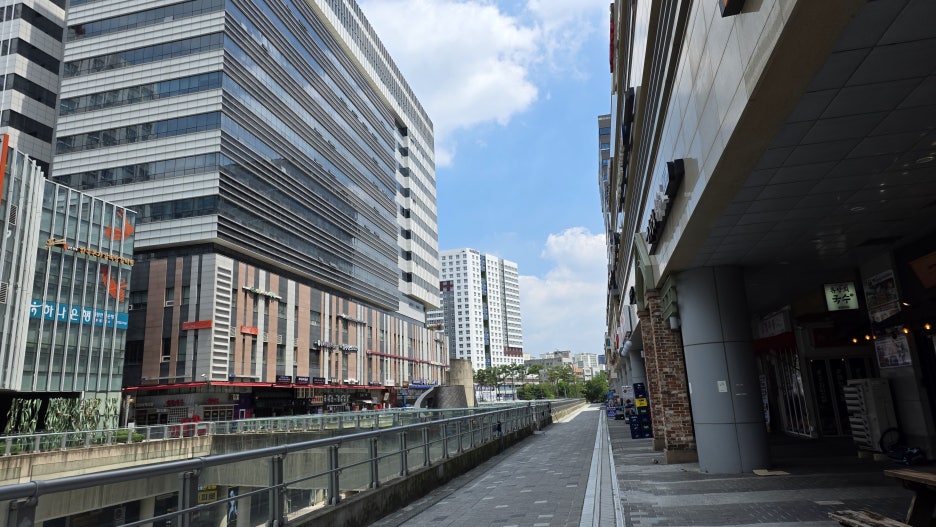
It is about 300 m from Munjeong Station Exit 3, and you can get there along an underground passage, so it is easy to reach whatever the weather. Not having to walk long under the blazing sun on a hot day was more welcome than I expected.
The Munjeong Station area is packed with office buildings, so I got the impression that office workers might pour in all at once during weekday lunch. If you can avoid the lunch peak, you should be able to eat a bit more leisurely.
If you drive, you can use the building's underground parking. However, the free parking time you get may differ depending on when you visit, so the most accurate thing is to check at the restaurant after your meal.
The route runs straight from the station along the underground passage into the arcade, so you hardly spend any time finding your way. For office workers with a tight lunch hour, this simple route alone will probably feel like a big plus.
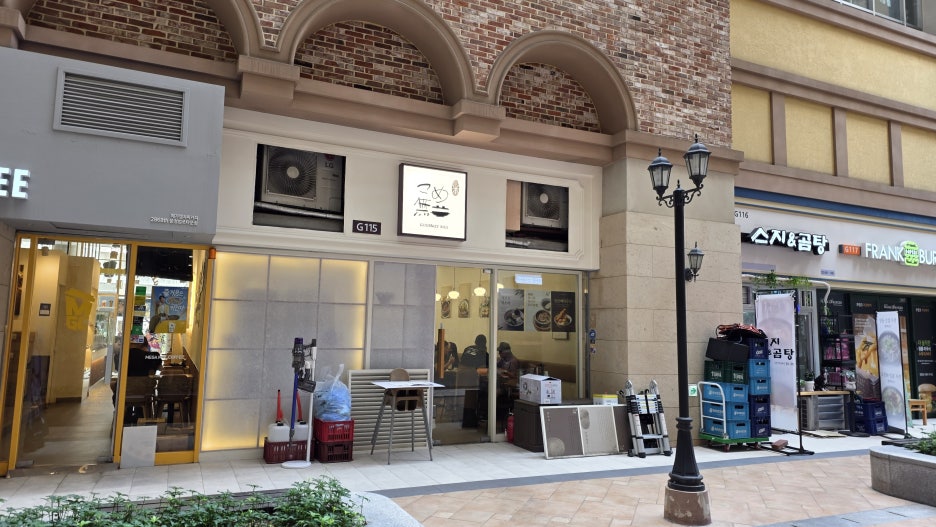
An ivory front with arched brick details, next to Mega Coffee in G115
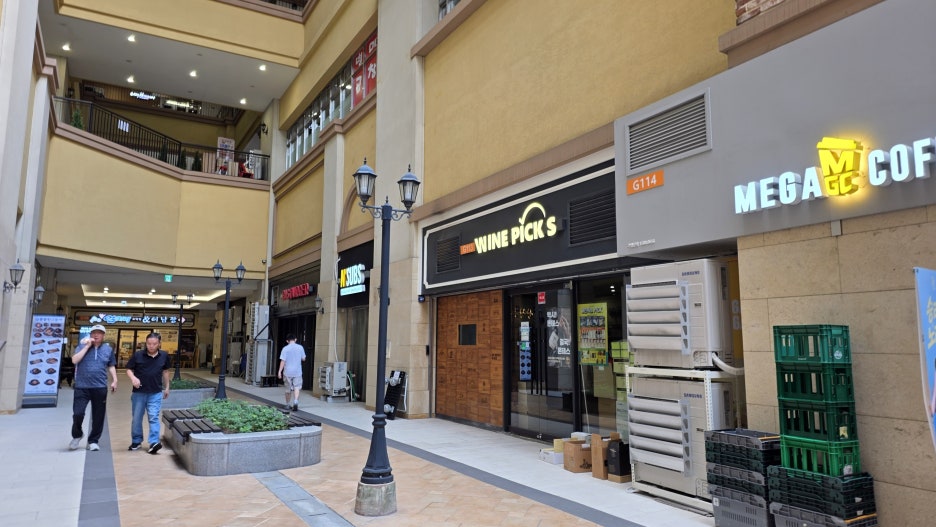
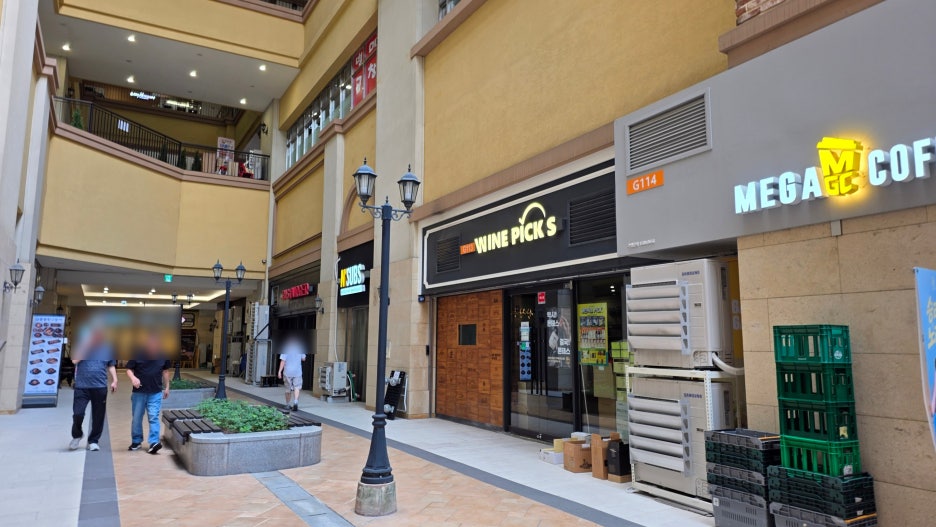
Walking along the Terra Tower arcade corridor, you come to Gomemui at Unit G115. The bright ivory front with arched brick details made it feel a bit different from the many similar-looking shops in the arcade.
The sign carries a large Gomemui logo written in Chinese characters, so it is easy to spot from a distance. Mega Coffee is right next door, so first-timers can use Mega Coffee as a landmark and will not get lost.
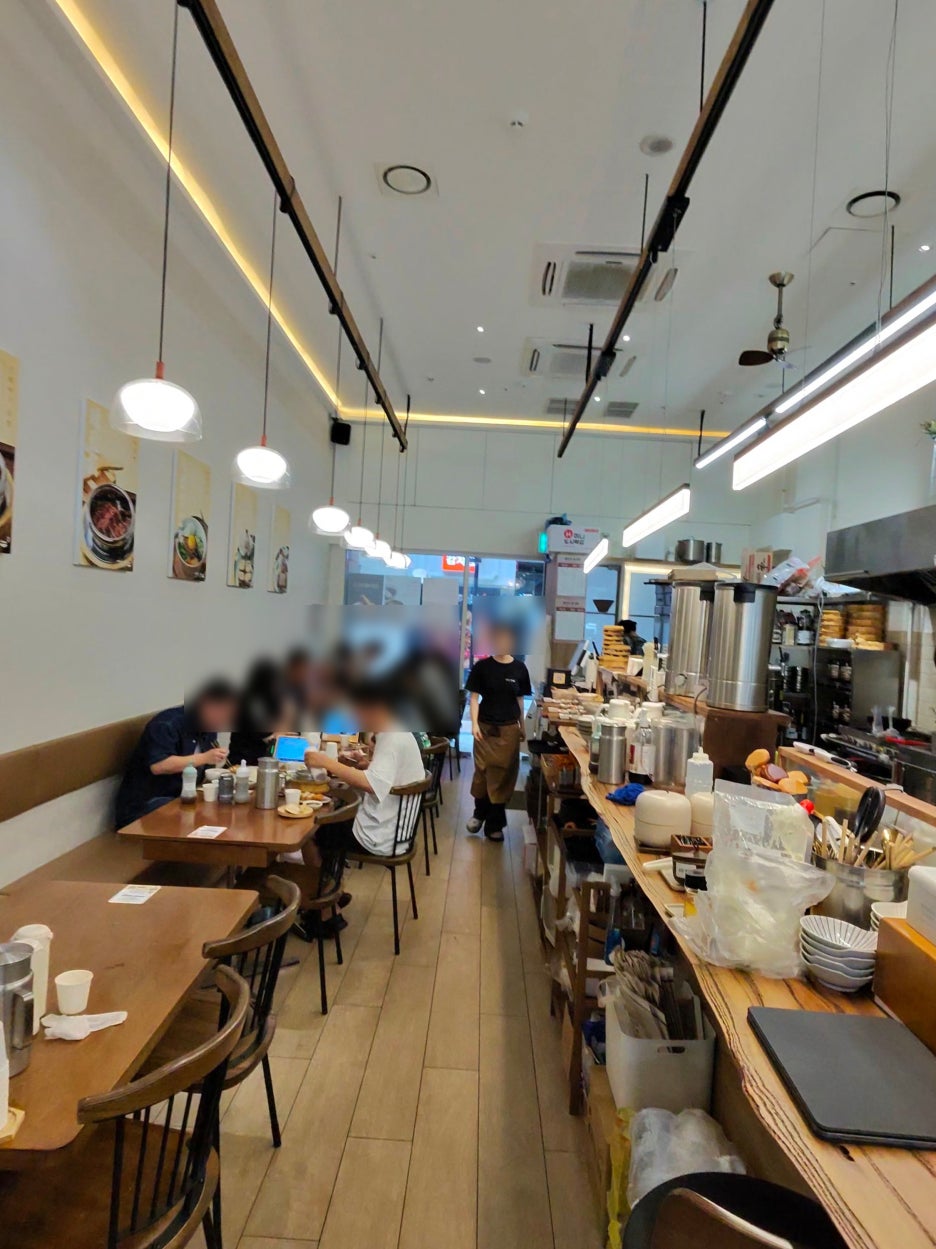
The entrance itself is not very wide, but you can see into the restaurant to some degree from outside, so it did not feel cramped. Being able to get a sense of the seating before going in was nice too.
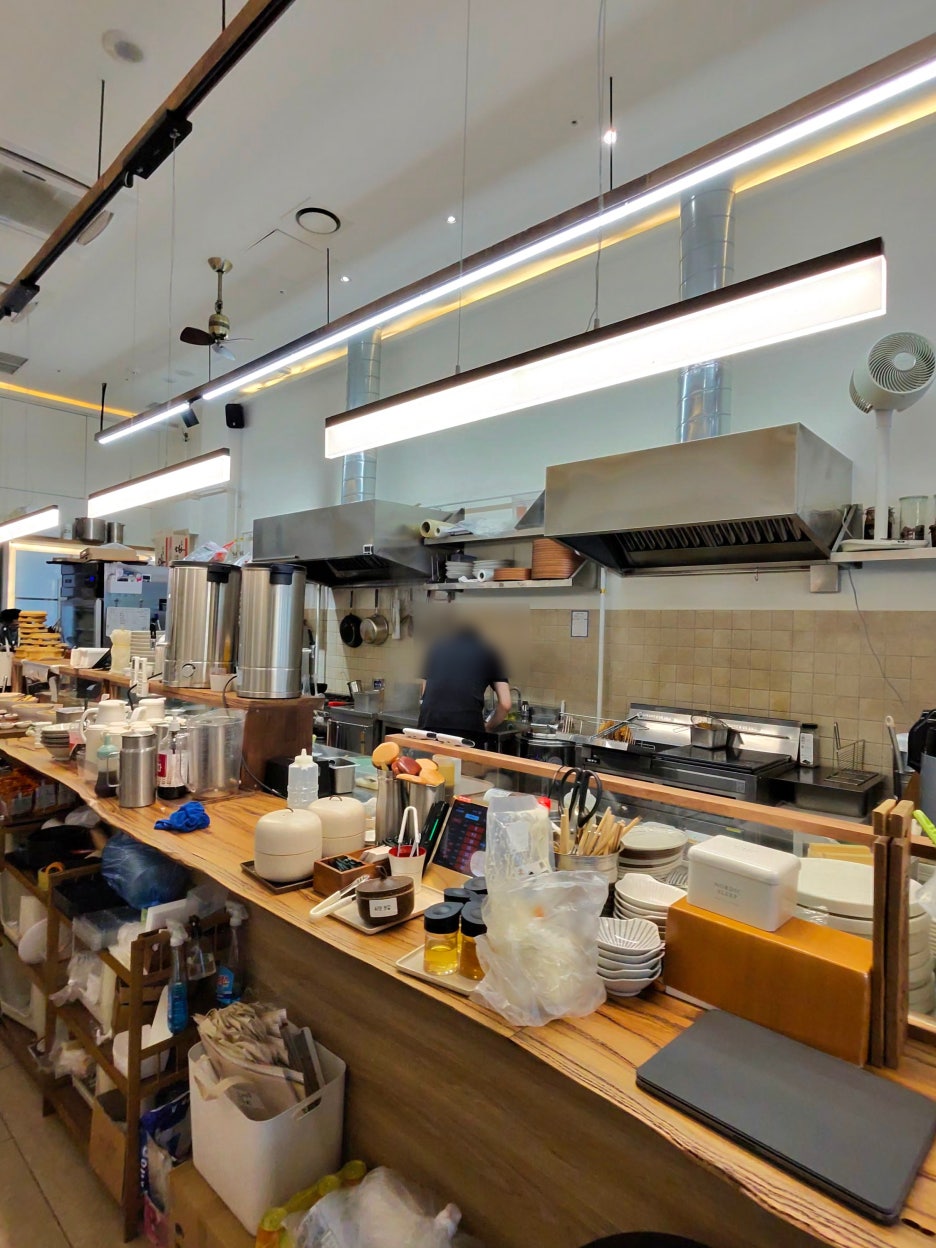
Overall it has a clean, no-frills Japanese restaurant feel. It suits both a solo meal at Munjeong Station and an office lunch with colleagues.
Tablet ordering, the menu, and prices as of my visit
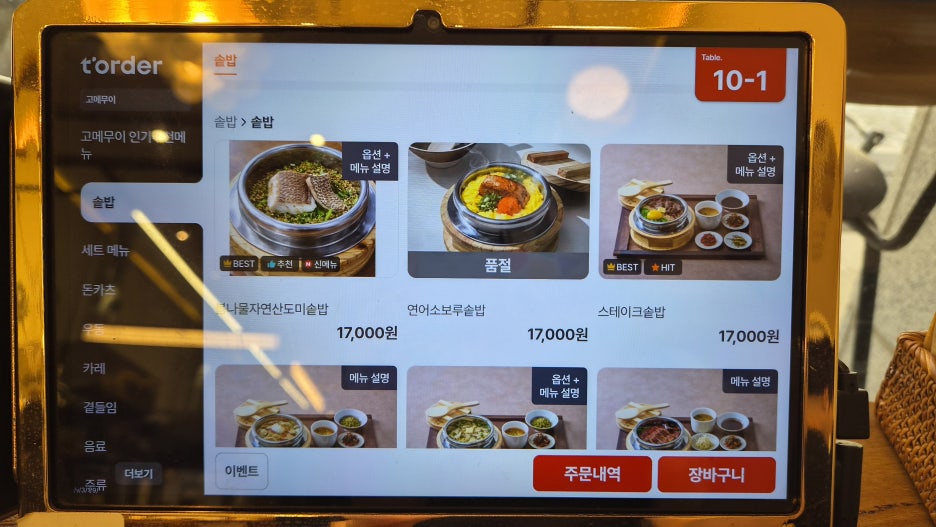
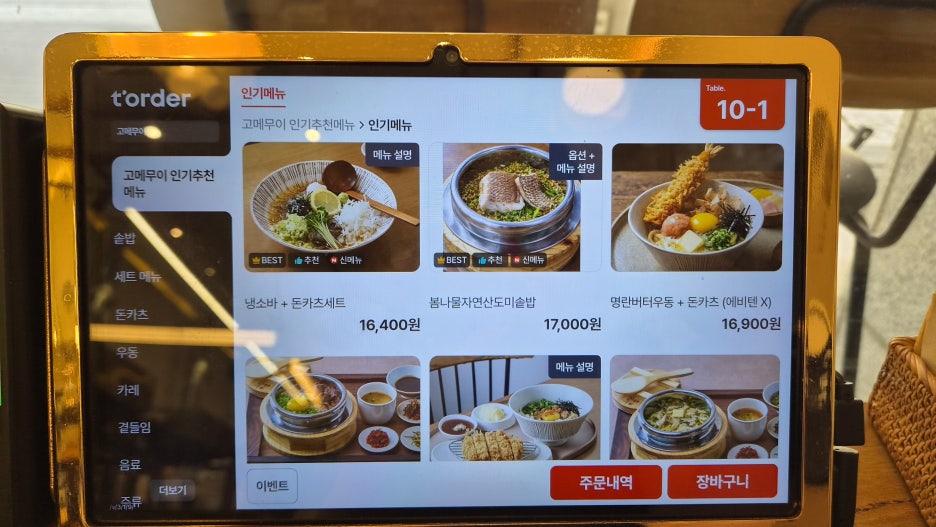
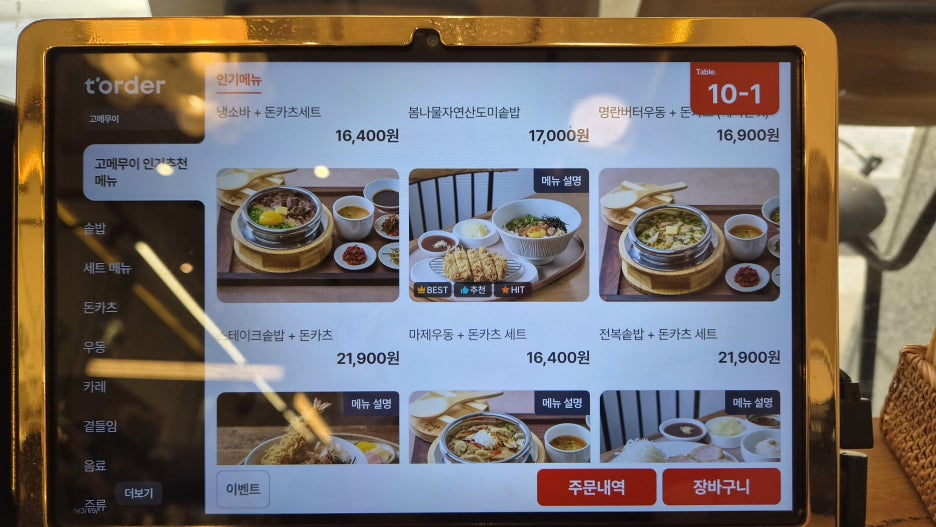
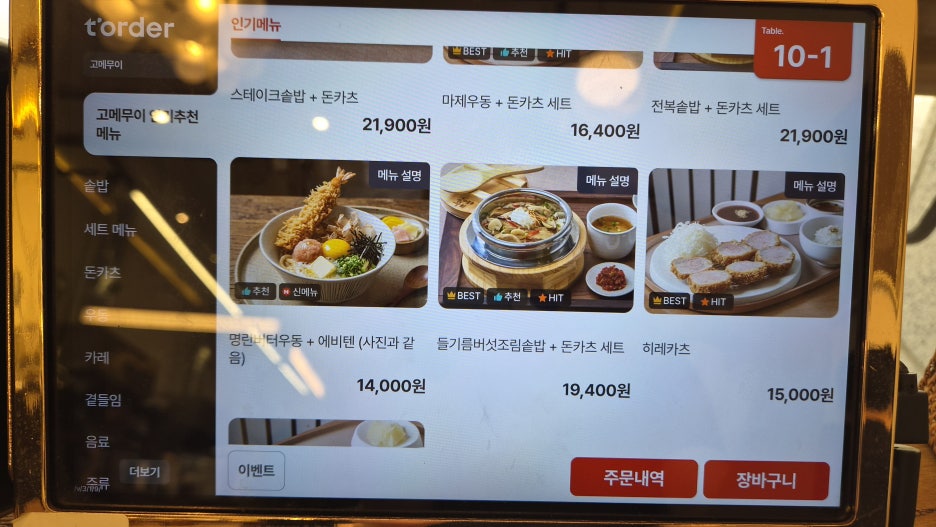
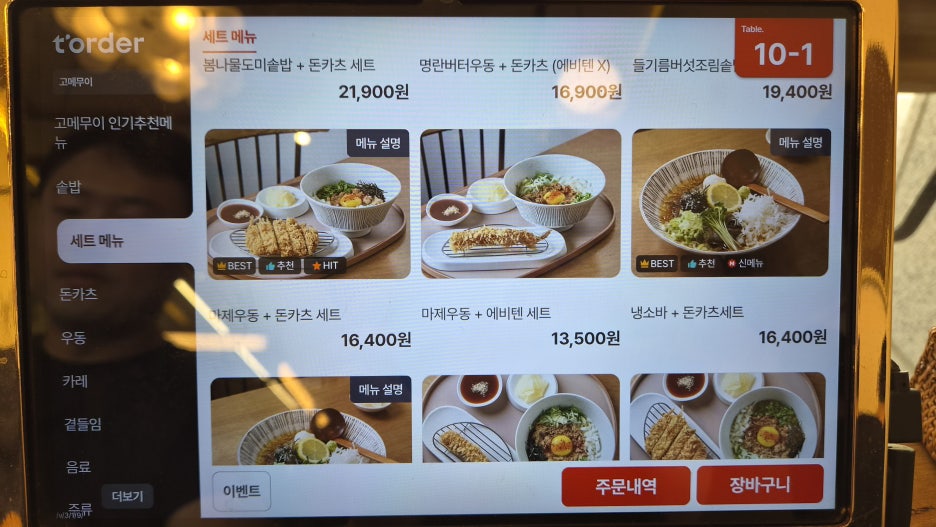
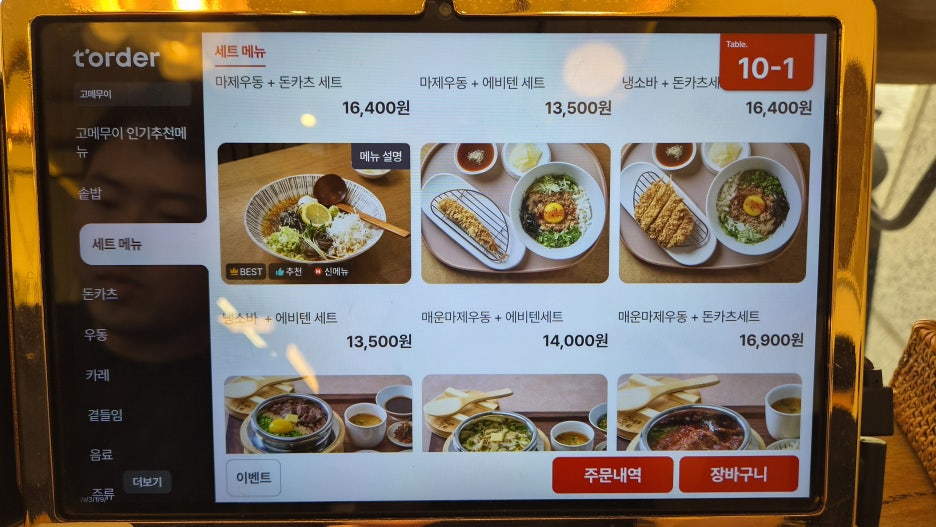
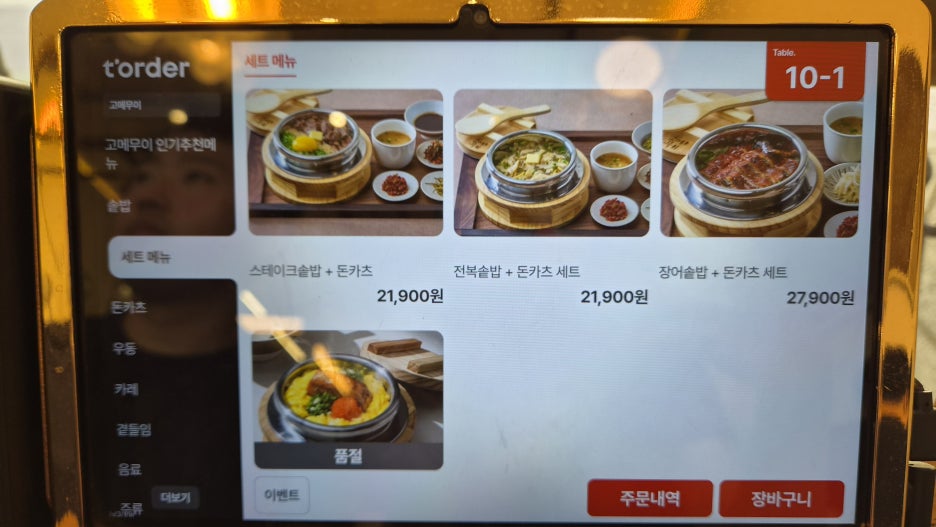
You order from the tablet on each table. Menu photos and prices are shown together, so even first-time visitors can flip through the screens and choose fairly easily.
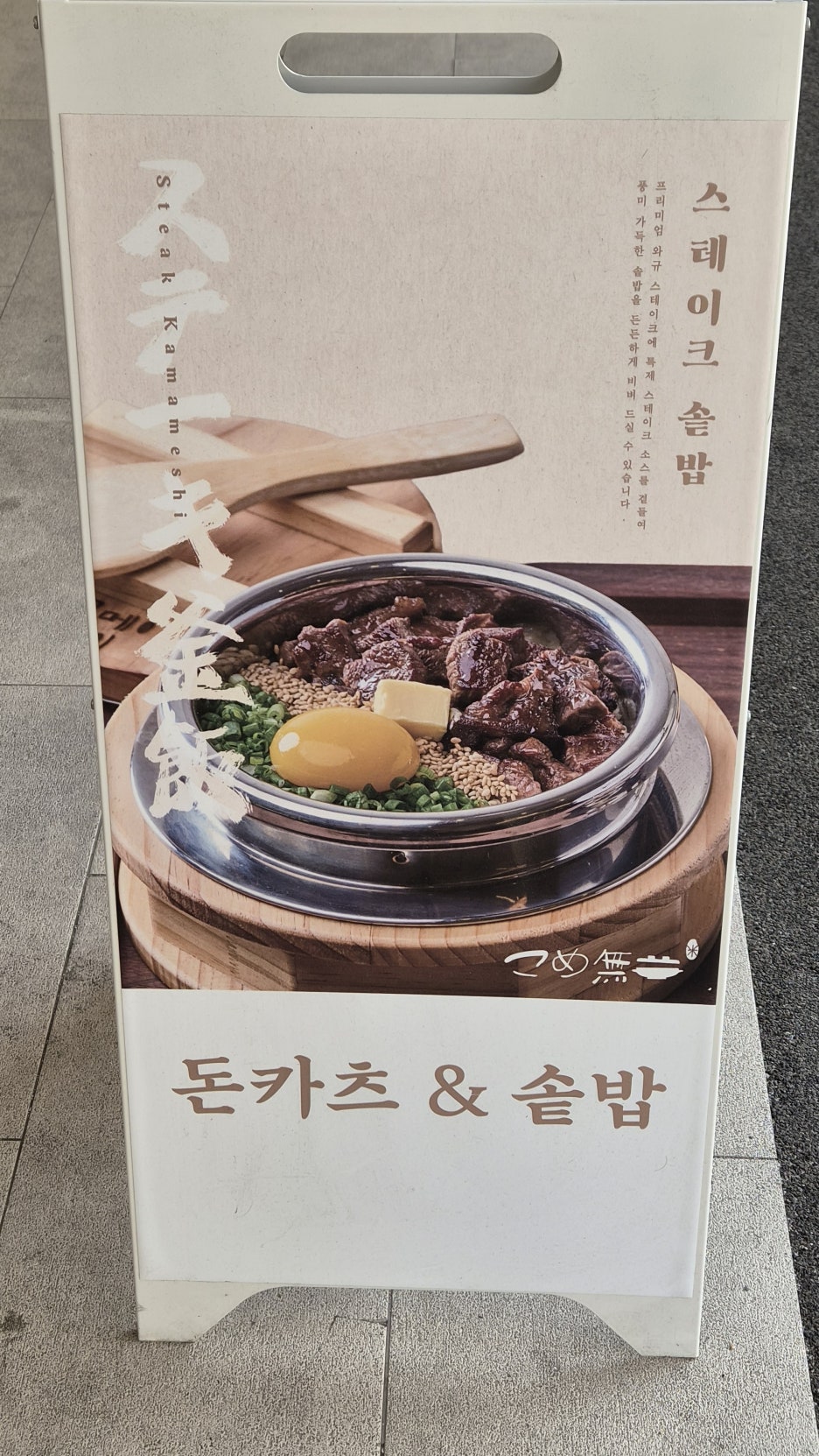
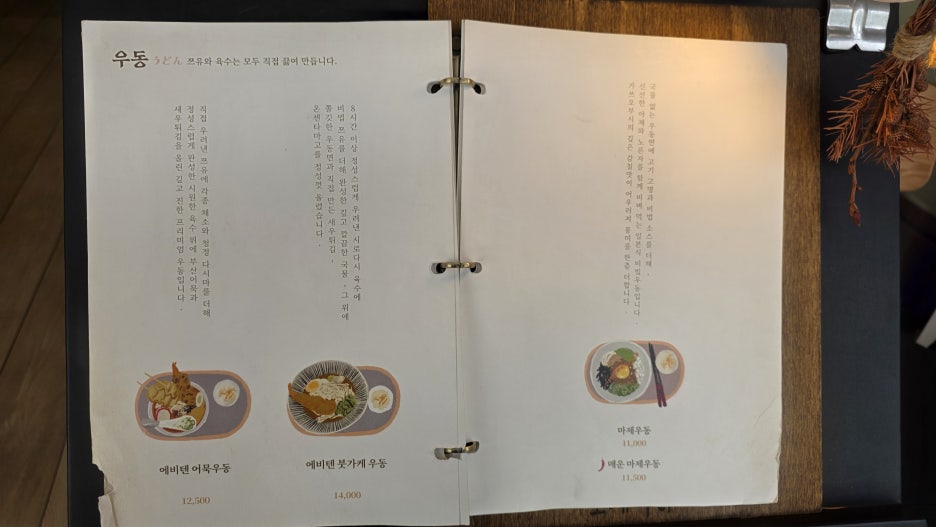
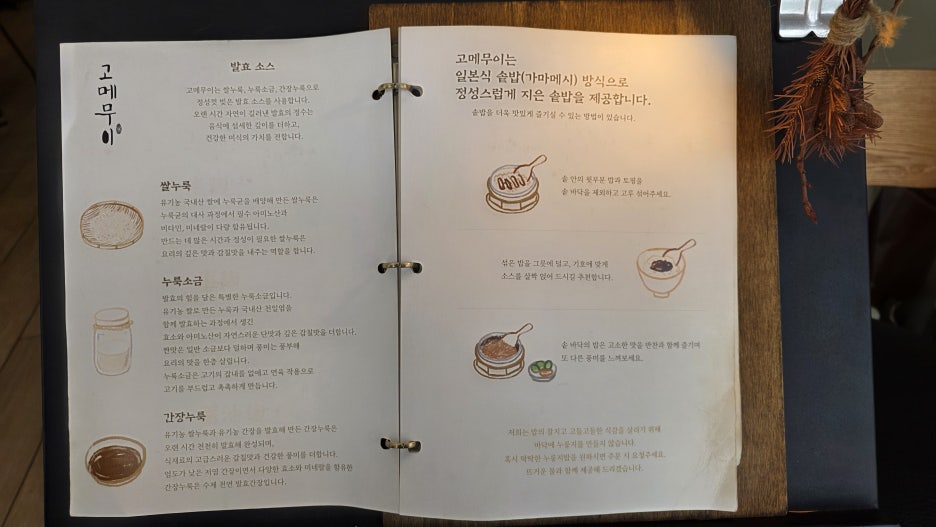
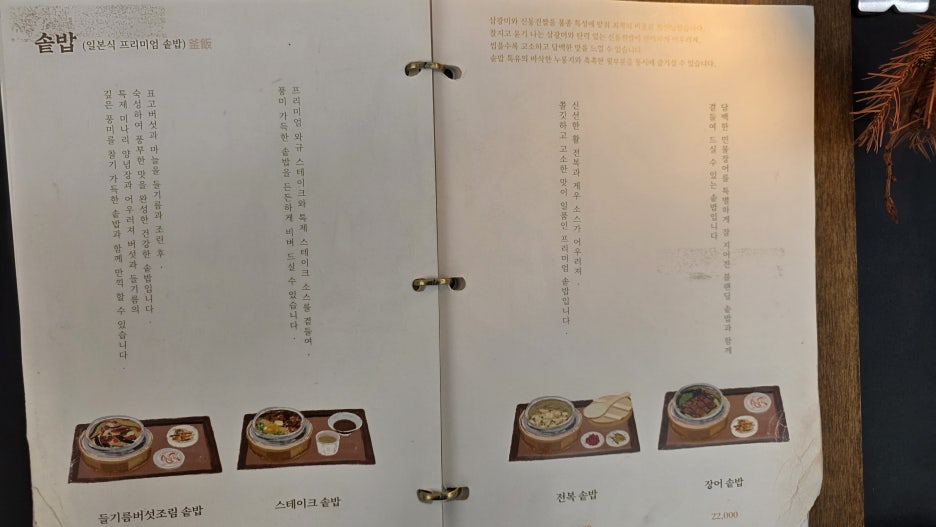
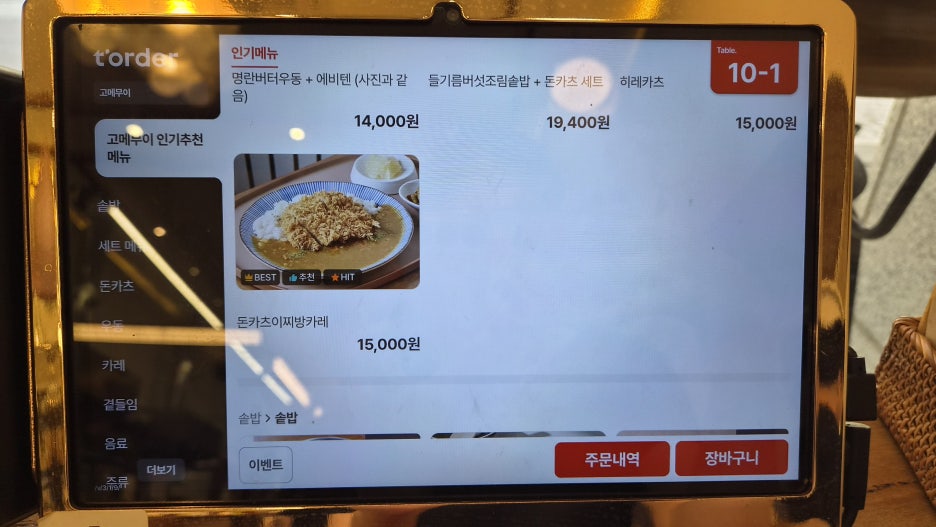
The menu is broadly divided into sotbap (stone-pot rice), tonkatsu, udon, cold soba and curry. Just among the sotbap there was quite a range, including a spring greens and wild sea bream sotbap, a steak sotbap, an abalone sotbap and a perilla-oil braised mushroom sotbap.
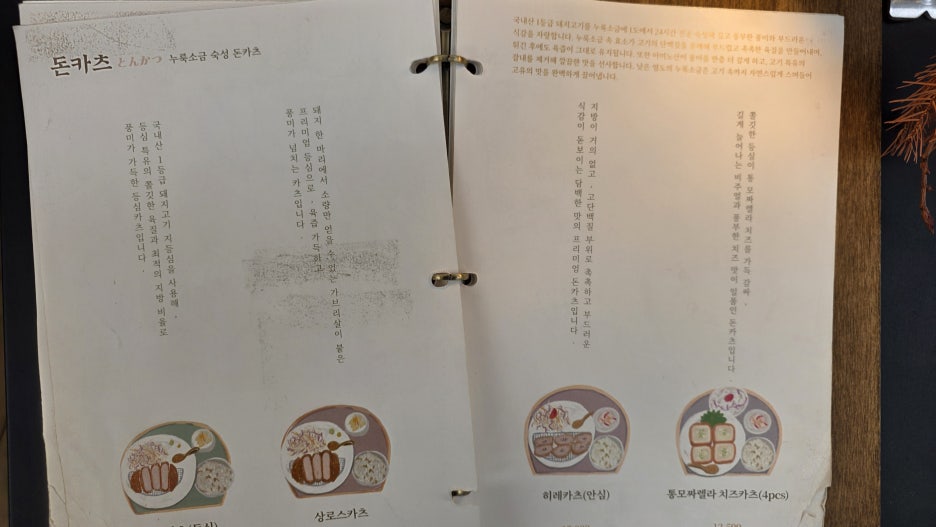
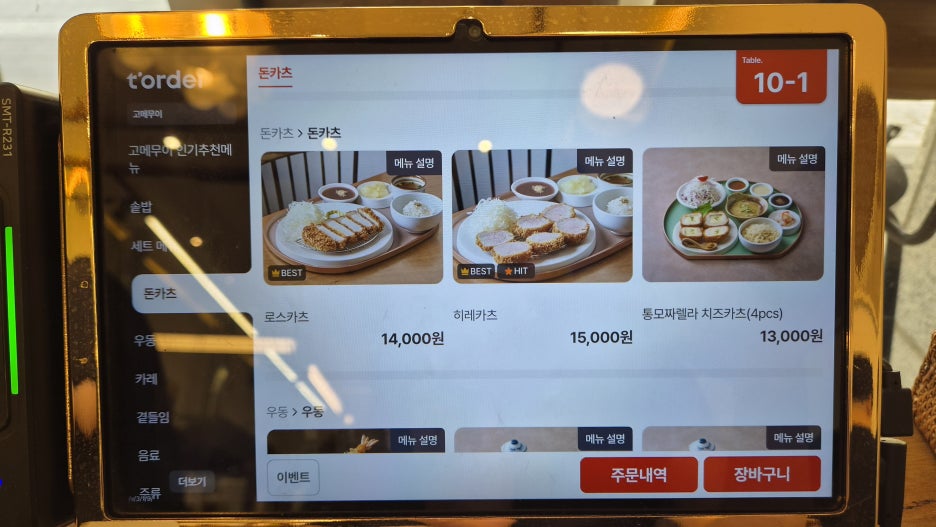
For tonkatsu, rosu katsu and hire katsu (pork tenderloin cutlet) are available on their own, and there are also set menus where katsu comes with cold soba or udon. In other words, they have a good lineup for people who want both noodles and something fried.
The main prices I checked from the tablet menu photos are as follows (as of my visit): cold soba and katsu set 16,400 won, rosu katsu 14,000 won, hire katsu 15,000 won, mazeudon and katsu set 16,400 won, steak sotbap and katsu 21,900 won, and abalone sotbap and katsu set 21,900 won.
We ordered the cold soba and katsu set, a rosu katsu and a drink, and paid 32,900 won in total. If you want cold soba but cannot give up the katsu either, I think the set menu is the safest choice without having to deliberate.
Looking at the prices side by side, the cold soba and katsu set and the mazeudon and katsu set are both 16,400 won, and the sotbap plus katsu sets sit a step higher at 21,900 won. Since the rosu katsu on its own is 14,000 won, choosing a noodle set means paying 2,400 won more to get a bowl of cold soba as well, so I felt it was not much of a stretch for what you get.
Cold soba and katsu set: icy broth and springy buckwheat noodles
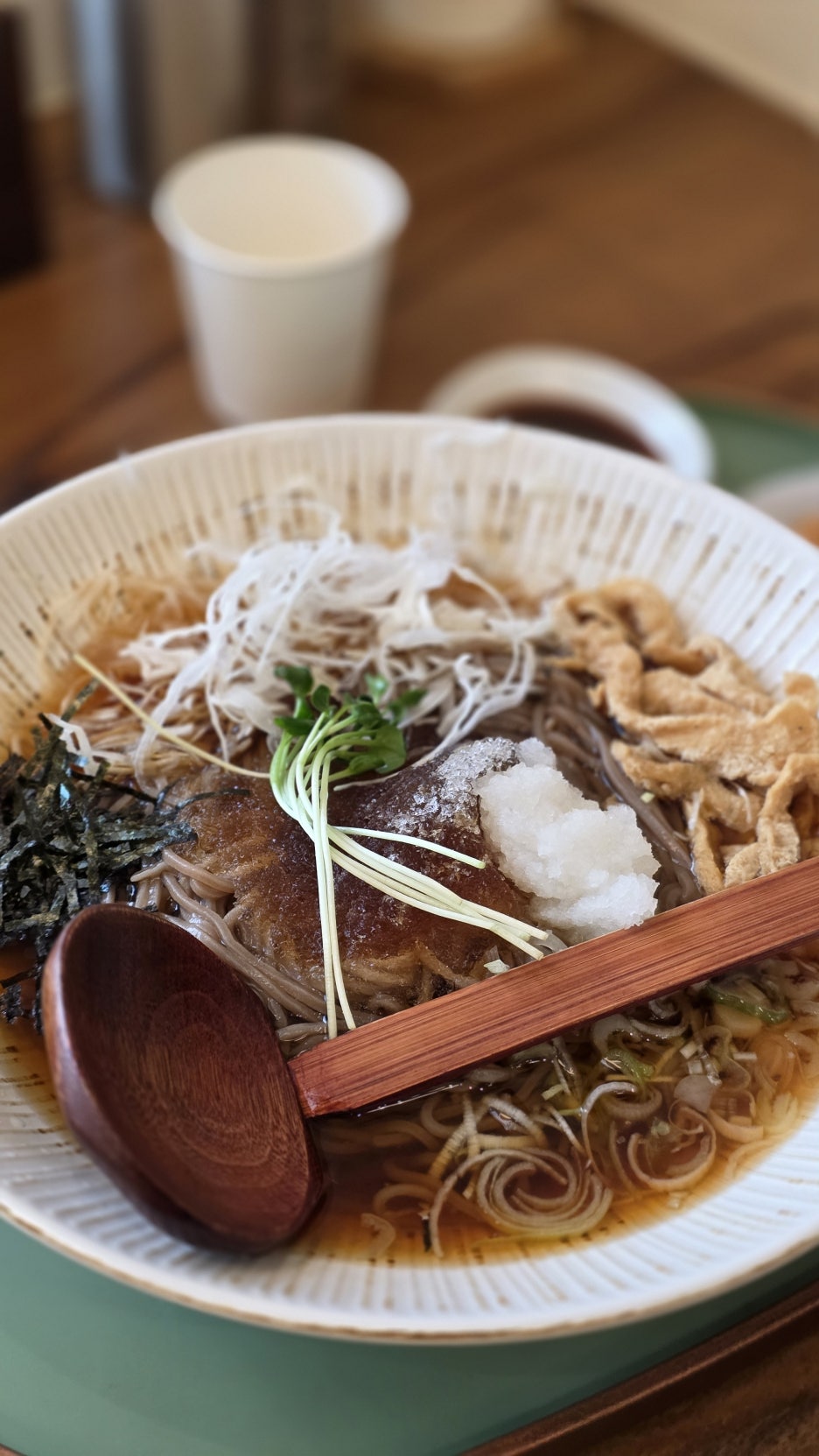
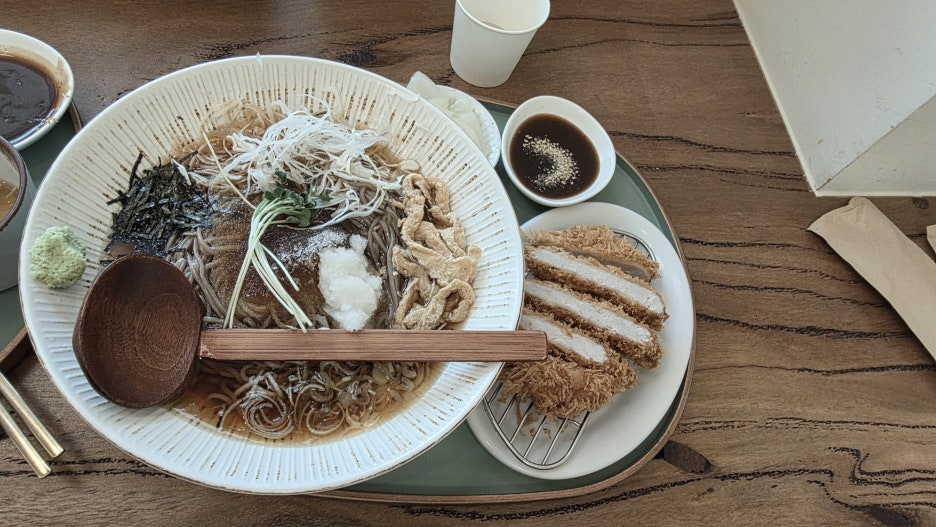
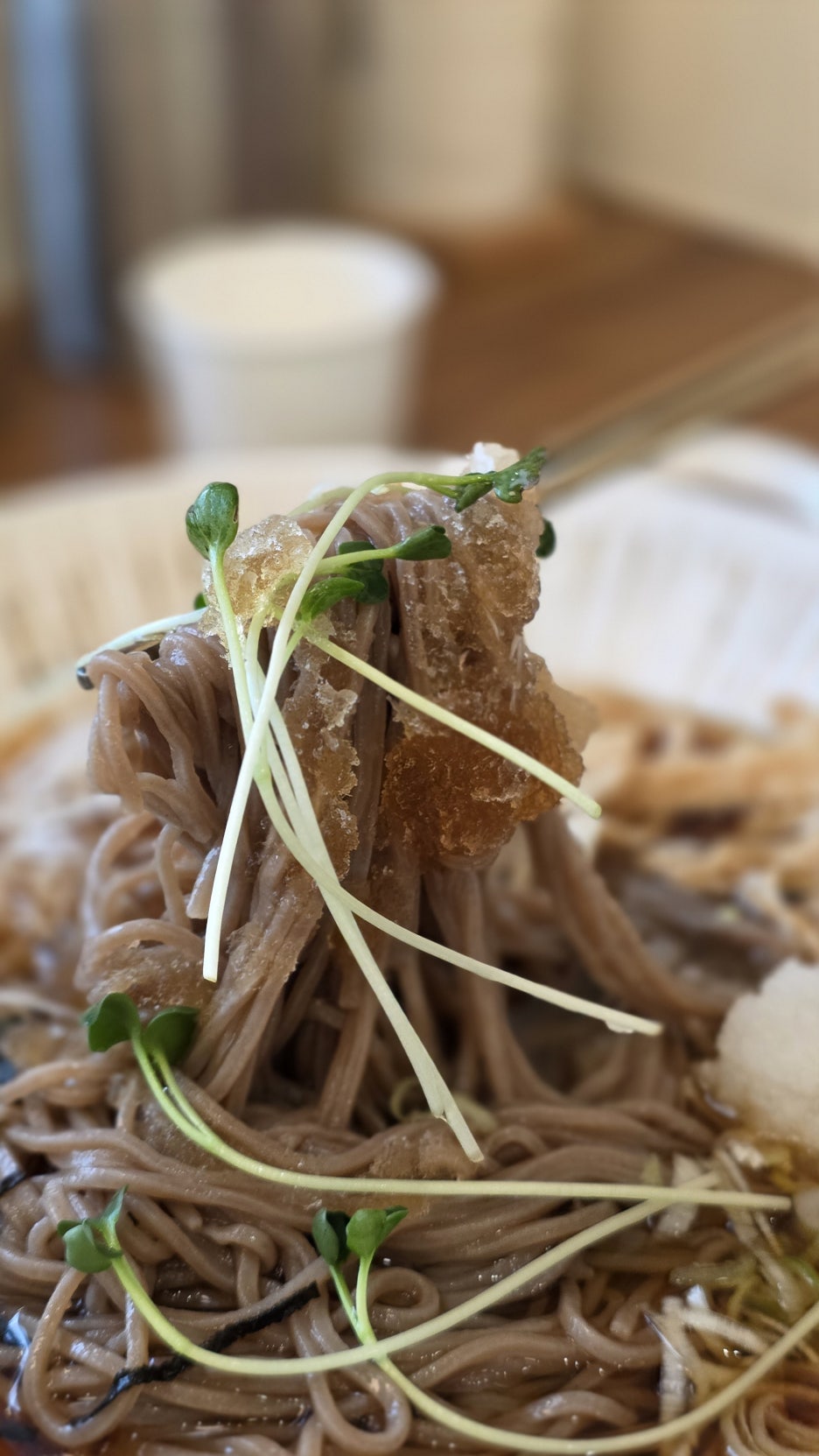
The cold soba came first in a big bowl. Dark buckwheat noodles were heaped with radish sprouts, julienned radish, seaweed flakes and fried tofu, so it looked refreshing at a glance.
Above all, there was plenty of slushy ice in the broth. Thanks to that, it stayed cold not just for the first few bites but until I had nearly emptied the bowl.
When you lift the noodles, the cold broth clings between the strands. The buckwheat noodles were not overly soft and kept a nice springiness, so they slid down easily.
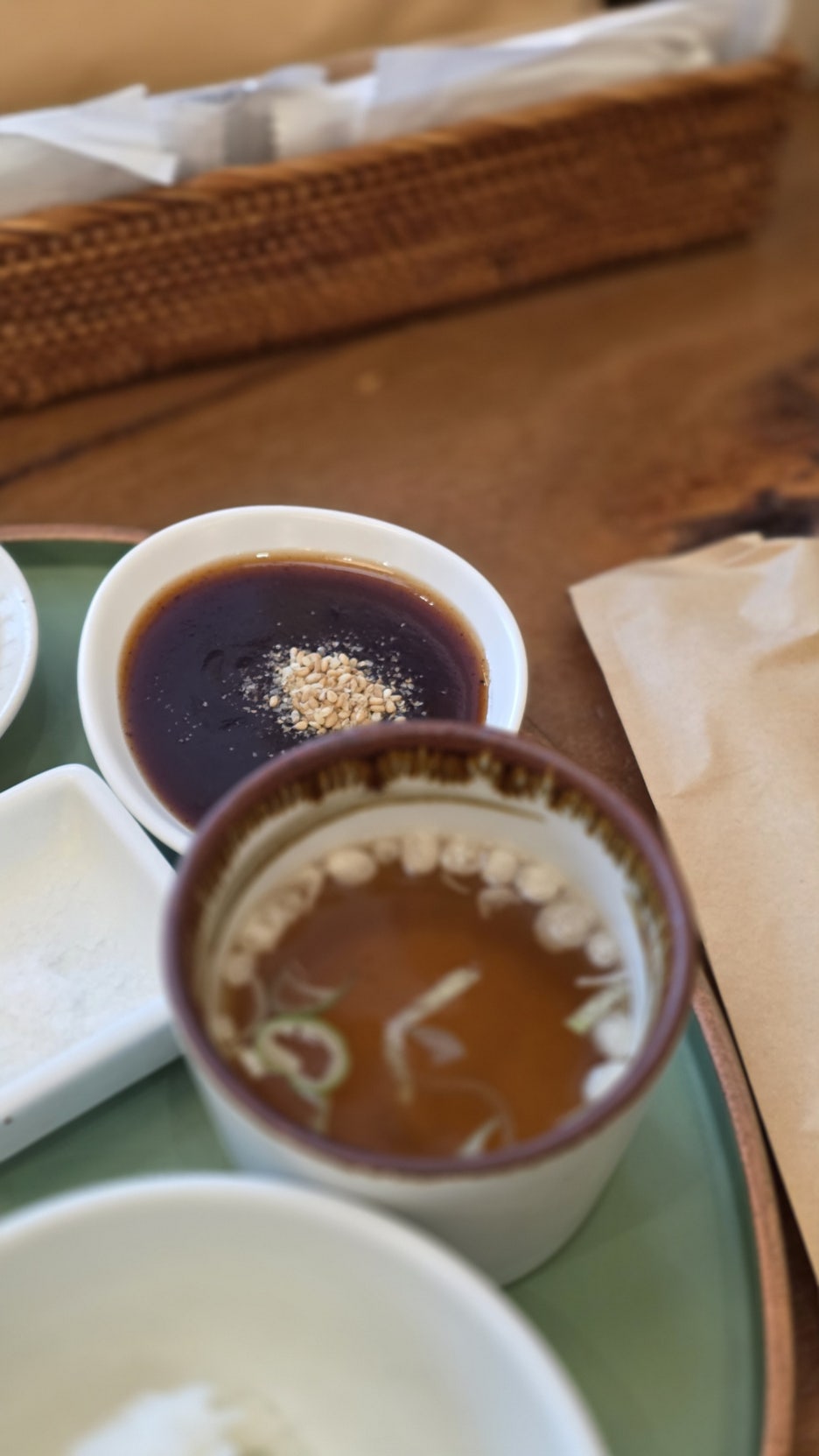
The broth is not the punchy kind that pushes saltiness or sweetness. It was closer to a style where the aroma of katsuobushi (bonito flakes) and savory umami carry through cleanly from start to finish.
Stirring the grated radish on top into the broth made it taste even fresher. Adding the fried tofu and seaweed flakes brought a nutty flavor, and the textures felt much more varied than an ordinary cold soba.
I also liked how the broth gradually mellowed as the ice slowly melted. I could drink it to the last sip without it feeling heavy, and if you are looking for a cool lunch at Munjeong Station on a hot day, it is a taste you will think about again.
Looking back, the biggest strength of this cold soba was that the toppings like grated radish, fried tofu and seaweed flakes did not each go their own way; they blended with the cold broth and built up the texture and flavor layer by layer. None of the noodles, broth or toppings stood out on its own; they meshed evenly.
Rosu katsu: a crumb with real texture and thick pork loin
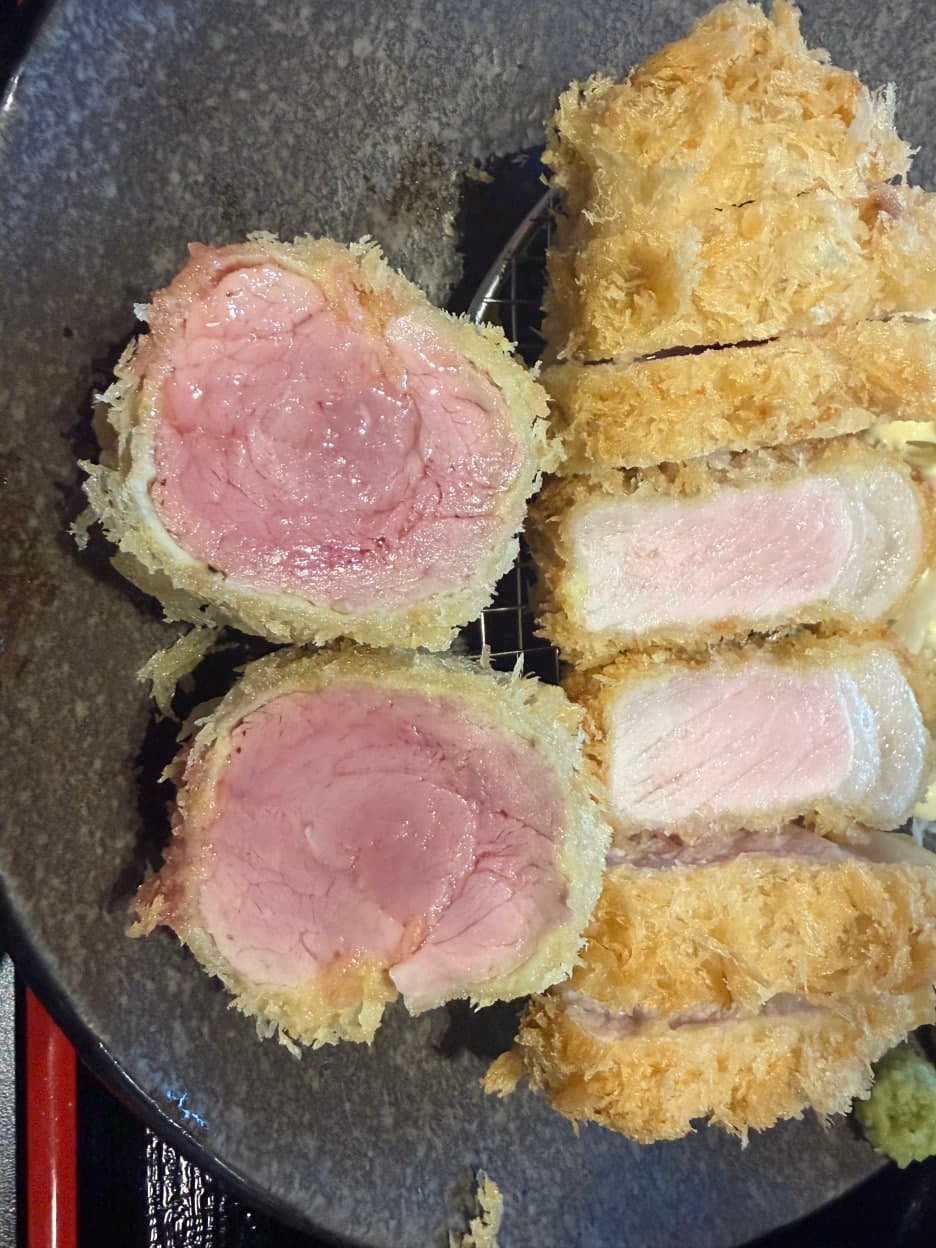
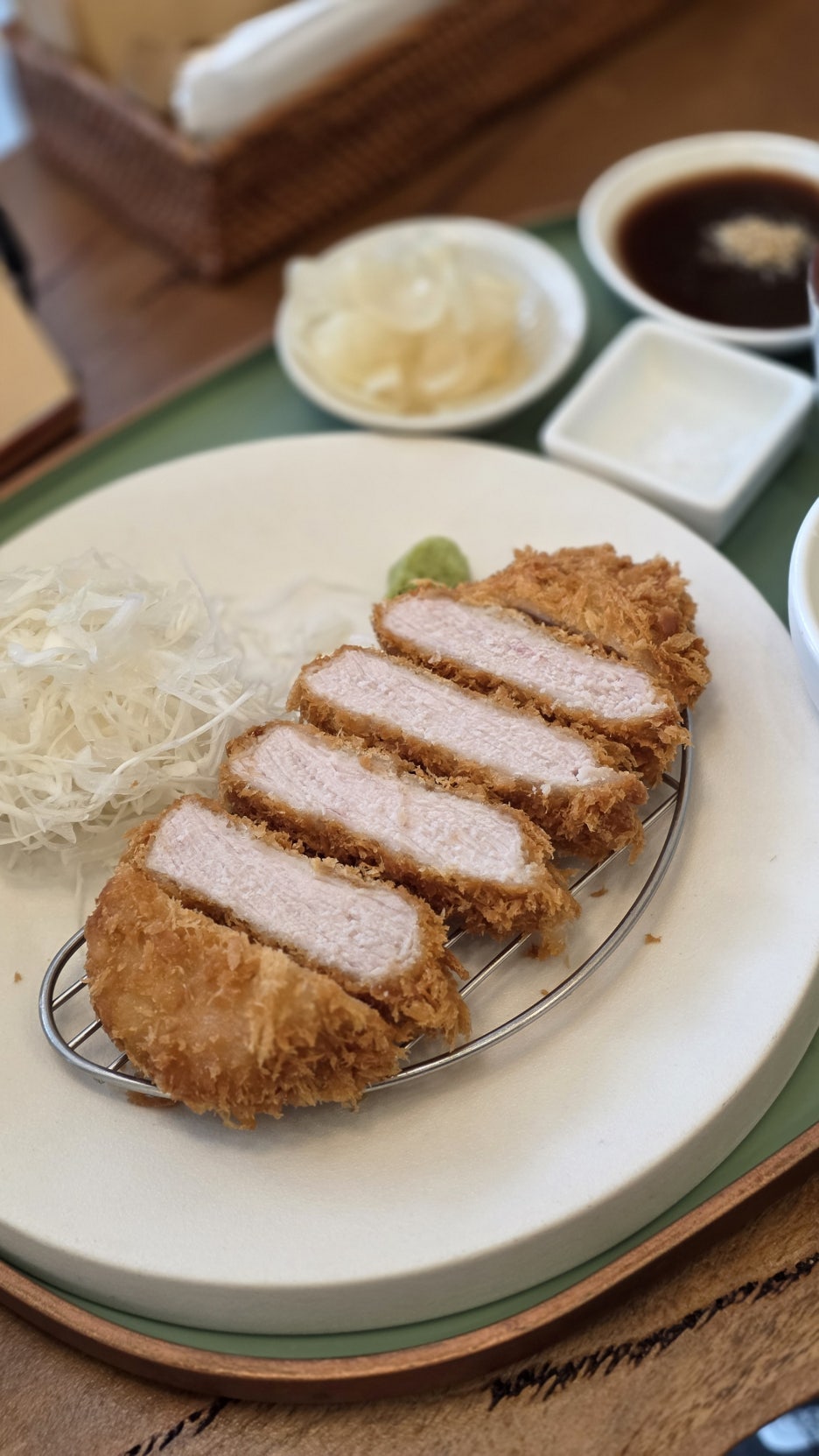
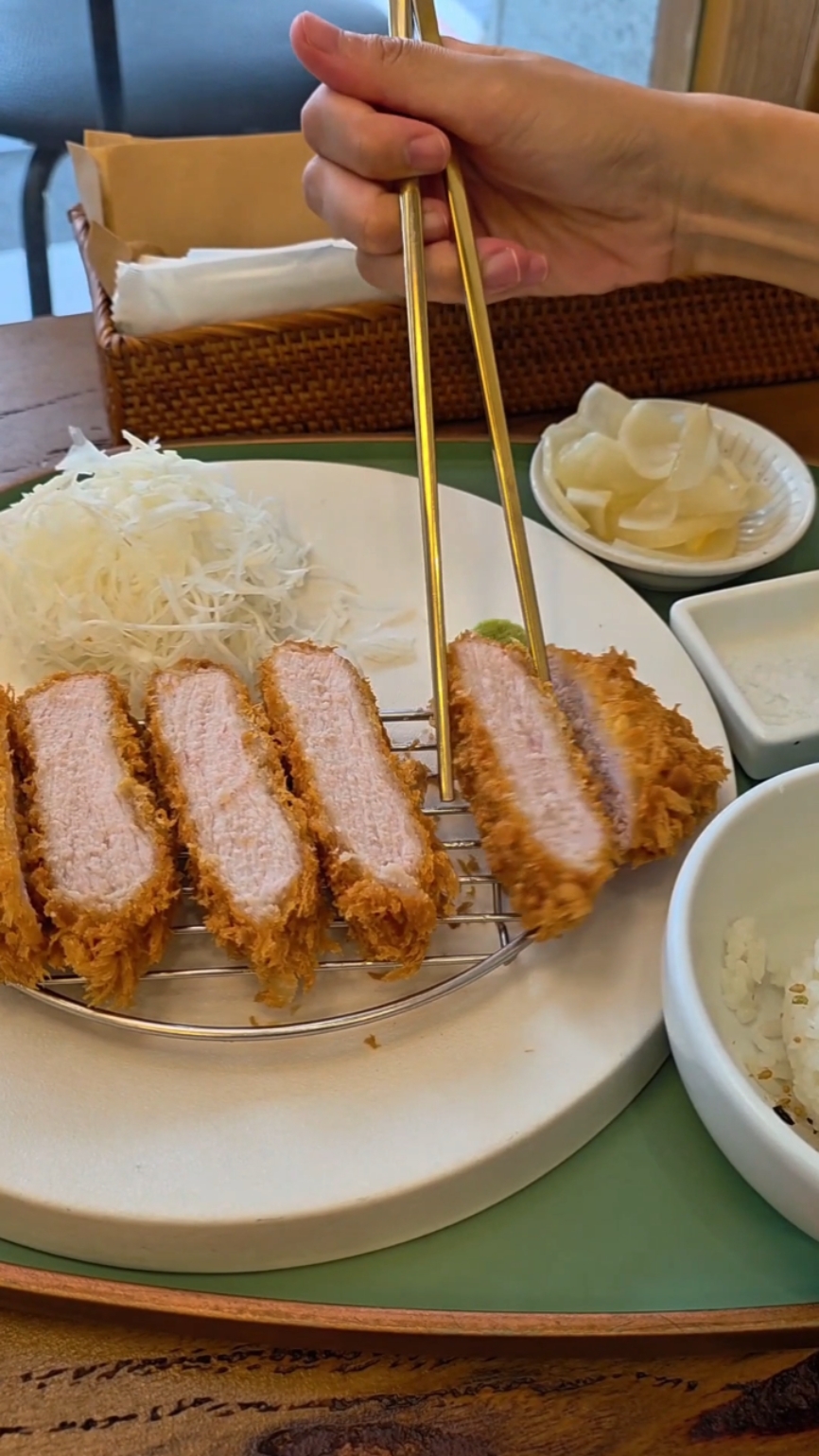
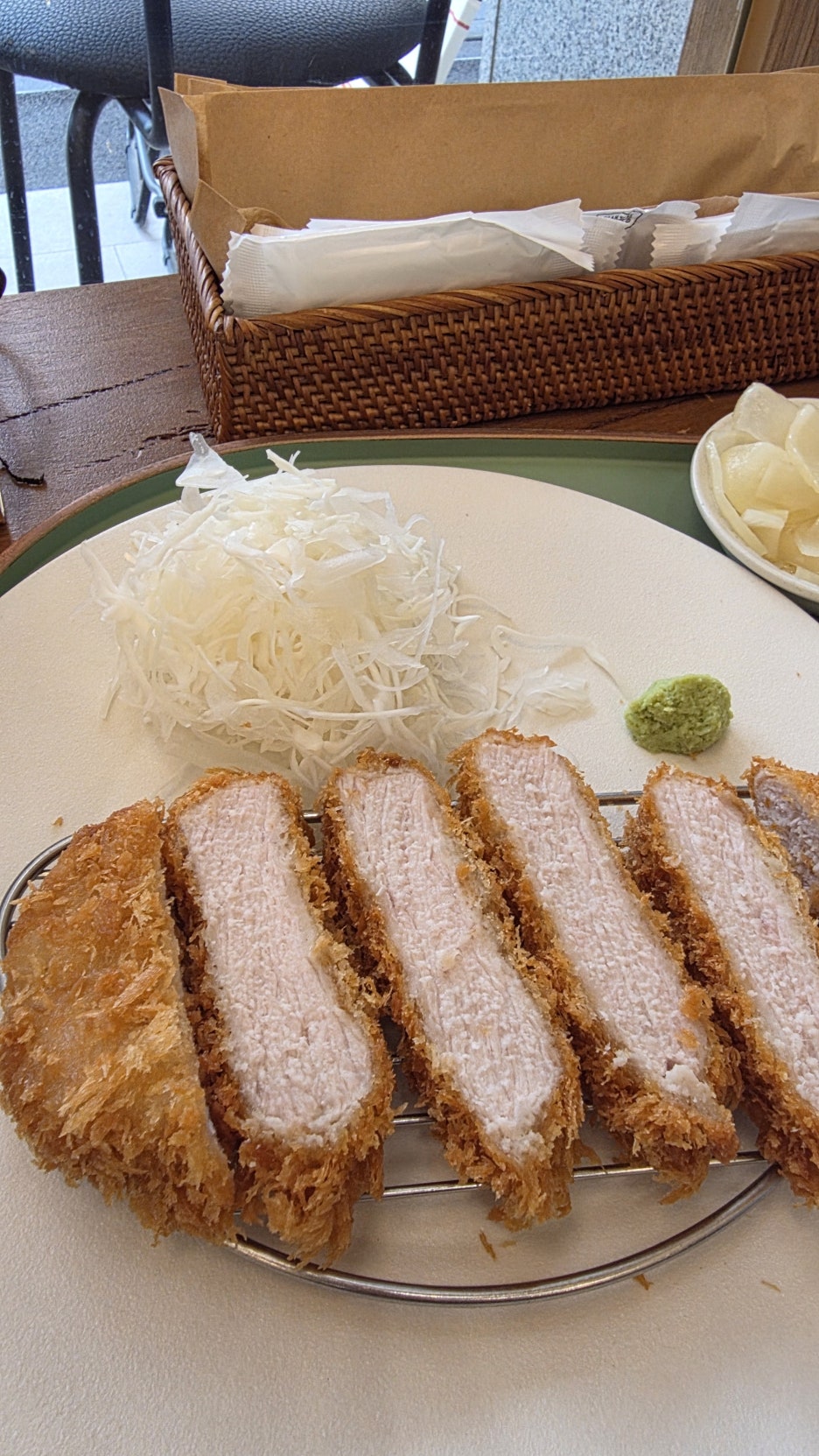
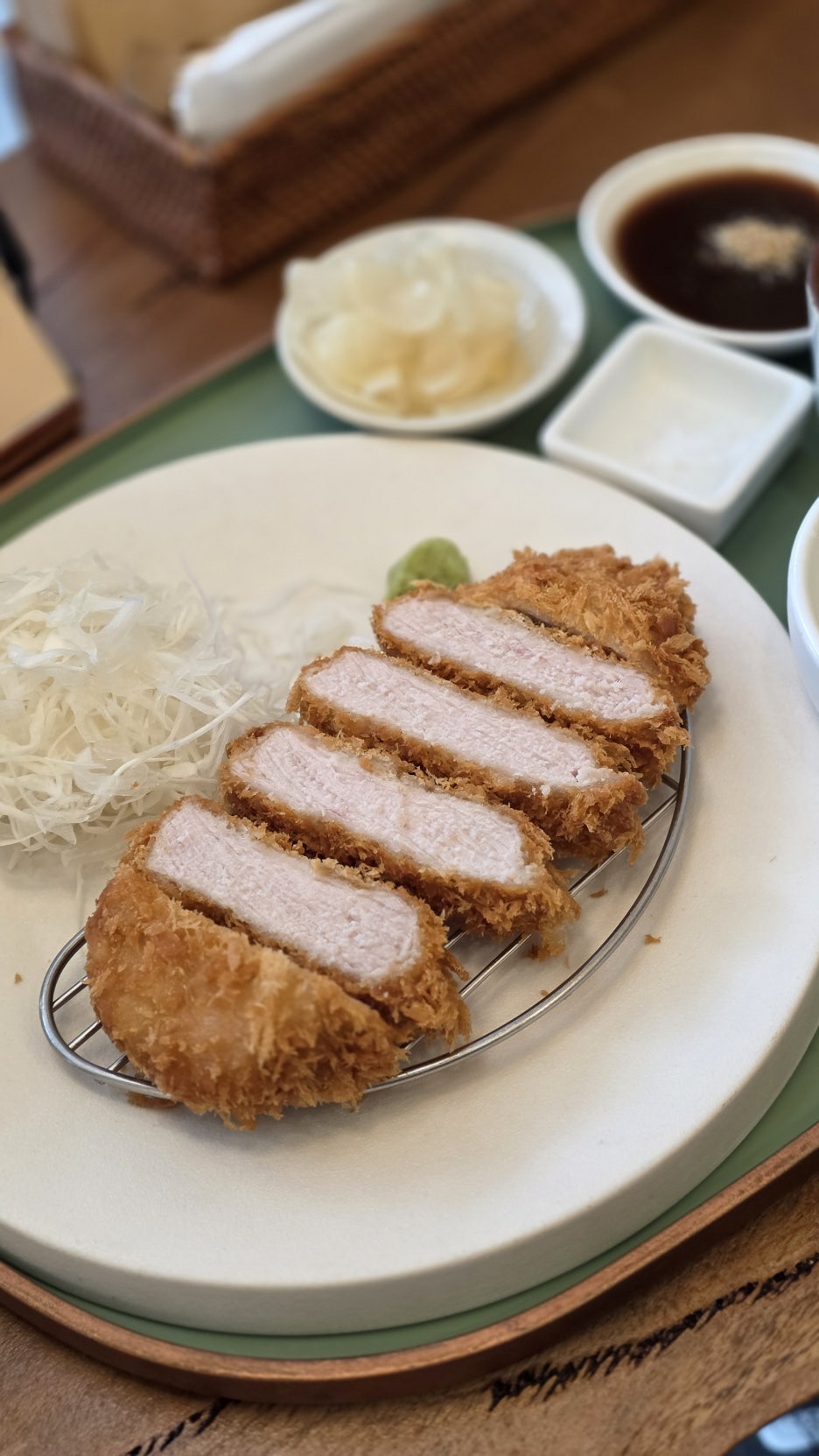
The rosu katsu came with shredded cabbage, wasabi and sauce. The large cutlet was sliced into even pieces, and the cross-section alone looked very appetizing.
The breading was not the thick, clumped style; it had distinct texture and crumbled crisply. The loin inside was thick but not tough, and the more I chewed, the more clean, gentle juices came through.
The breading and the meat stuck together well rather than separating, so each bite had a good balance of crunch and tenderness. It impressed me that the coating stayed put even on such a thick piece of meat.
I liked starting with a few pieces topped with a little salt or wasabi to taste the meat itself, then dipping in tonkatsu sauce after that. In particular, the sharp kick of the wasabi cut through the richness of the katsu, which I personally thought was a great match.
Picking at the cabbage served alongside now and then refreshed my mouth, so I could eat to the last piece without getting tired of it.
I also liked being able to switch the flavor among salt, wasabi and tonkatsu sauce. Even on the same plate of rosu katsu, the impression changed from clean to fresh to rich depending on what you paired it with, so it never got monotonous.
Cold noodles and hot katsu, each filling in for the other
Cold soba on its own is cool and clean but can feel a little light as a full meal. On the other hand, eating only katsu tends to feel heavy toward the end.
Ordering both at Gomemui, I found they made up for each other's shortcomings. Taking a bite of crispy katsu and then some cold soba refreshes your mouth right away.
Then going back to the warm katsu made the savory flavor of the meat stand out even more. The rhythm of moving between cold and hot, clean and rich, kept the whole meal from ever getting dull.
Adding a rosu katsu on its own to the cold soba and katsu set made a generous, filling spread for two people to share. If two of you visit, I would recommend this exact combination. One person focused on the set's soba and katsu and the other on the rosu katsu, and by sharing from each other's plates along the way, we got to enjoy the best of both.
Wrap-up: a Japanese meal at Munjeong Station with lots of menu options
What I liked most about Gomemui Songpa Munjeong was the wide range of choices, from sotbap to tonkatsu, udon and cold soba. Even if a group goes and everyone wants something different, it should be easy to agree.
The cold soba we had stayed cold to the end thanks to all the slushy ice, and the rosu katsu stood out for the balance of thick meat and crispy breading. It should also suit anyone looking for an office lunch or a solo meal spot at Munjeong Station.
Especially if you want cold soba and katsu at once on a hot day, I recommend ordering a set. Next time I would like to try a sotbap with seasonal ingredients or the mazeudon. It is a good place to stop by in Munjeong-dong, Songpa, on a day when you want a clean Japanese meal.
This post was written after being provided a meal by the restaurant. The menu ratings and impressions are exactly how the food tasted to me.
Check opening hours and closing days on the map before you go.
Contains affiliate links. Your price stays the same.
This box contains affiliate links. If you book through them, Mudung may earn a commission at no extra cost to you.
 Read nextSame neighborhoodGangnam Conveyor Belt Sushi near Seolleung: Prices, Parking₩40,000Read →
 Read nextSame neighborhoodHitsumabushi near Yeoksam Station: Top-Grade Eel, Revisited₩25,000Read →