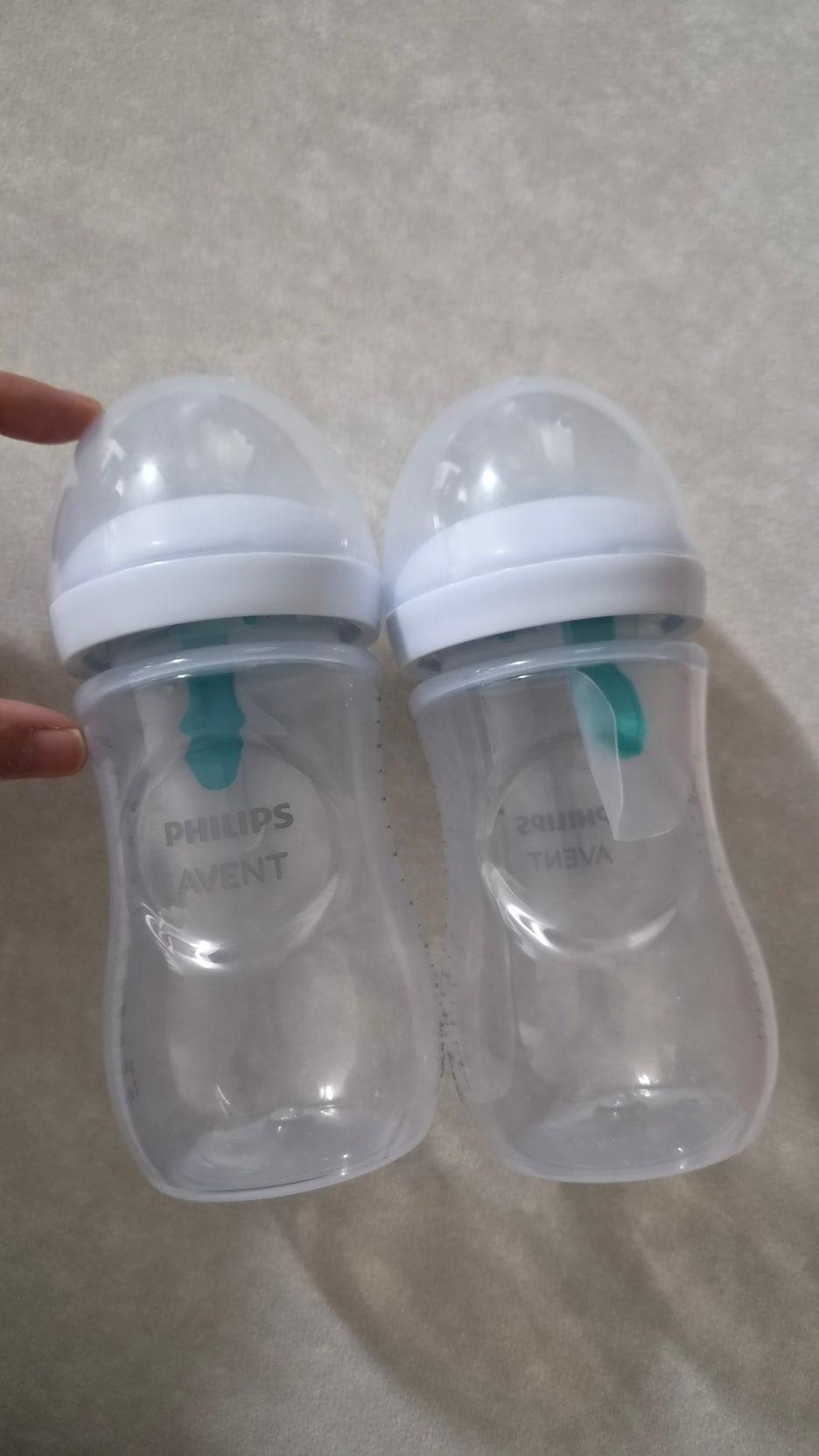
As my baby started drinking more, we switched our Philips Avent bottles to the Natural Response 260ml (3 to 6 months, flow stage 3 nipple). Notes on the design, the AirFree vent and how it comes apart for cleaning.
In this article Show
Sizing up our bottles as feeds got bigger
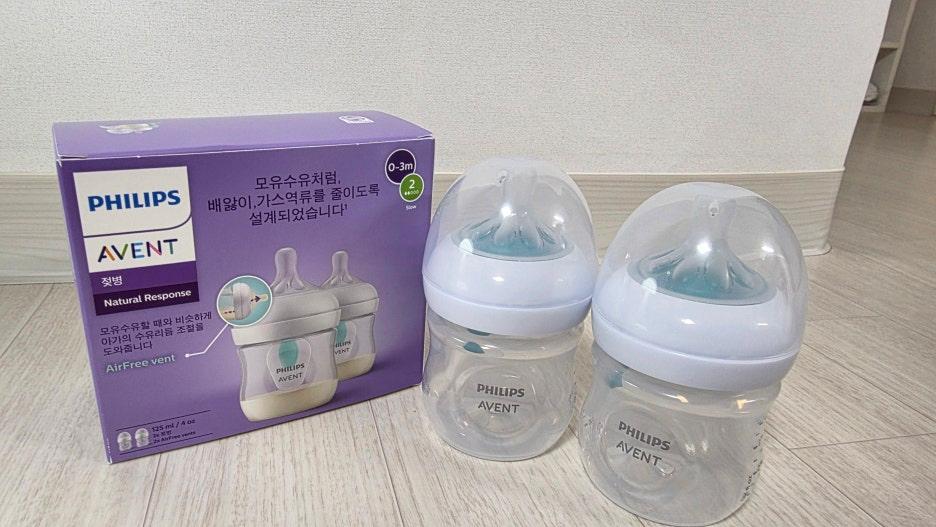
As our baby gradually started drinking more, we needed a bigger capacity than the bottles we had been using. So this time we moved up to the Philips Avent Natural Response 260ml bottle.
We were already using Philips Avent bottles, so rather than switching to a different brand altogether, we chose to simply go up a size in a product we knew. Sticking with a design you are used to means you do not have to learn a new way of washing or assembling it.
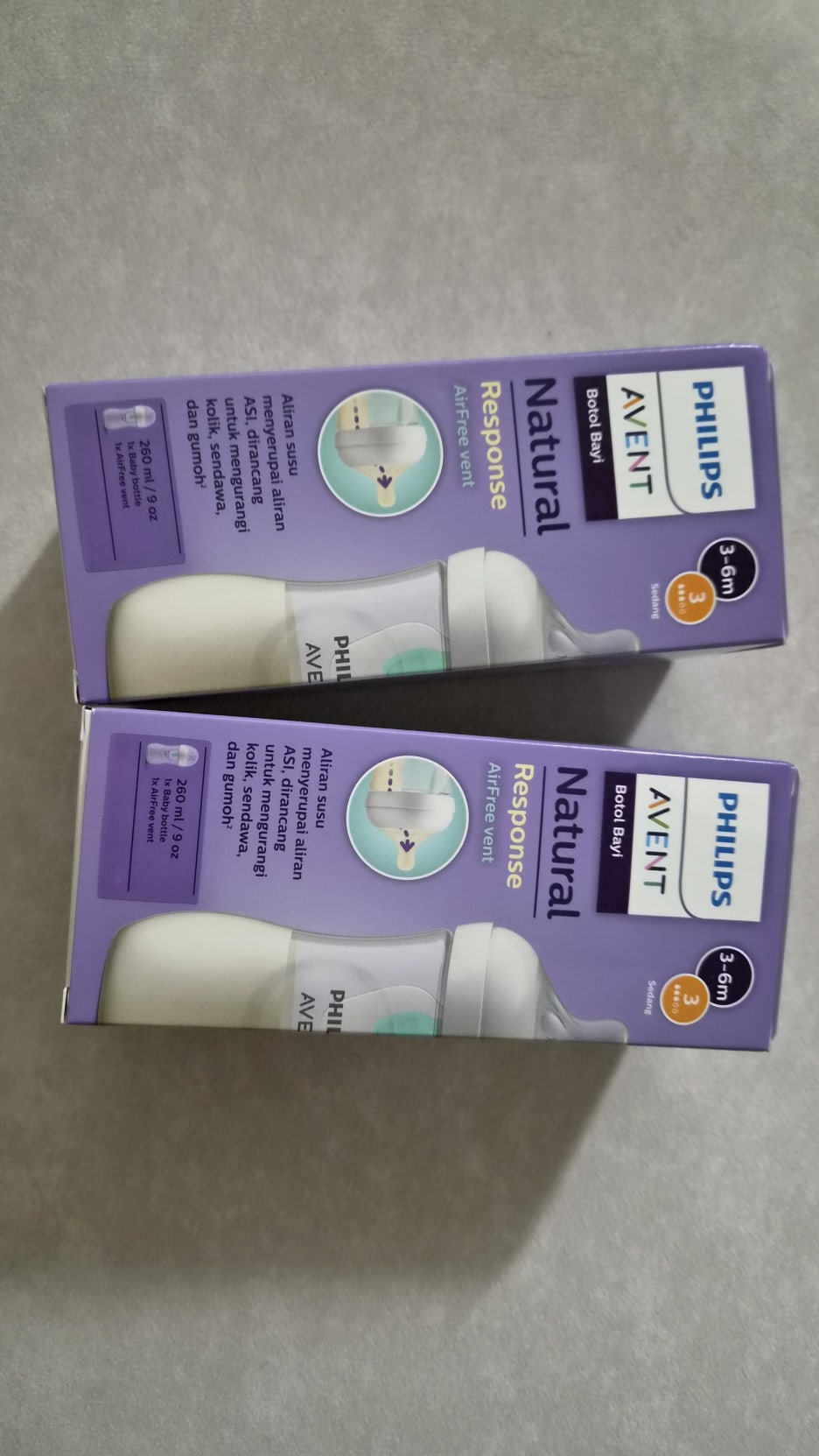
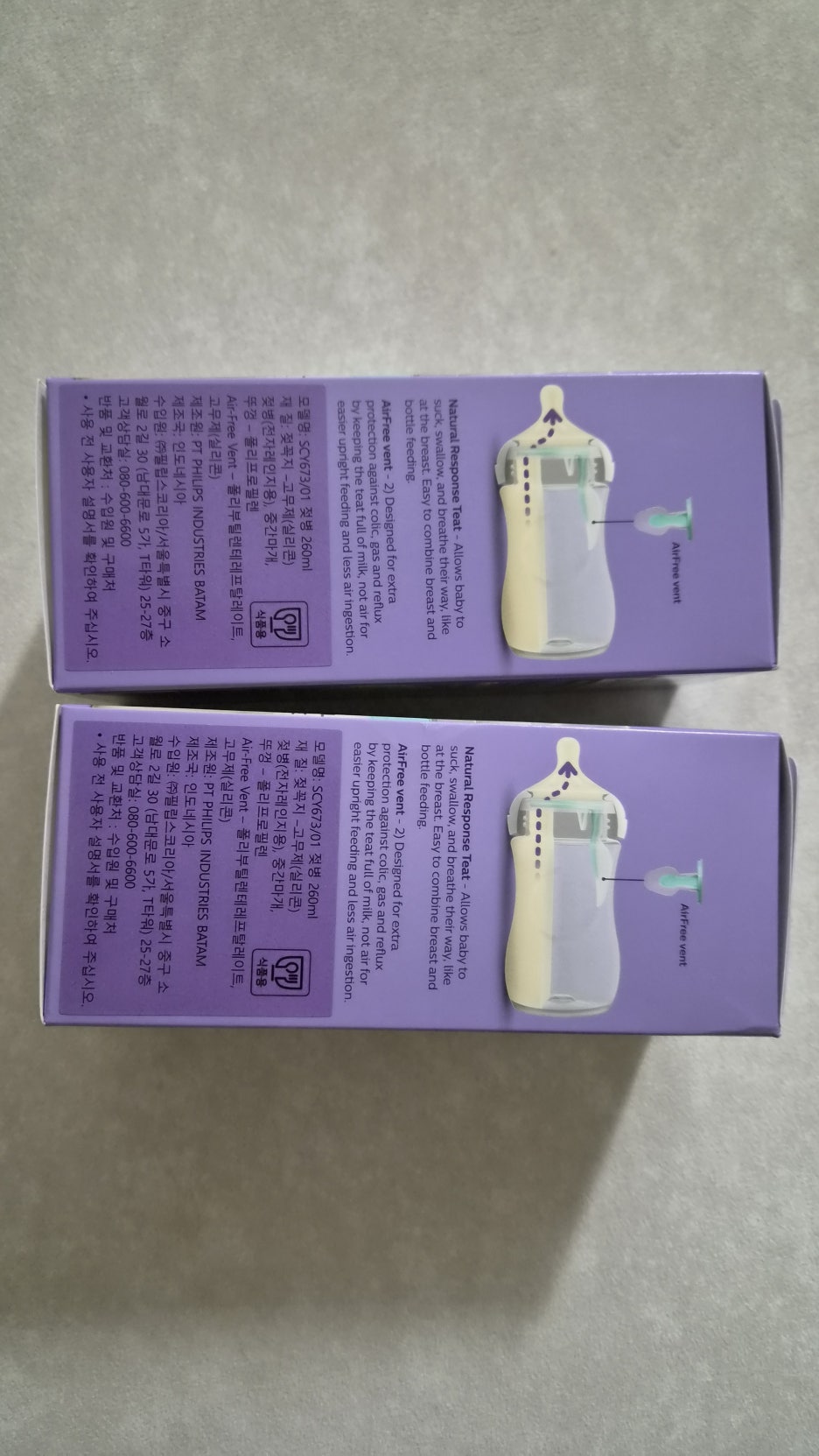
260ml / 9oz, 3 to 6 months, flow stage 3 nipple
The bottle we got is the 260ml (9oz) size. The package lists it as 3 to 6 months with a flow stage 3 nipple.
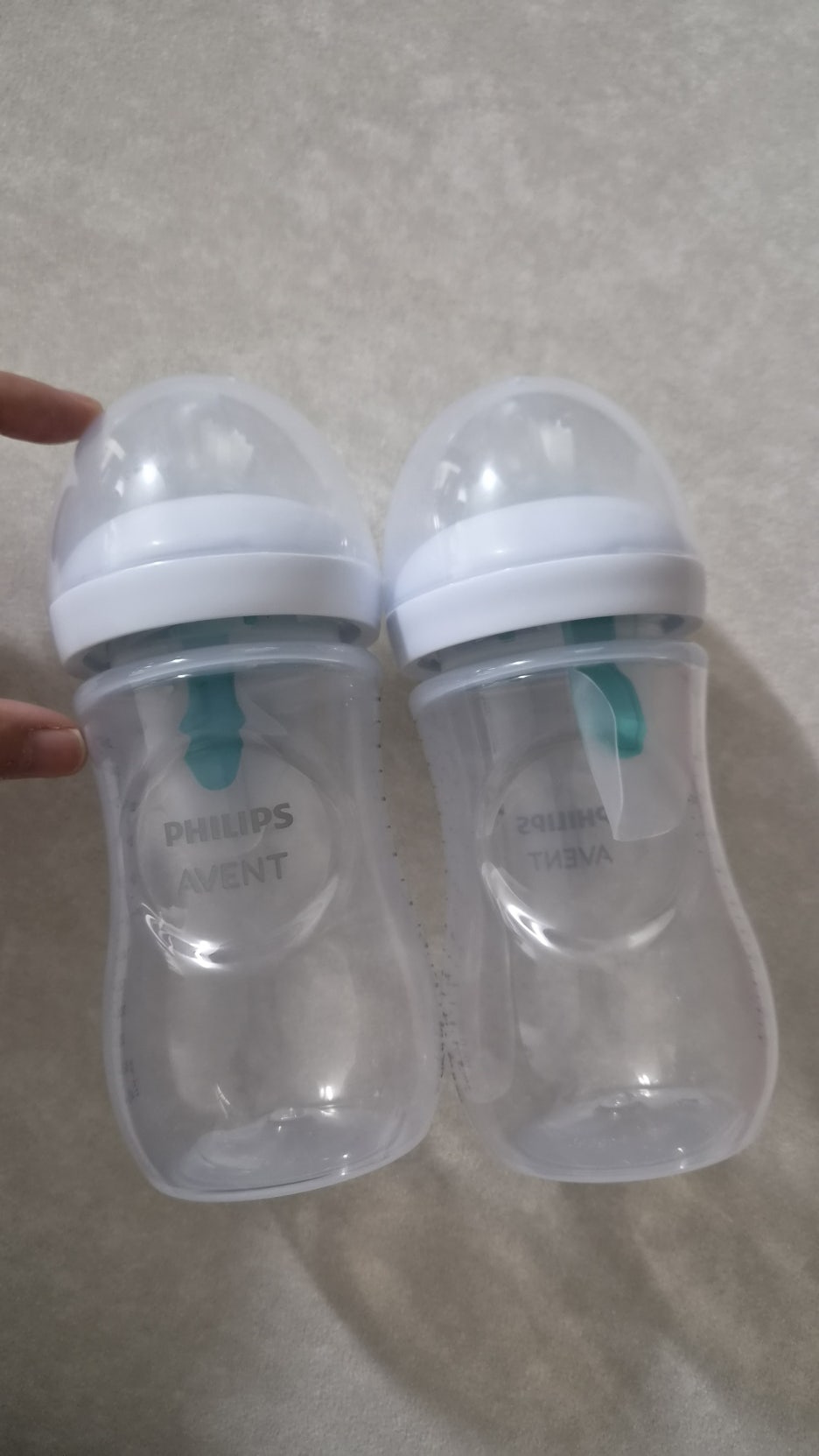
Take the bottle out and you get a clear bottle with the PHILIPS AVENT logo and a clean, no-frills design overall. Even with the larger capacity, it narrows slightly in the middle, so it did not feel as unwieldy in the hand as I expected. I had worried a big bottle might slip out of my hand, but the shape naturally guides where you hold it.
The AirFree vent and the Natural Response nipple
What stood out with this product was the AirFree vent. According to the description on the box, it is a part designed to reduce the air that gets into the bottle, and you fit it in when feeding.
The Avent Natural Response nipple is described as being designed so that milk flows when the baby sucks, which is meant to help regulate the feeding flow. The package lists features such as an anti-colic valve, a nipple that does not leak easily, and a design that is simple to clean. These features are taken from the package description, and we plan to watch as we use it to see whether it suits our baby.
A design that is easy to take apart and wash
When you actually take the bottle apart, the parts are not complicated. That makes washing it and putting it back together fairly easy.
A baby bottle gets washed and dried several times a day, so a design with fewer parts that fit together easily makes a bigger difference than you might think. When you are washing bottles while exhausted, a simple design like this takes much less effort than one where you have to check and fit each part one by one. Since we had been using the smaller bottles from the same brand, we already knew the order for taking it apart and putting it together, so apart from the bigger size, I hardly noticed any difference.
Same familiar brand, just a bigger size
Once a baby starts drinking more, there comes a point where a small bottle cannot quite hold enough for one feed. At that stage, I felt that staying with a brand that has worked well for you and moving up to a larger 260ml bottle is a perfectly good option.
For the time being, we plan to alternate between two Philips Avent 260ml bottles while our baby gets used to them. If you are thinking about sizing up your baby bottles because feeds are getting bigger, I hope this helps.
This box contains affiliate links. If you book through them, Mudung may earn a commission at no extra cost to you.
 Read nextKeep readingMyeongdong Skin Care: 3D Symmetry Session Price and ProcessRead →