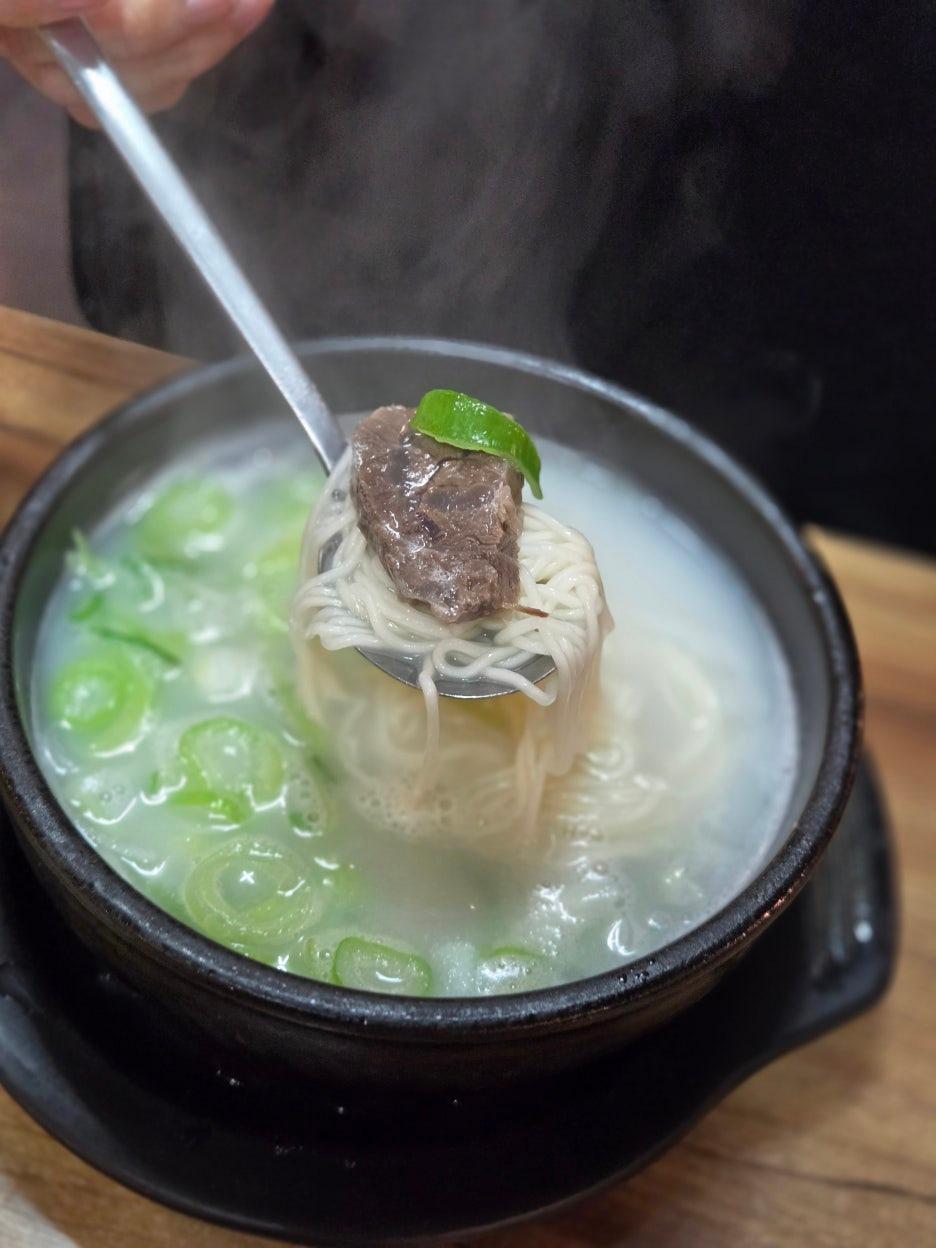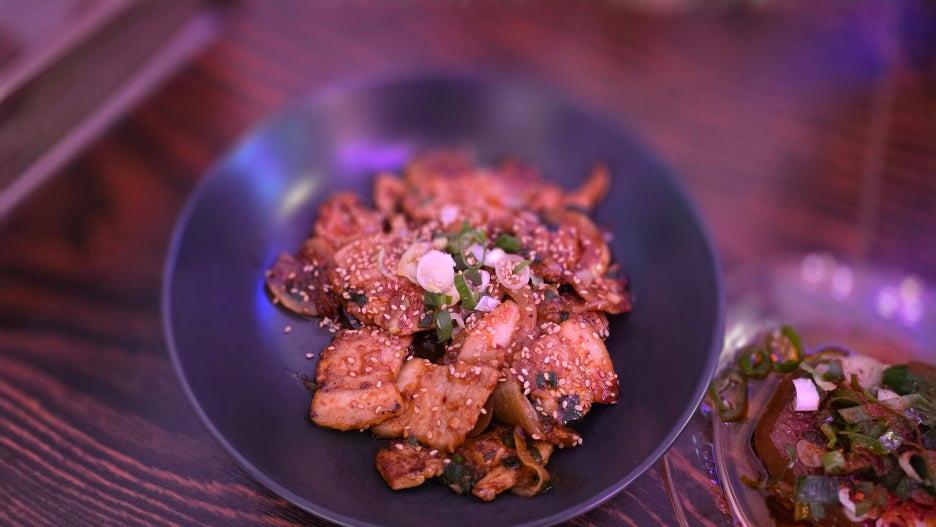
Clean, gently spicy suji-tang (beef tendon soup) and 9,000-won gochujang jeyuk at Sikdang Uyeon (식당우연) in Dochon-dong, Seongnam. Plus the pink-lit interior with folding screens and the yesul-bap from an Instagram event.
In this article Show
- Somewhere between dinner and drinks
- An unexpected interior combo of pink lighting and folding screens
- What's on Sikdang Uyeon's menu
- Starting off with chilled tomatoes and a slushie
- Suji-tang brought back to a boil at the table
- Sweet and spicy gochujang jeyuk next to the suji-tang
- Yesul-bap from an Instagram follow event
- Good for a meal or for drinks
Somewhere between dinner and drinks: why I went to Sikdang Uyeon in Dochon-dong
These days when I make dinner plans, I find myself choosing places where I can have good food with a light drink, rather than spots where you just eat and leave. This time it was Sikdang Uyeon (식당우연) in Dochon-dong, Seongnam. From hot suji-tang (beef tendon soup) to jeyuk-bokkeum (stir-fried pork), gambas and dakbal (spicy chicken feet), the menu was evenly stocked with familiar dishes that go well with drinks.
The good thing about a place like this is that the line between a meal and a drinking session is loose. If you are hungry you can fill up on rice and soup, and if the conversation runs long you can order one more dish and keep going slowly. Just looking at the menu, Sikdang Uyeon seemed built with that kind of use in mind.
That day we ordered the suji-tang, which seemed to be the signature dish, plus a gochujang jeyuk (pork stir-fried in red chili paste) on the side. From the atmosphere to the food, it was a bit different from the neighborhood Korean restaurant you usually picture, and it stayed with me for quite a while after.
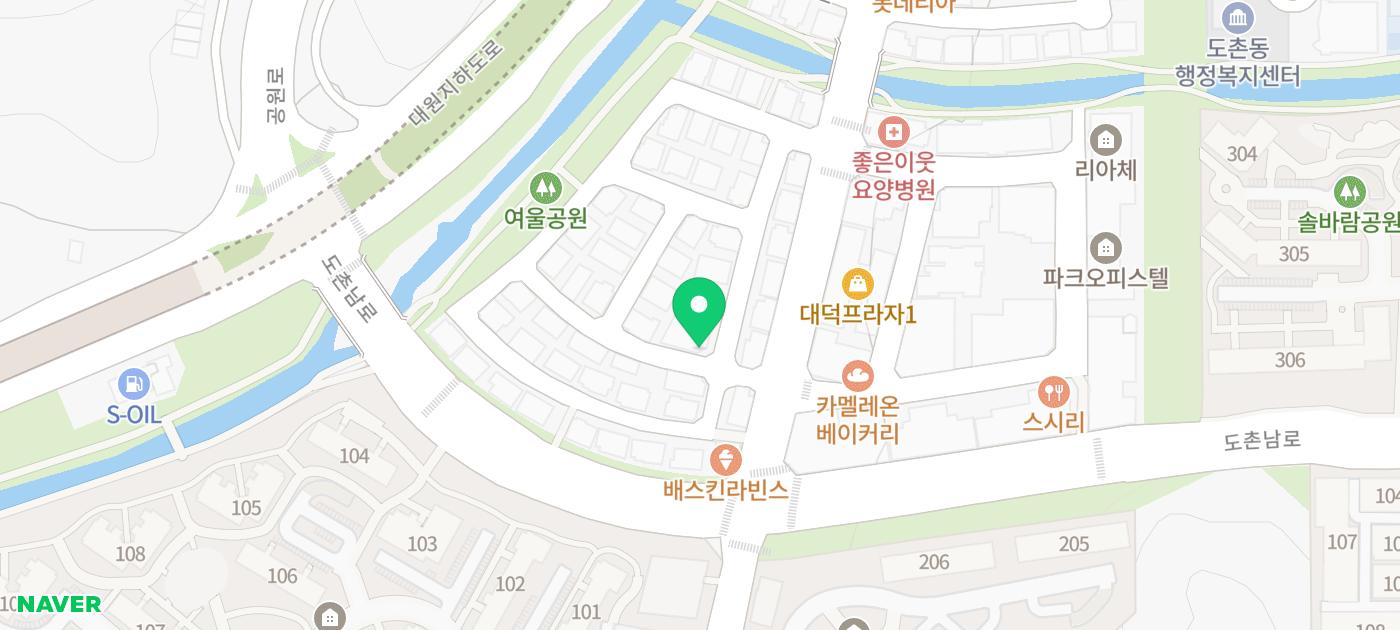
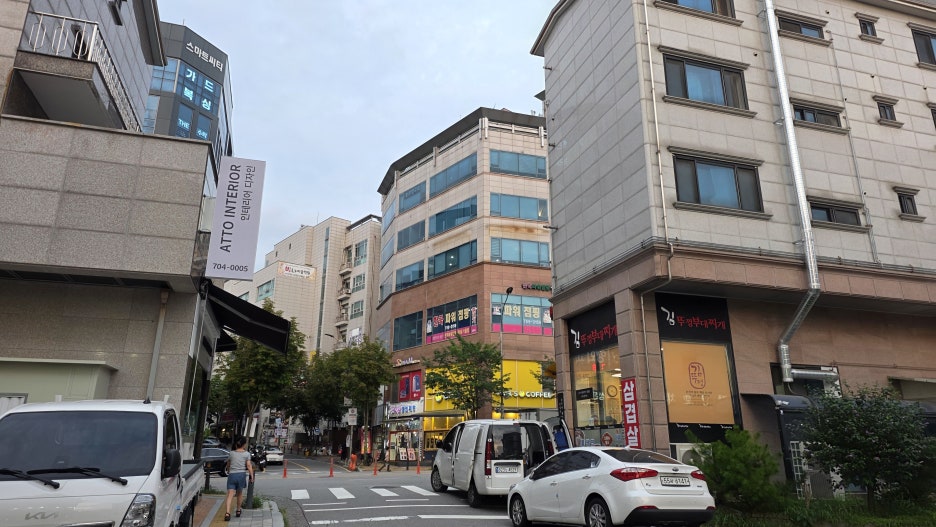
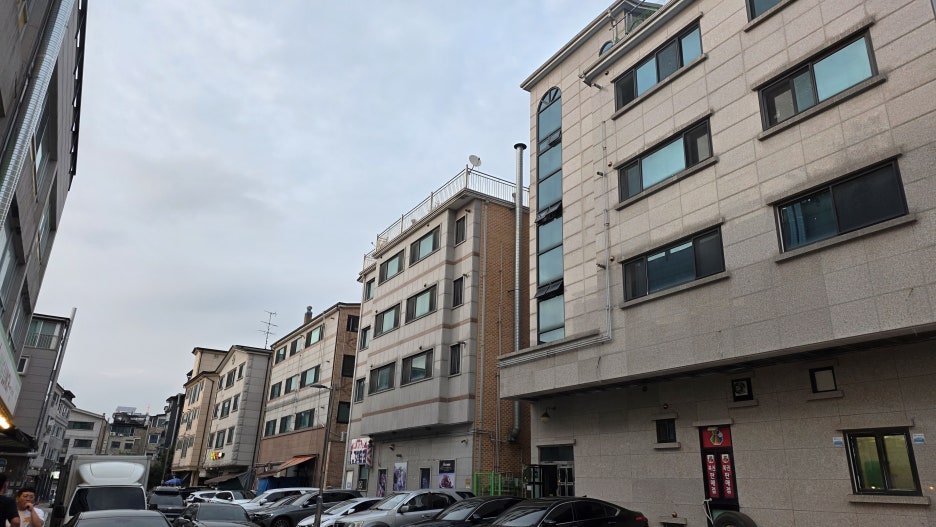
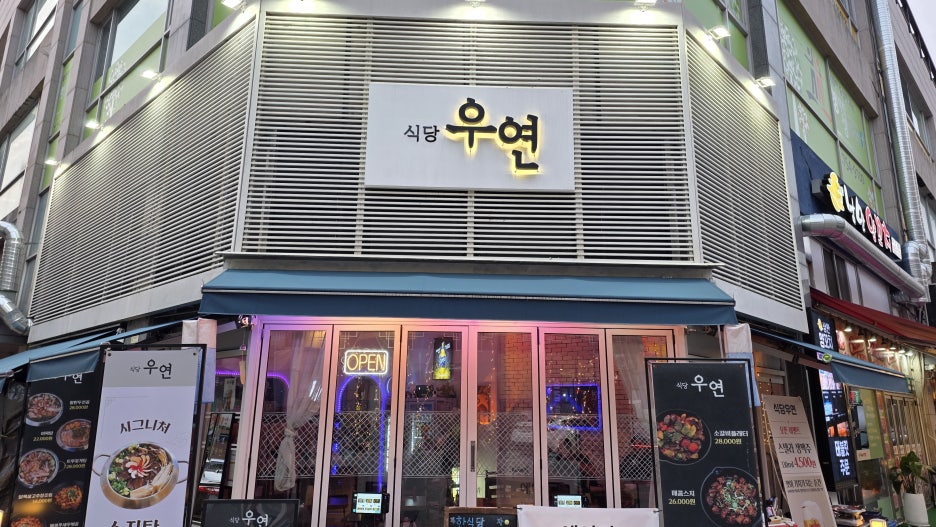
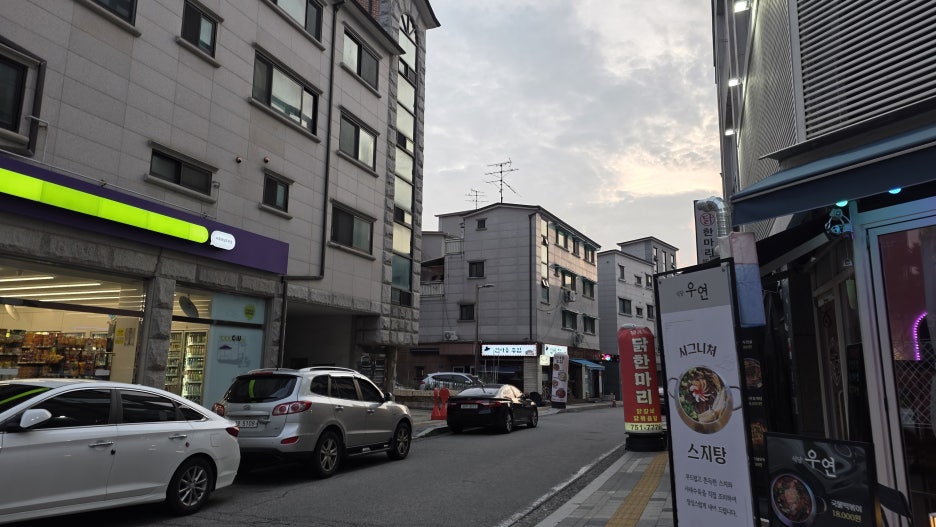
Sikdang Uyeon's address is 1F, 4-1 Dochon-ro 7beon-gil, Jungwon-gu, Seongnam-si, Gyeonggi-do. It sits on a street corner, so the brightly lit "Sikdang Uyeon" sign caught my eye from a distance. It is fairly close not only to Dochon-dong but also to Yatap and Yeosu-dong, which makes it a good location if you are looking for dinner in that area.
It is not far from the Bundang area either, and it looked like plenty of customers come over from Bundang on purpose. It is less a restaurant hidden deep in the neighborhood and more a spot that naturally catches your eye as you walk by.
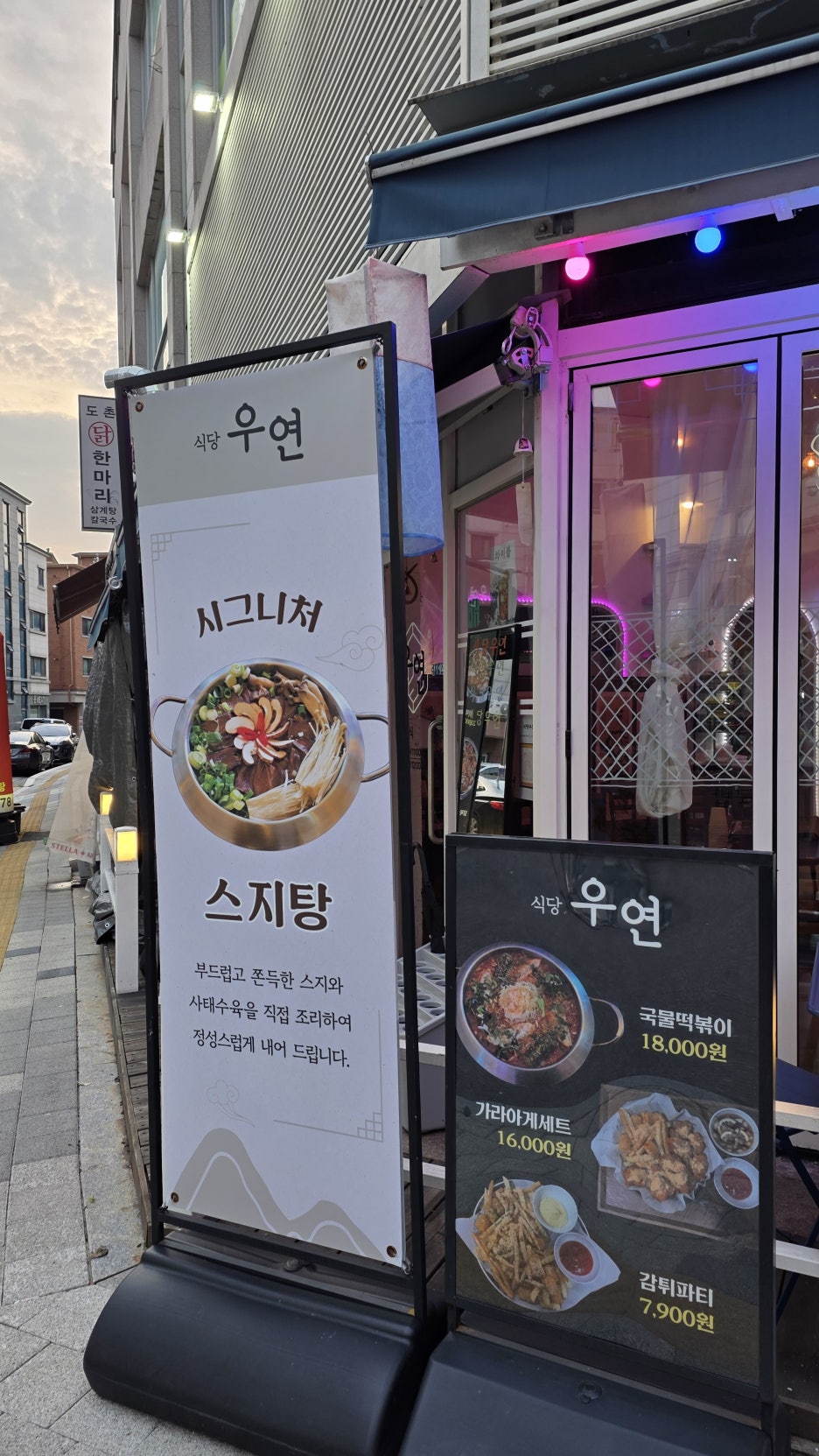
Standing in front of the restaurant, a full glass door sits under a big white sign. From the outside it looks like an ordinary, tidy Korean restaurant, but a soft pink light spilling out from inside piqued my curiosity. From outside, it was hard to guess what kind of atmosphere it would have.
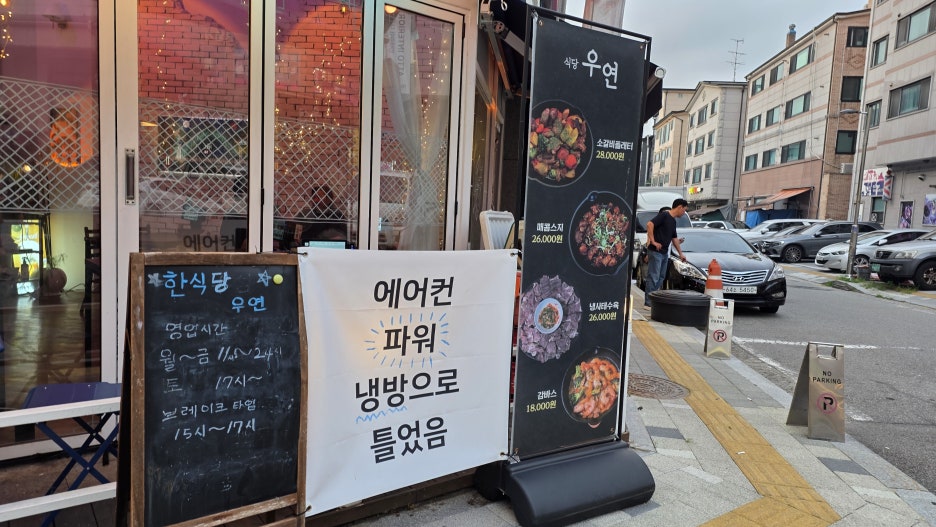
Large photos of the signature dishes were posted on both sides of the entrance, so you can scan what they serve before going in. The range runs from hearty dishes like suji-tang and a beef short rib platter to spicy bar snacks, so even with a group, deciding what to order did not look like it would be much of a struggle.
An unexpected interior combo of pink lighting and folding screens
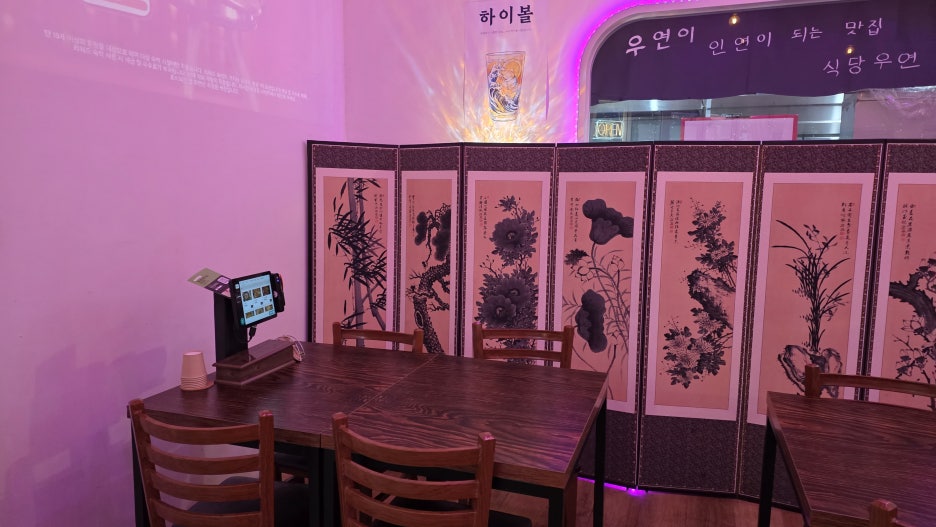
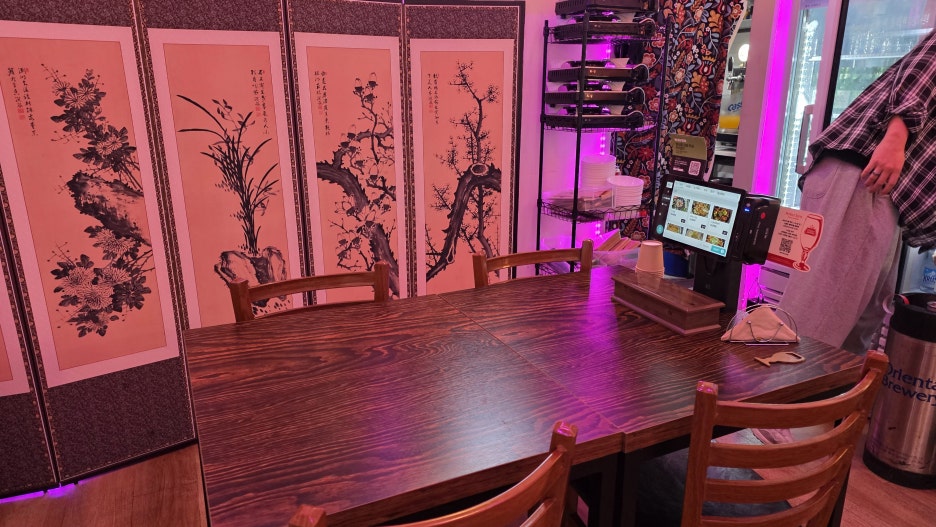
When I opened the door, the pink and purple lighting I had glimpsed from outside was softly filling the whole room. There were traditional folding screens and dark wooden tables, but the lighting was pretty trendy, and that seemingly mismatched combination was actually fun.
If I had to describe it, the vibe was somewhere between a Korean-style bar and a casual pub. That said, it was not a dark or loud bar, so walking in to eat rather than drink did not feel awkward at all.
Long folding screens painted with flowers, trees and orchids stood along the walls. Old-style paintings that would normally look serene looked completely different, almost novel, under the pink light. The lighting had such a strong presence that photos came out with the whole interior tinted pink.
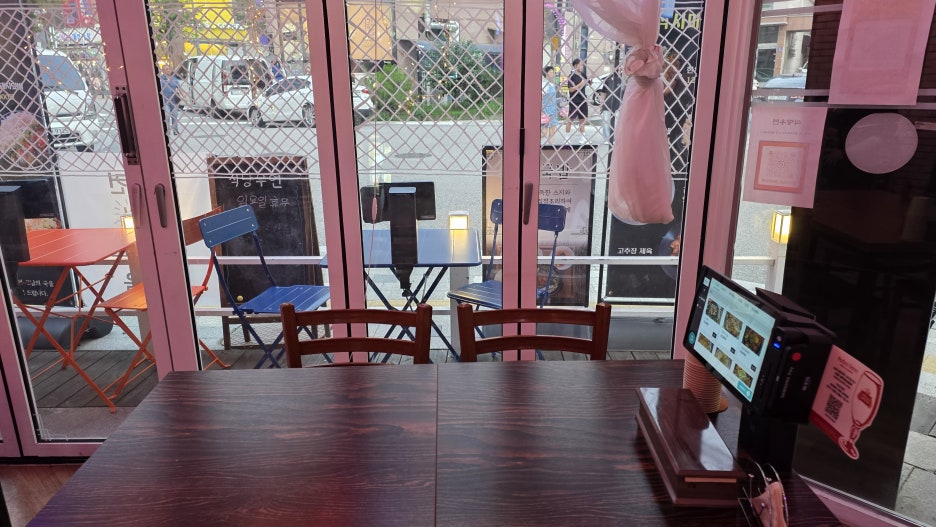
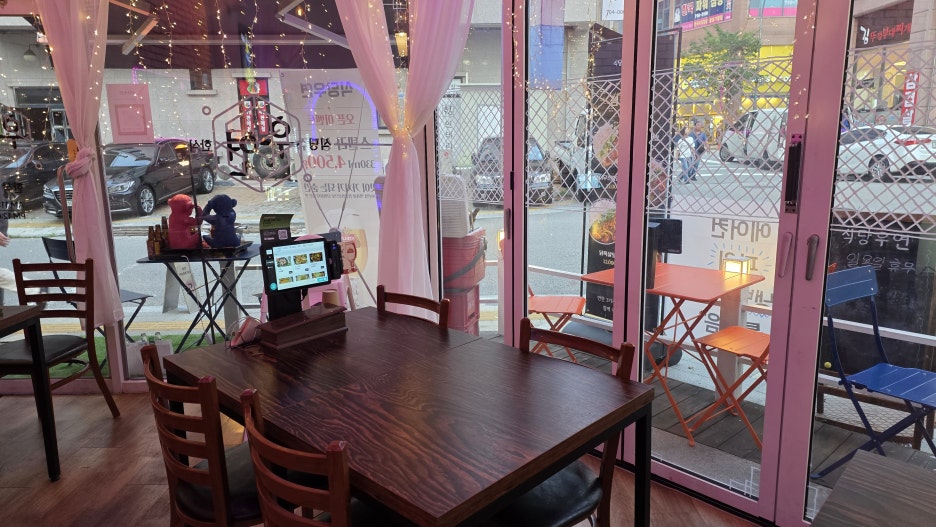
The seating mixed two-person tables with tables that comfortably fit four or more. By the windows there were seats where you could look outside, and there was also a small outdoor table set up in front of the restaurant. Whether it is two people eating quietly or a group gathering, finding a seat would not be hard.
The lighting was so unusual that I spent the first few minutes looking around, but once I sat down I got used to it faster than expected. The tables were not cramped, so conversations at the next table did not bother me much, and the heavy tone of the wooden tables made the lighting feel calmer rather than overly flashy.
The atmosphere itself was relaxed and the owner was friendly, so even though it was my first time there, I could settle in without any tension from the start.
What's on Sikdang Uyeon's menu
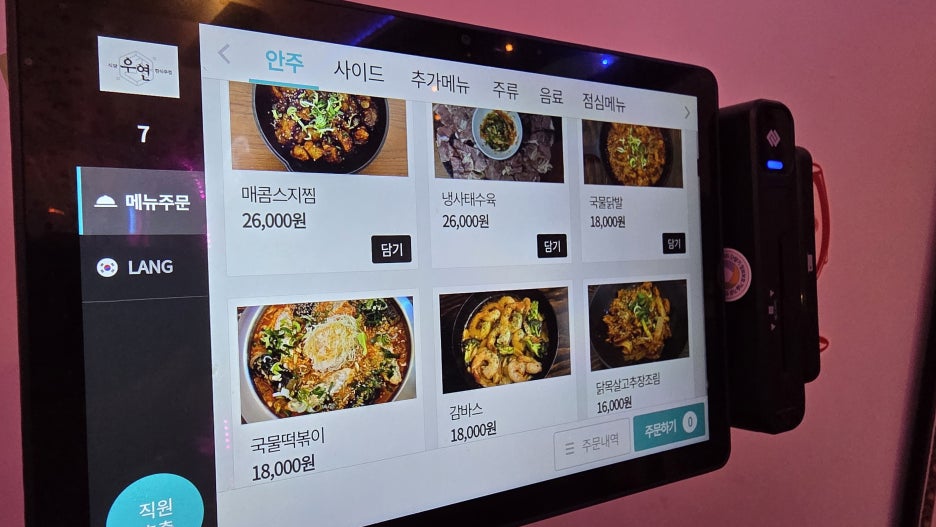
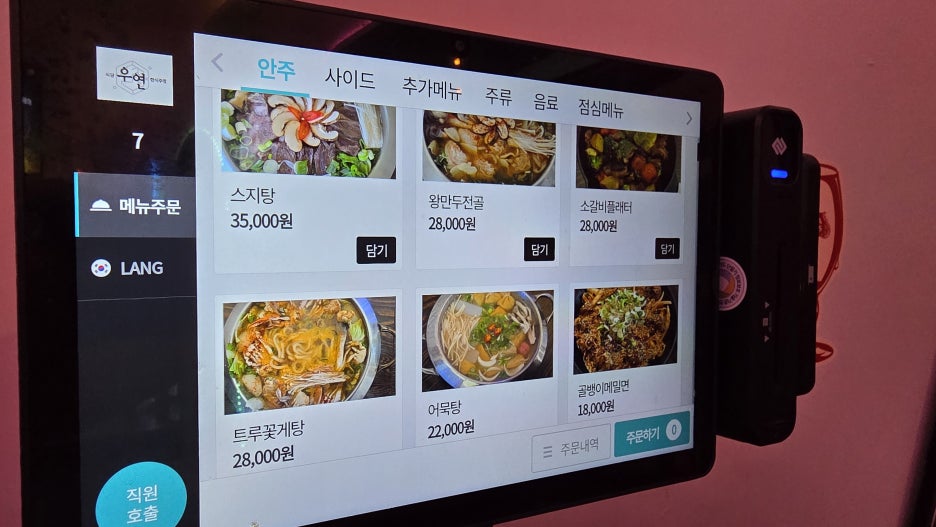
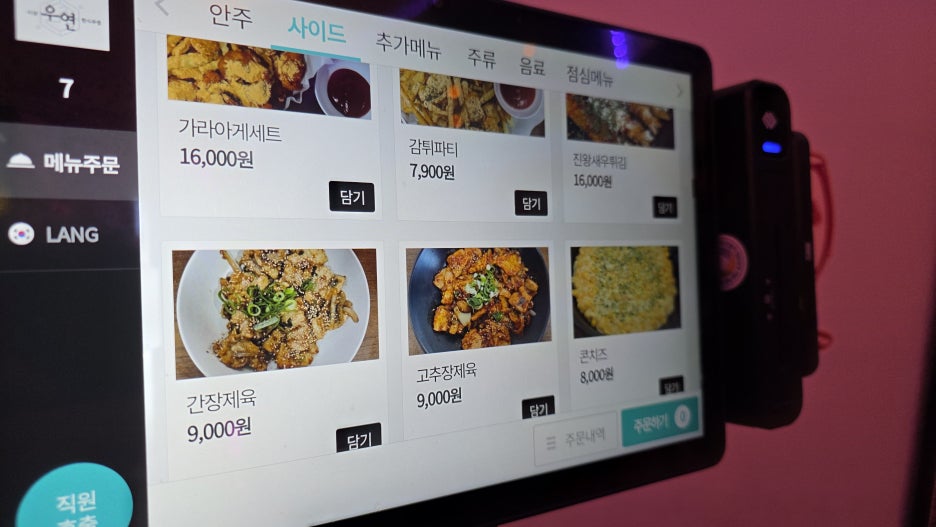
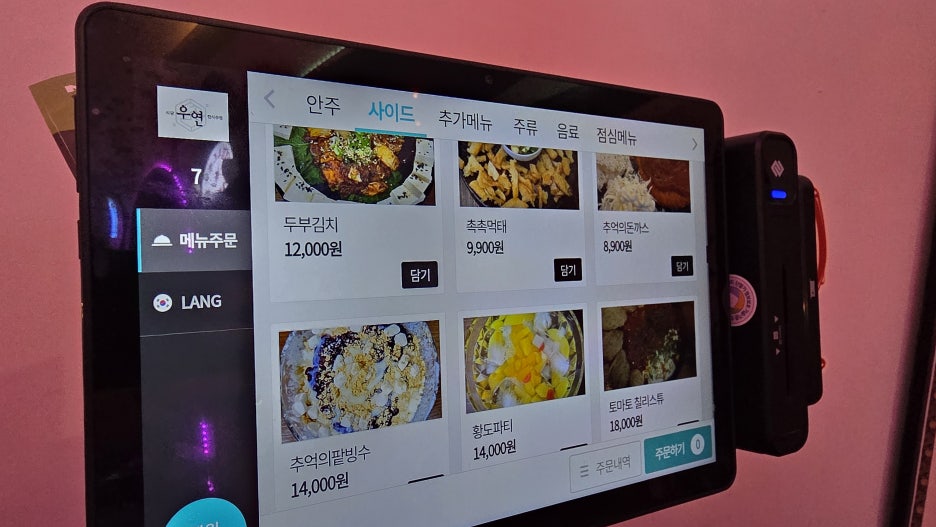
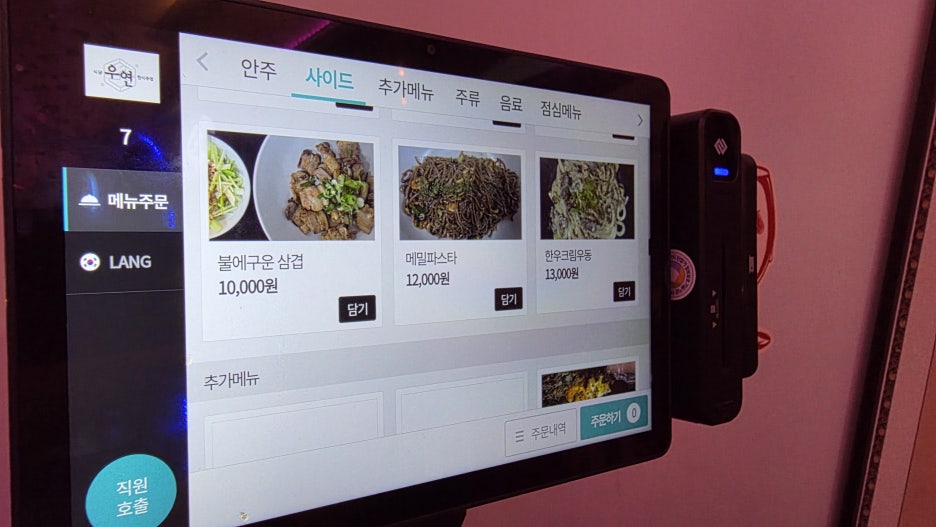
Sikdang Uyeon's menu is set up so you can enjoy both a meal and bar snacks. As of my visit, the spicy braised beef tendon (maekom suji-jjim) and chilled sliced beef shank (naeng-satae suyuk) were 26,000 won each, and the brothy chicken feet, soupy tteokbokki and gambas were 18,000 won each.
There were also fried dishes like a karaage set and jumbo fried shrimp, and the soy sauce jeyuk and gochujang jeyuk were 9,000 won each. Since the two jeyuk dishes are on the cheaper side, they looked good for adding alongside a main. Centering the table on a soup or braise and adding a jeyuk or something fried seemed like an easy way to fill the table for however many people you have.
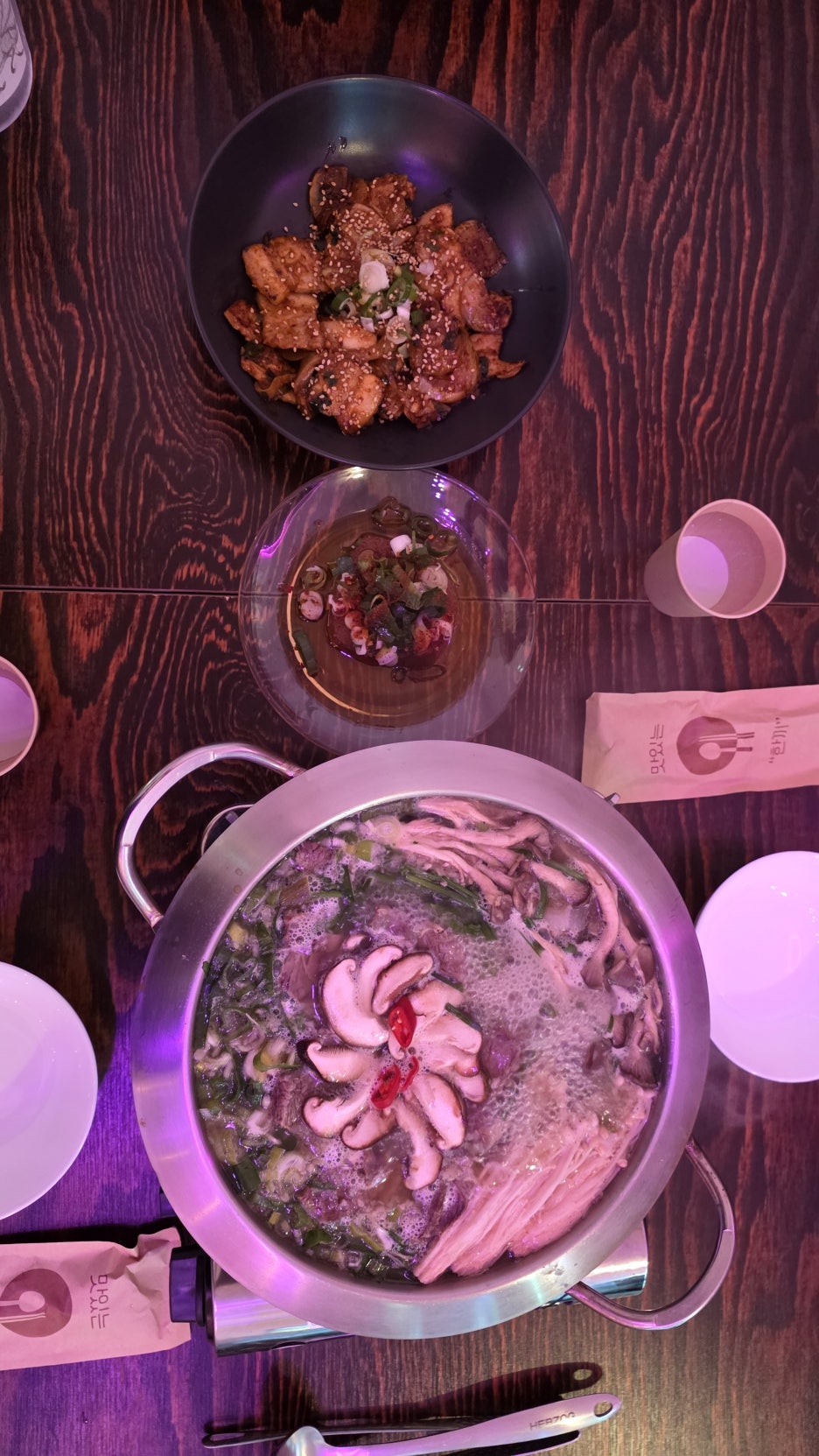
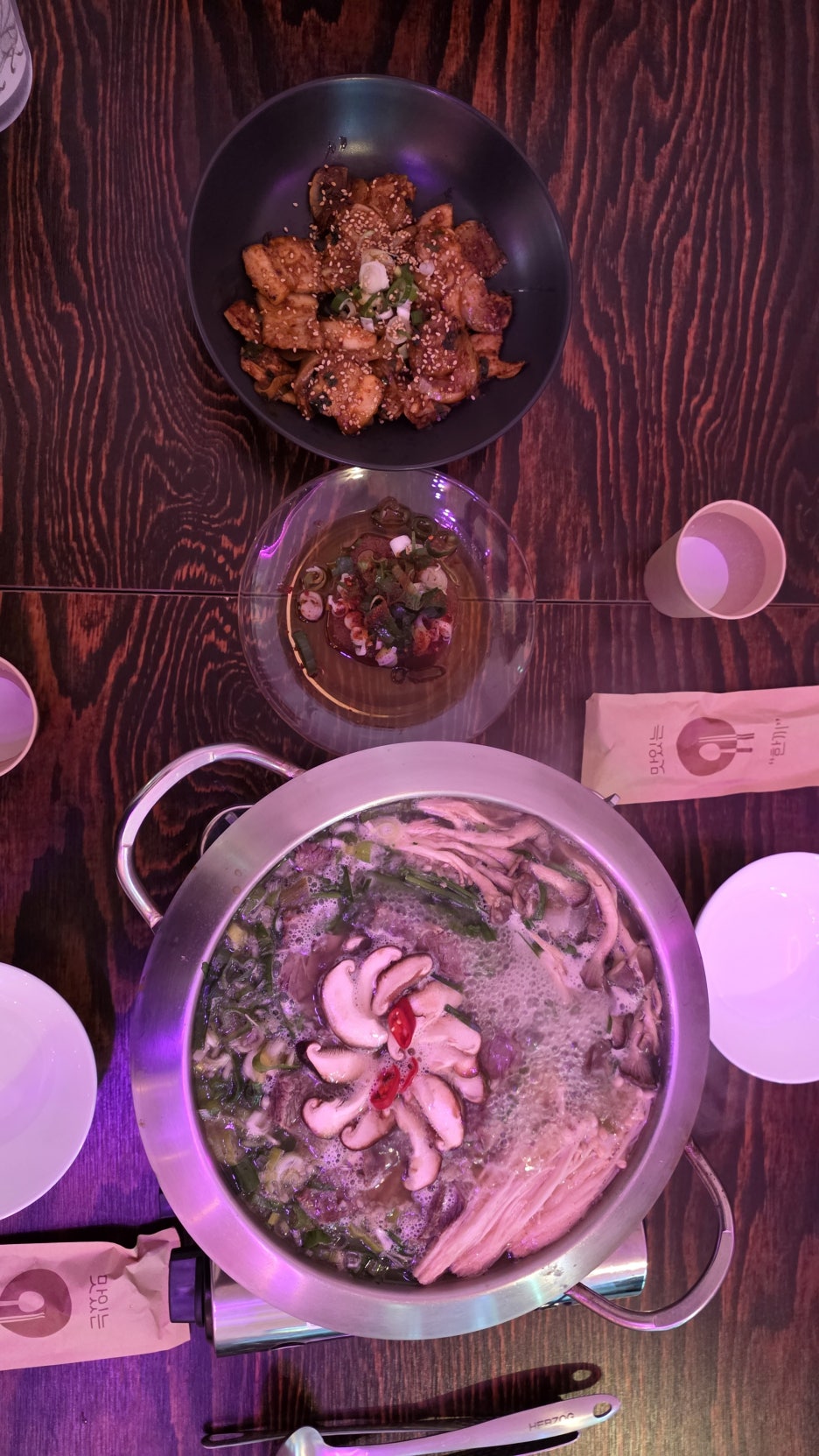
What we picked that day was the suji-tang and the gochujang jeyuk. It was a good combo for the two of us to have as a meal while also picking at it slowly like bar snacks. With one soup and one stir-fry, the table did not feel monotonous.
The braise and the sliced beef shank are big-plate dishes good for sharing among several people, while the chicken feet, tteokbokki and gambas are the kind of bar snacks you keep reaching for. The two jeyuk dishes, on the other hand, work both as a meal with rice and as a snack with drinks, so they are versatile. The choices were so varied that I spent a while studying the menu and even picked out what to order next time.
According to the restaurant, the owner does everything from prepping the ingredients to cooking, and makes the food without using artificial seasonings. Eating it, the food leaned toward bringing out the natural flavor of the ingredients rather than pushing strong flavors, and that approach suited soup-centered dishes like the suji-tang especially well.
Starting off with chilled tomatoes and a slushie
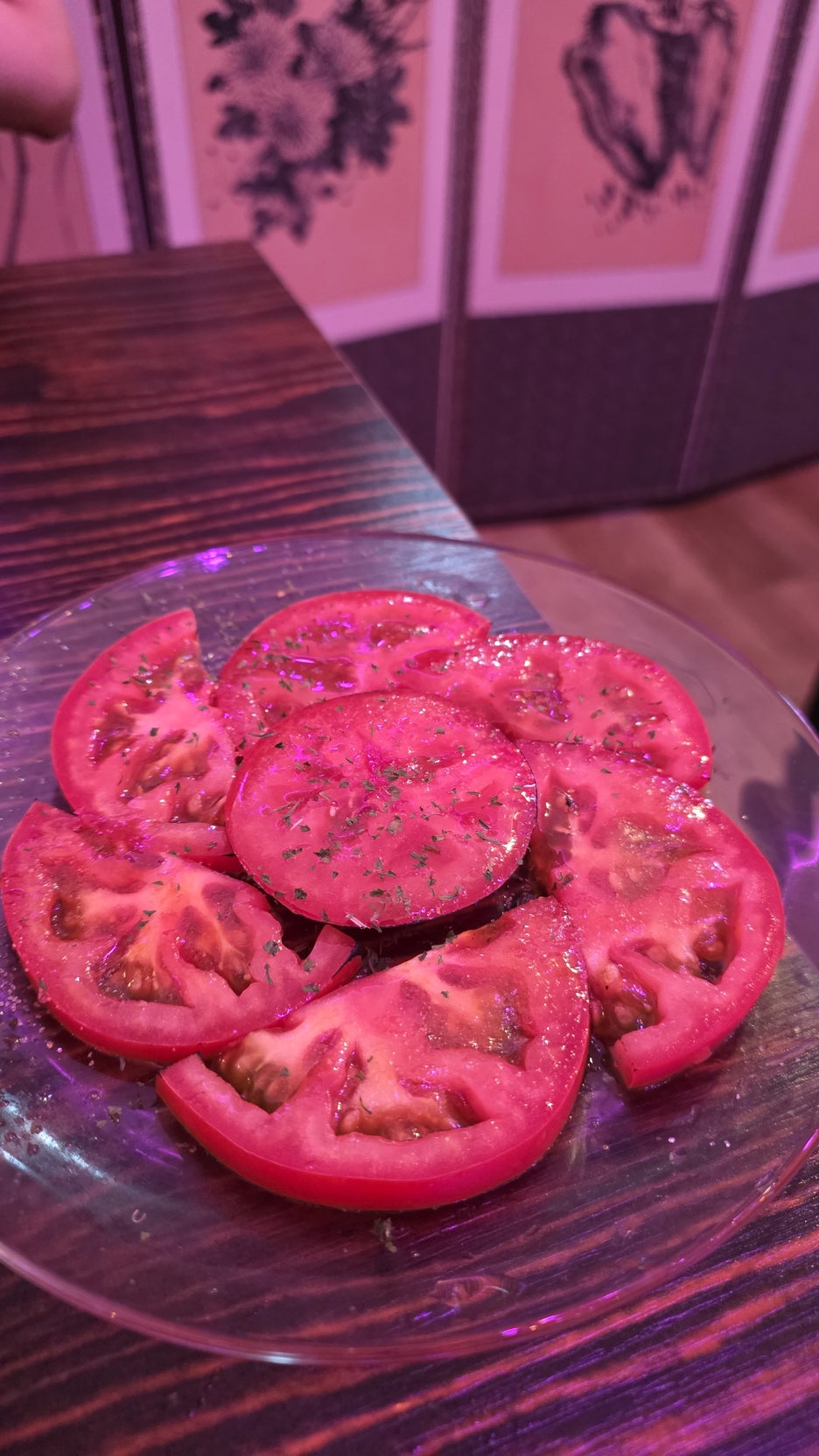
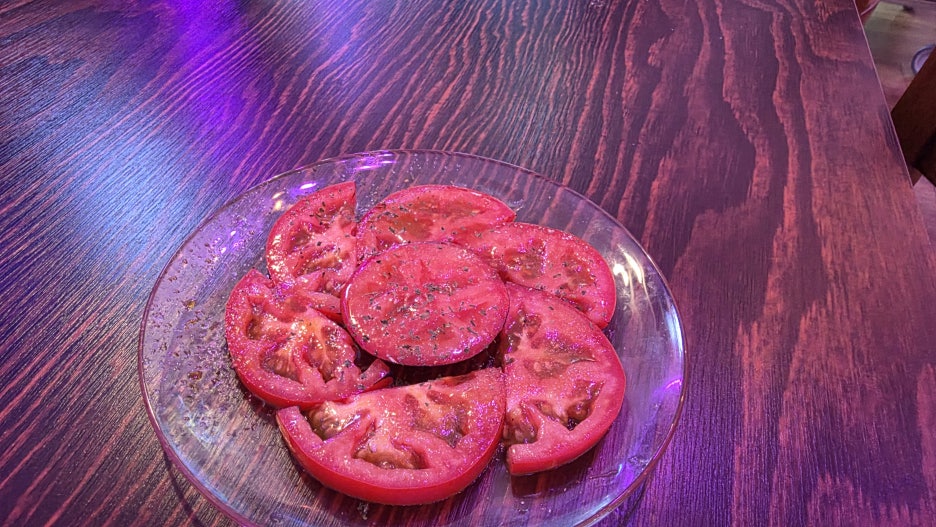
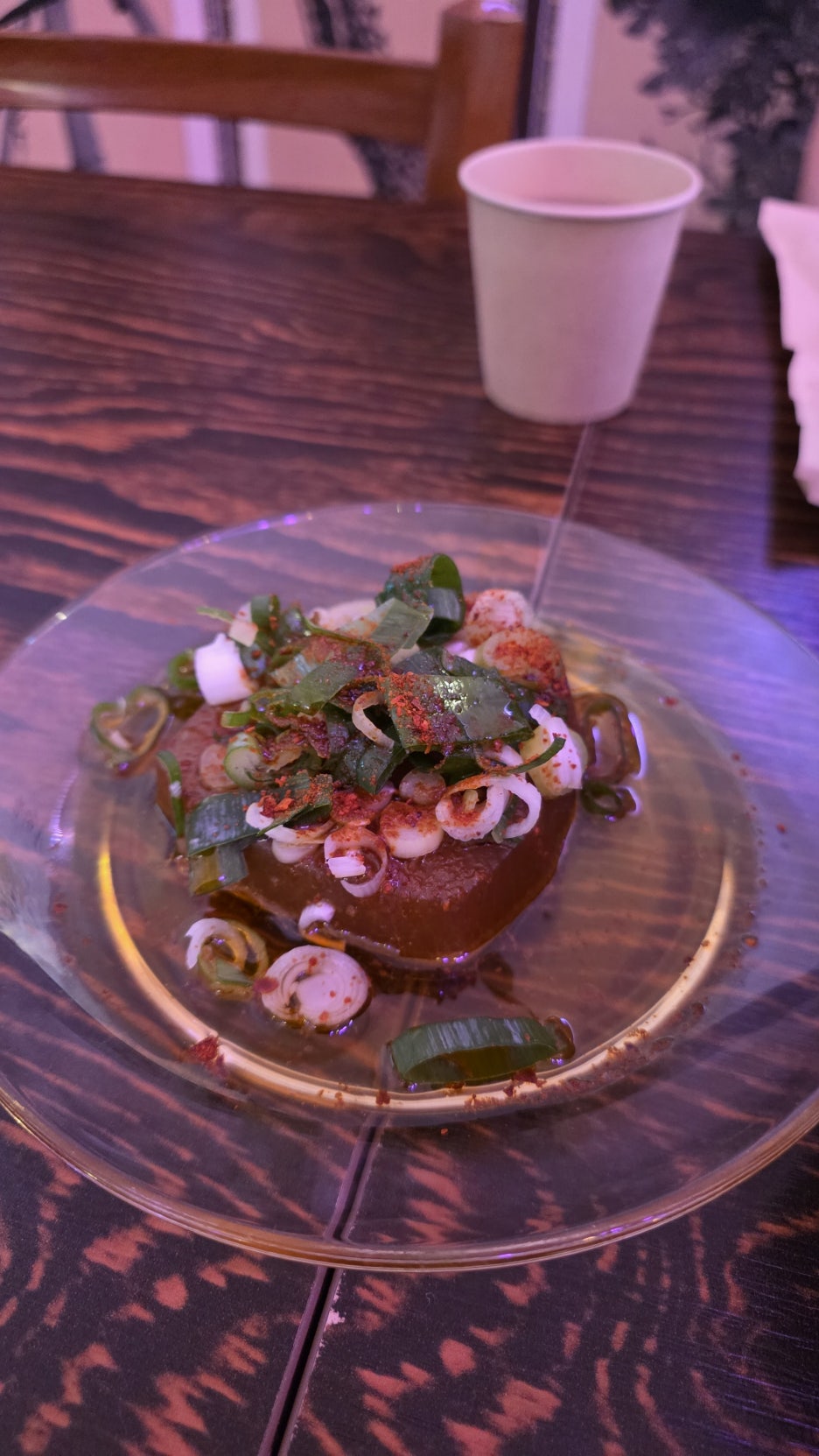
While we waited after ordering, thinly sliced tomatoes came out first on a plate. They had a light sprinkle of herbs on top, and being cold and fresh, they were perfect for waking up the appetite.
It is not a fancy dish, but it was nice to pick at before the mains arrived. Especially on a hot day like this one, cold tomatoes were welcome in themselves. They helped reset the palate before the heavier food.
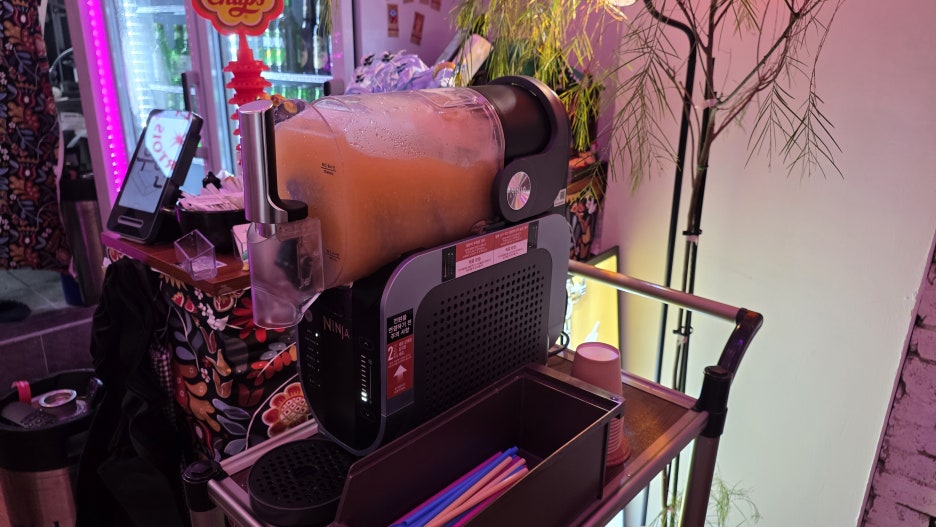
On one side there was also a cold slushie set out. We poured a little at a time into paper cups, and the crunchy ice crystals and sweet flavor cooled us down quickly. Being able to help yourself to as much as you want was a small but nice touch.
Because of the restaurant's lighting, both the tomatoes and the slushie come out pink in photos, and it was actually a start that suited Sikdang Uyeon's atmosphere quite well. Rather than starting heavy, we could whet our appetites with something cool and light and then move on to the main dishes, which made for a nice flow.
Suji-tang brought back to a boil at the table
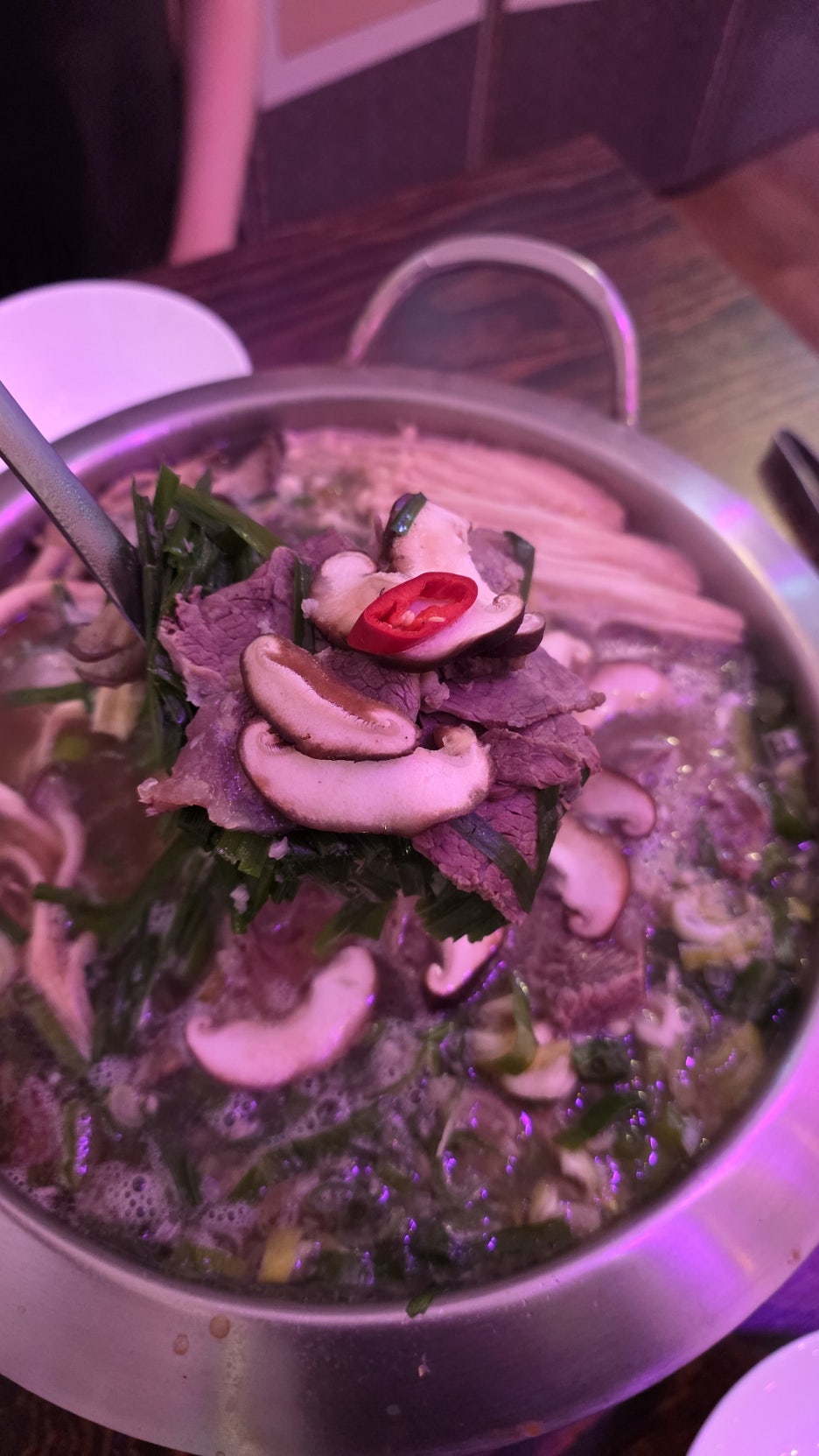
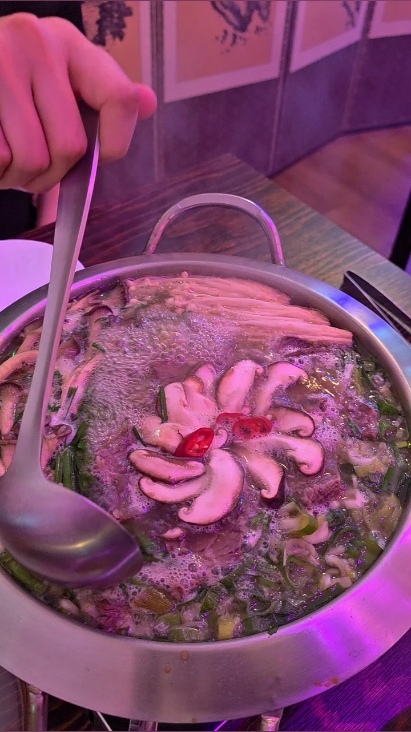
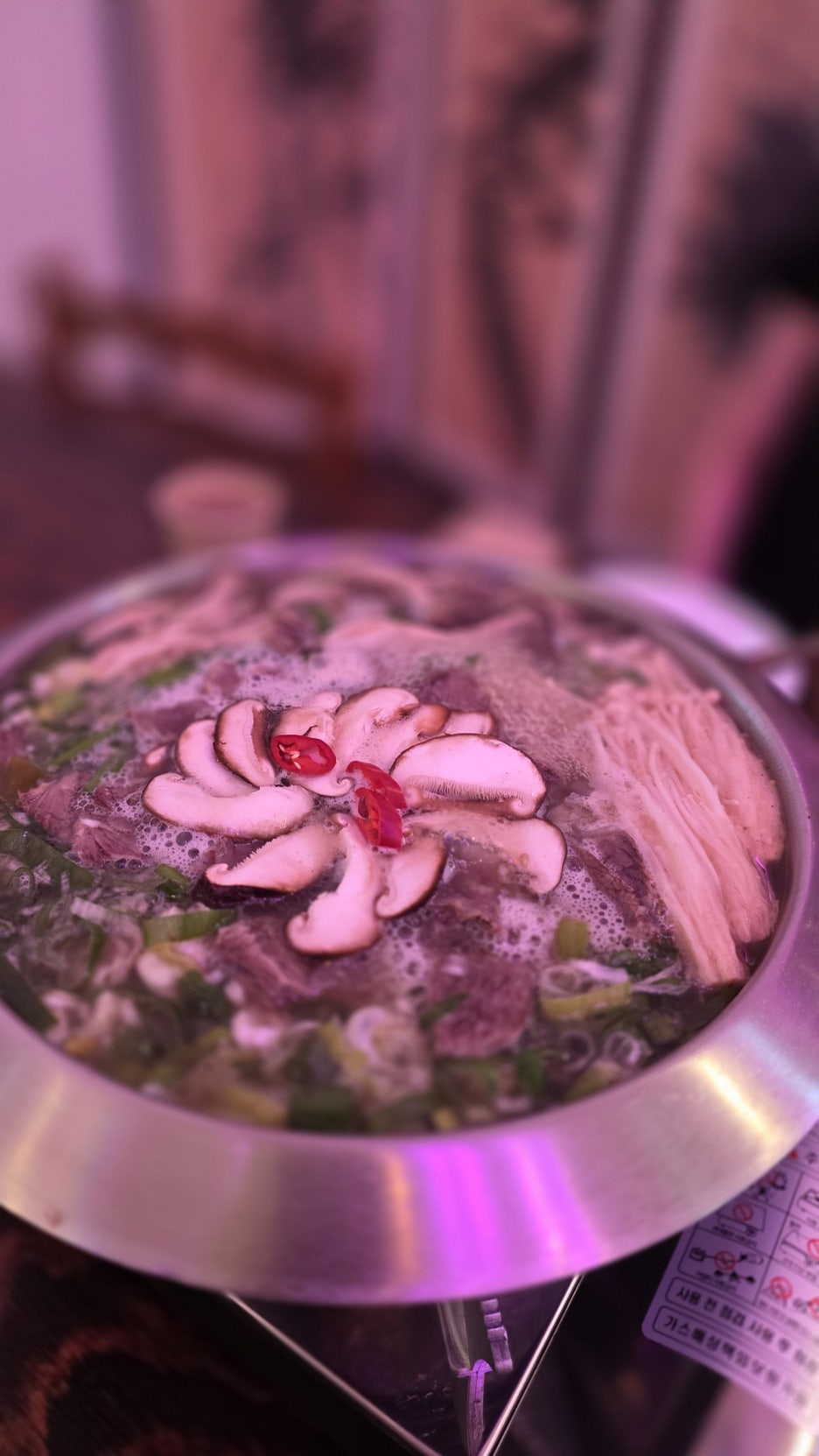
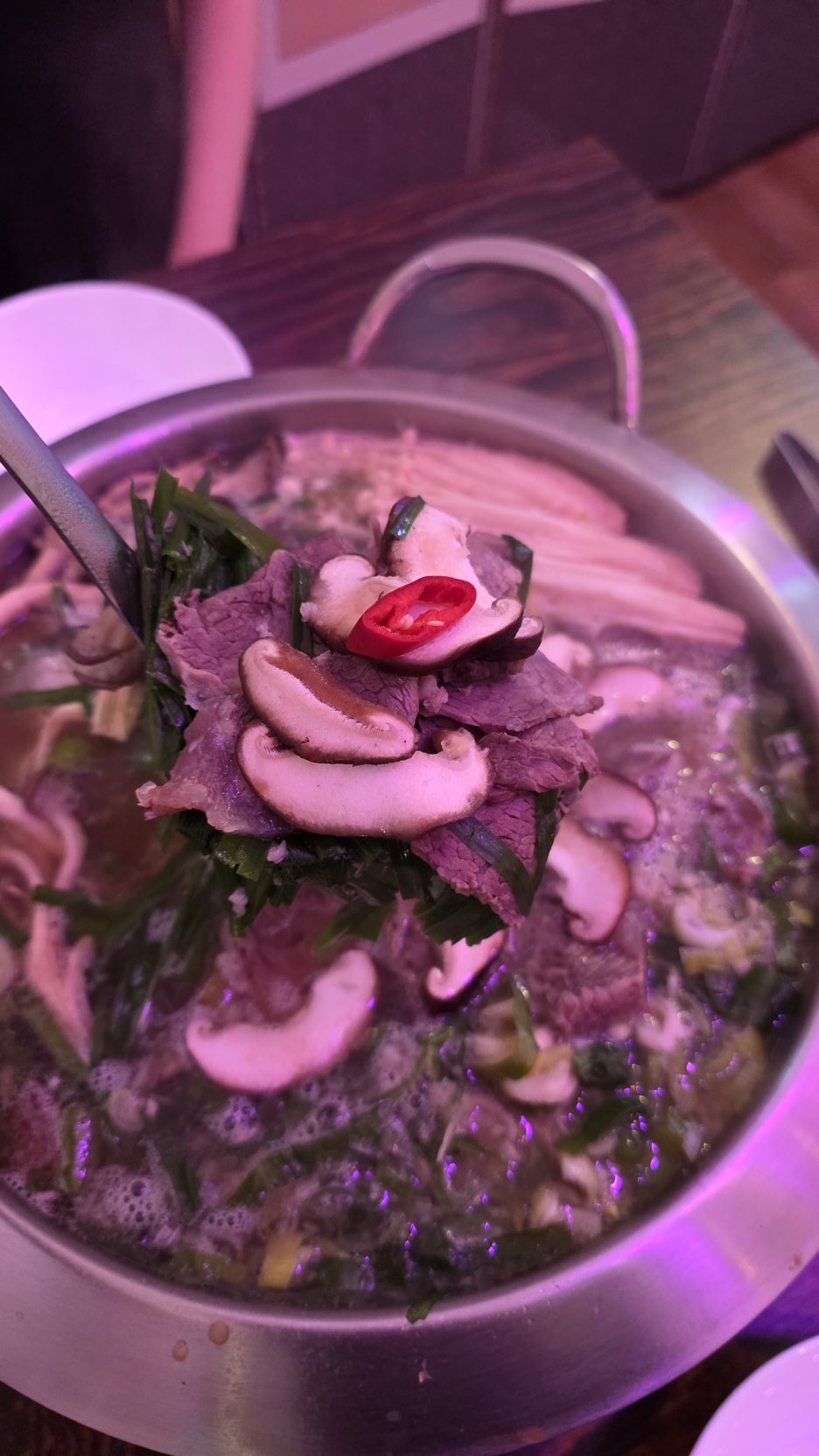
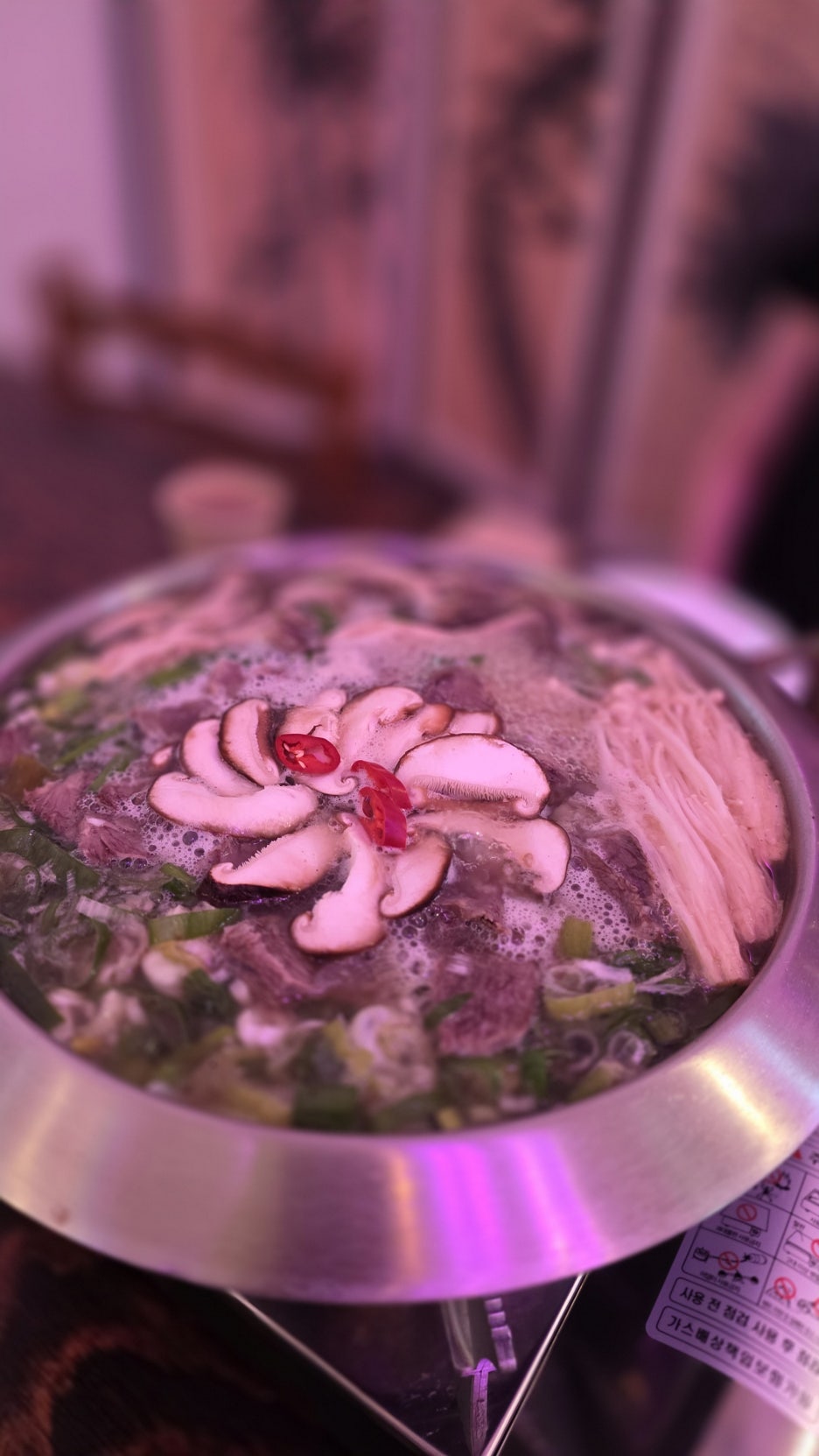
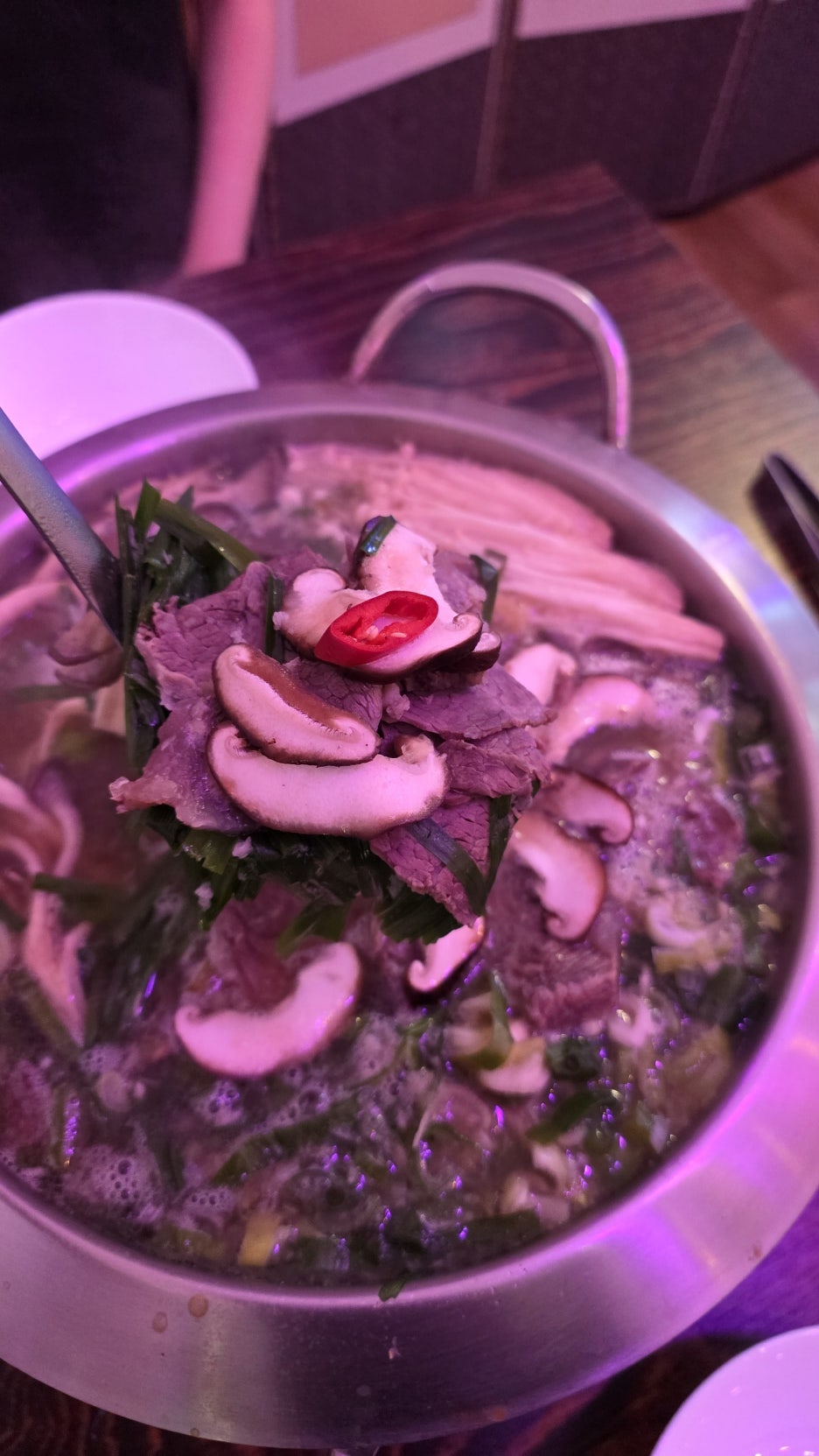
A little later, the suji-tang arrived in a big pot. The broth was generously filled with beef tendon, meat, green onions, mushrooms and enoki mushrooms, with a red chili pepper placed in the center. Judging by the size of the pot and the amount of filling, it looked like plenty for two to share.
You bring it back to a rolling boil on the table, so once the broth started bubbling, the smell of warm soup spread around us. Watching it bubble away, it was the kind of sight that makes you think of a drink even when you have not ordered one.
After letting it boil long enough, I tried the broth first. The first taste was cleaner and lighter than I expected. It was not a broth that is overly salty or leaves a lingering seasoning taste on the tongue, so I could keep going back for more without it feeling heavy.
The aroma from the green onions and mushrooms had naturally seeped into the broth, and a subtle spicy kick slowly rose at the back. Rather than a hot, aggressive stew, it was closer to a warm, refreshing soup, so even people who do not handle spicy food well could eat it comfortably.
The longer it simmered, the more the sweetness of the green onions and the aroma of the mushrooms deepened in the broth, and it was fun how the flavor shifted a little between the first spoonful and the middle of the meal. The enoki absorbed the broth and softened, and the green onions wilted and made the broth even mellower.
The beef tendon was chewy but not tough, so it was soft to bite. It kept that springiness tendon is known for, but there were no parts you had to chew forever, which made it easy to eat spoonful by spoonful with the broth.
It goes without saying on cold days, but even on summer evenings when you are sitting with the air conditioner on, a hot soup like this goes down surprisingly well. If you are looking for a warm stew or a soup to go with drinks in Dochon-dong, I thought starting with this suji-tang would be a good call.
Sweet and spicy gochujang jeyuk next to the suji-tang
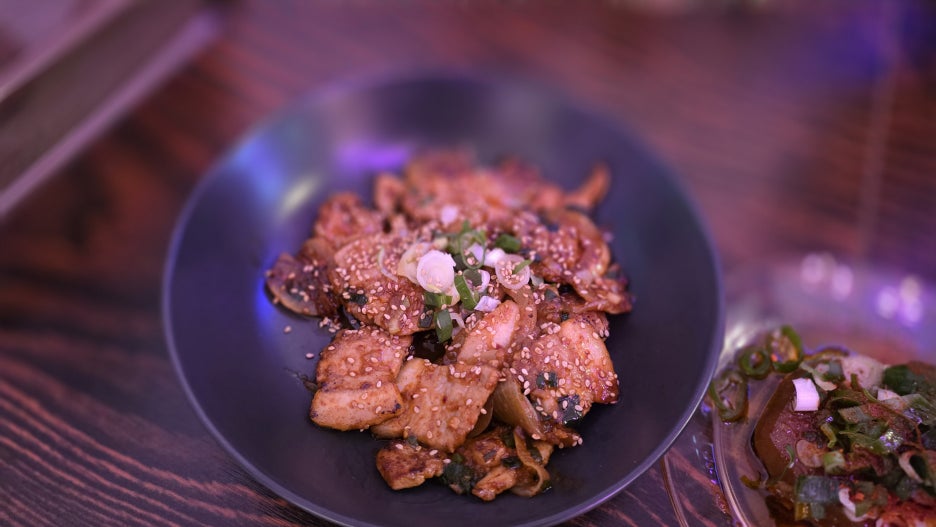
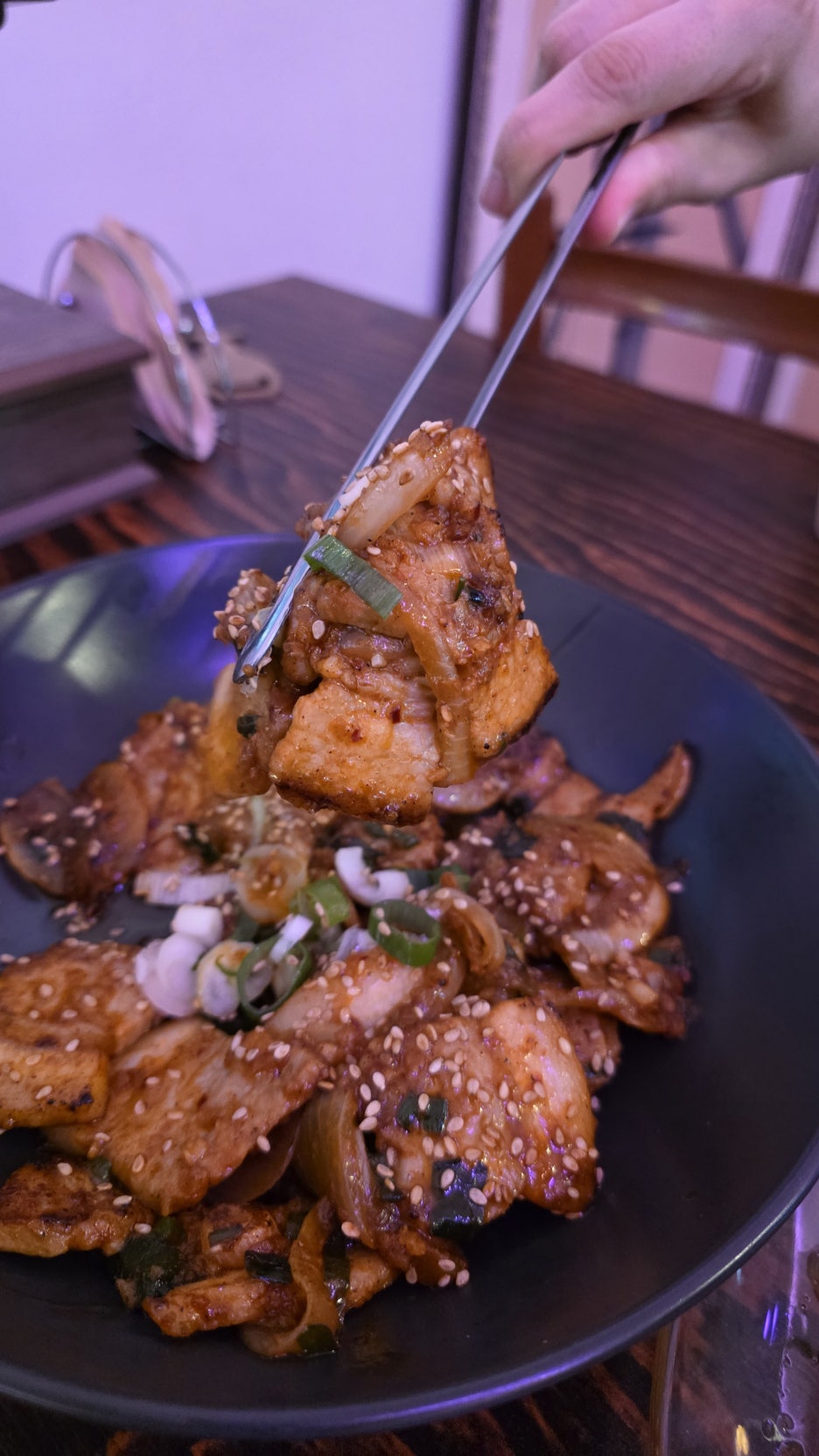
The gochujang jeyuk we ordered with the suji-tang came out soon after. Bite-sized pieces of pork were served on a black plate, with plenty of chopped green onions and sesame seeds sprinkled on top.
The sauce had soaked in well enough to give the meat a glossy, moist sheen. With each bite, sweetness came first, followed slowly by the heat of the gochujang. It was not too spicy, so it was good on its own, and alternating it with the clean broth of the suji-tang, the two complemented each other well.
It felt like the gochujang jeyuk filled in where the suji-tang alone might feel a little plain. Even coated in sauce, the meat was tender rather than dry. Picking it up together with the green onions on top added another layer of aroma, and I thought it would make a great bar snack too.
Alternating a spoonful of hot broth with a piece of spicy jeyuk, neither one got old quickly. It is a pairing where the clean flavor and the saucy flavor give each other a break, so even sitting for a long time, the two of us never got bored of the table.
The gochujang jeyuk was 9,000 won as of my visit, so it was easy on the wallet to add as a side after ordering a main soup or hot pot. With rice it makes a filling dinner, and with drinks it becomes a spicy snack, a really versatile dish.
Yesul-bap from an Instagram follow event
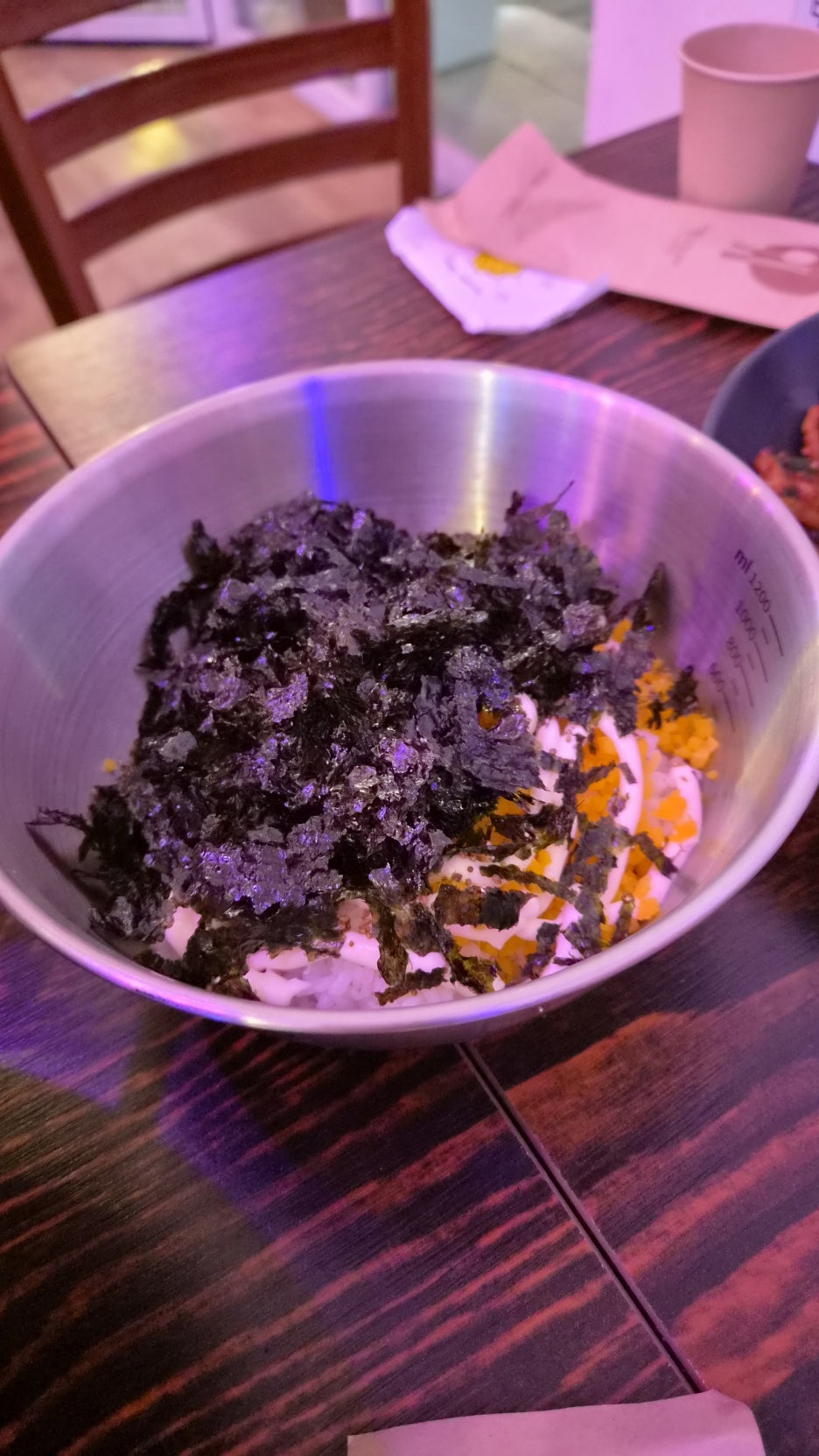
At the time of my visit, there was an event where you could get yesul-bap ("art rice") by following Sikdang Uyeon's official Instagram. Yesul-bap is a dish served in a big metal mixing bowl (yangpun), piled generously with rice, seaweed flakes, chopped egg and more.
When it first arrived, the seaweed flakes were piled so high, like a mountain, that you could barely see the rice underneath. When I mixed the rice and toppings at the bottom evenly with a spoon, a rich, nutty seaweed aroma rose up.
The yesul-bap alone was tasty, nutty and savory, but topping it with a piece of gochujang jeyuk made it much more filling. Spooning a little suji-tang broth over it and mixing it to make it moist worked well too.
The clean suji-tang, the sweet and spicy jeyuk and the nutty yesul-bap flowed into one another naturally without clashing, so the whole table felt like a single course. That said, event details can change depending on when you visit, so it is best to check at the restaurant whether it is still running.
Good for a meal or for drinks
Sikdang Uyeon was hard to sum up with a single vibe. Judging by the menu it is a hearty Korean restaurant, but the interior with pink lighting and folding screens felt like a casual bar. So it would not feel out of place to come for dinner with family, and it would also suit sharing snacks over drinks with friends.
The menu is broad, so it looked like a good place to come with people whose tastes differ. Of what we ate that day, the suji-tang, with its clean broth and tender tendon, is what I remember most. Add the sweet and spicy gochujang jeyuk and the nutty yesul-bap, and it made a very filling dinner.
It is a good place to come from Bundang for a casual meal, and also for a slow conversation around a pot of hot suji-tang. Next time I would like to order dishes I did not get to try this time, like the spicy braised beef tendon or the beef short rib platter.
To sum up, it is a place to keep in mind when you want a table built around a soup dish, or when you want a light drink somewhere not too noisy. If you are wondering where to have dinner near Dochon-dong, Yatap or Yeosu-dong, it is worth adding to your list.
This post is a visit review written with sponsorship from the business. My assessments and impressions of the menu are based on actually eating the food.
Check opening hours and closing days on the map before you go.
This box contains affiliate links. If you book through them, Mudung may earn a commission at no extra cost to you.
 Read nextSame neighborhoodBlack Goat Soup and Suyuk at Moran Market, Seongnam₩23,000Read →
 Read nextSame neighborhoodSeongnam Salt Bread Bakery: Lotus Bakery Revisit in Bokjeong₩4,200Read →