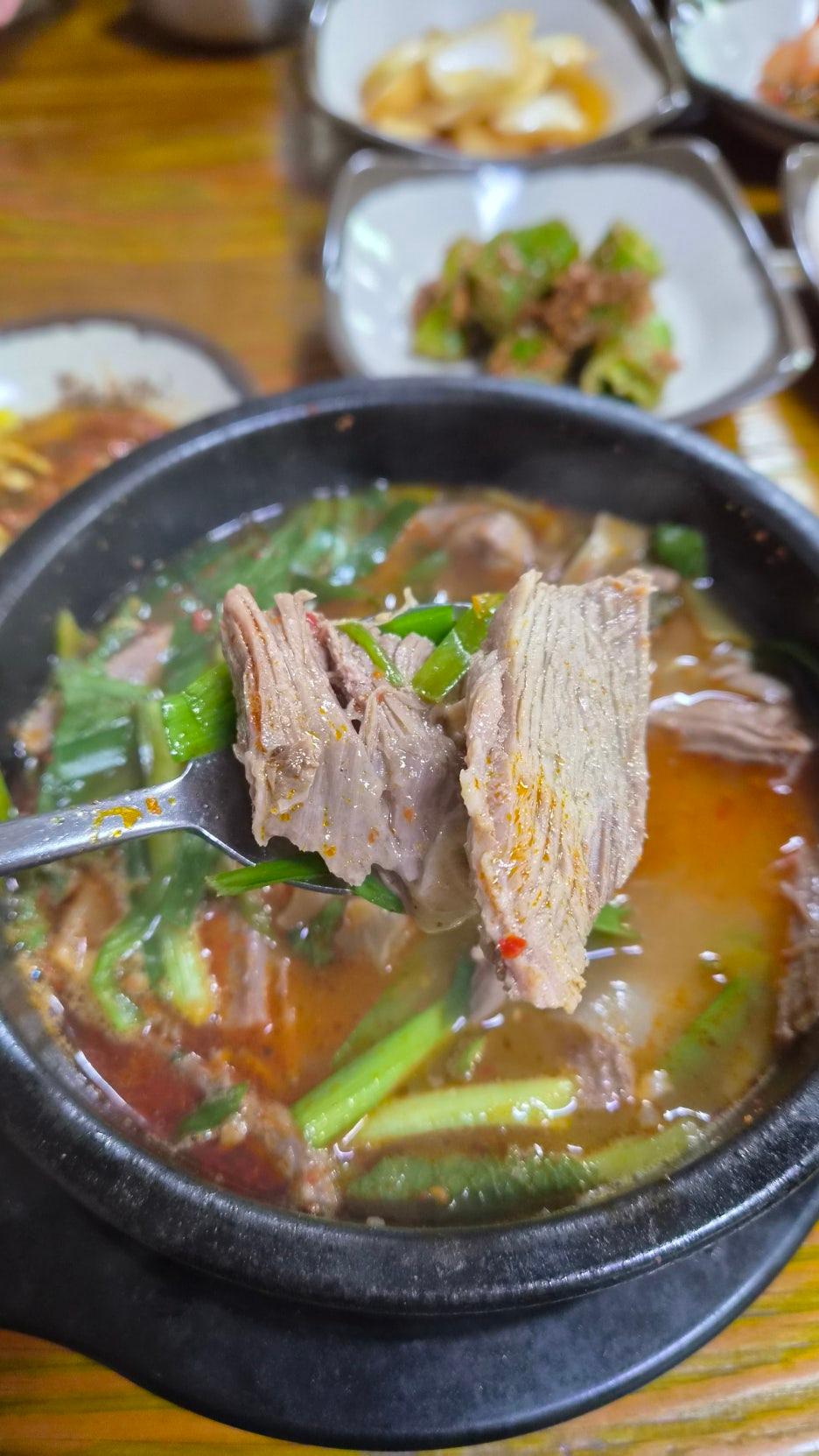
At Namsan Sikdang on the second floor of a building in Seongnam's Moran Traditional Market, I had black goat soup heaped with perilla powder and boiled black goat with chives. Despite my worries about gaminess, the broth was rich and clean.
In this article Show
- On a low-energy day, to the black goat alley at Moran Market
- An exterior that greets you with a big sign and menu boards
- White tiled walls and wooden tables, like a regulars' restorative food spot
- Black goat, bosin, duck and native chicken dishes on the menu
- Basic side dishes
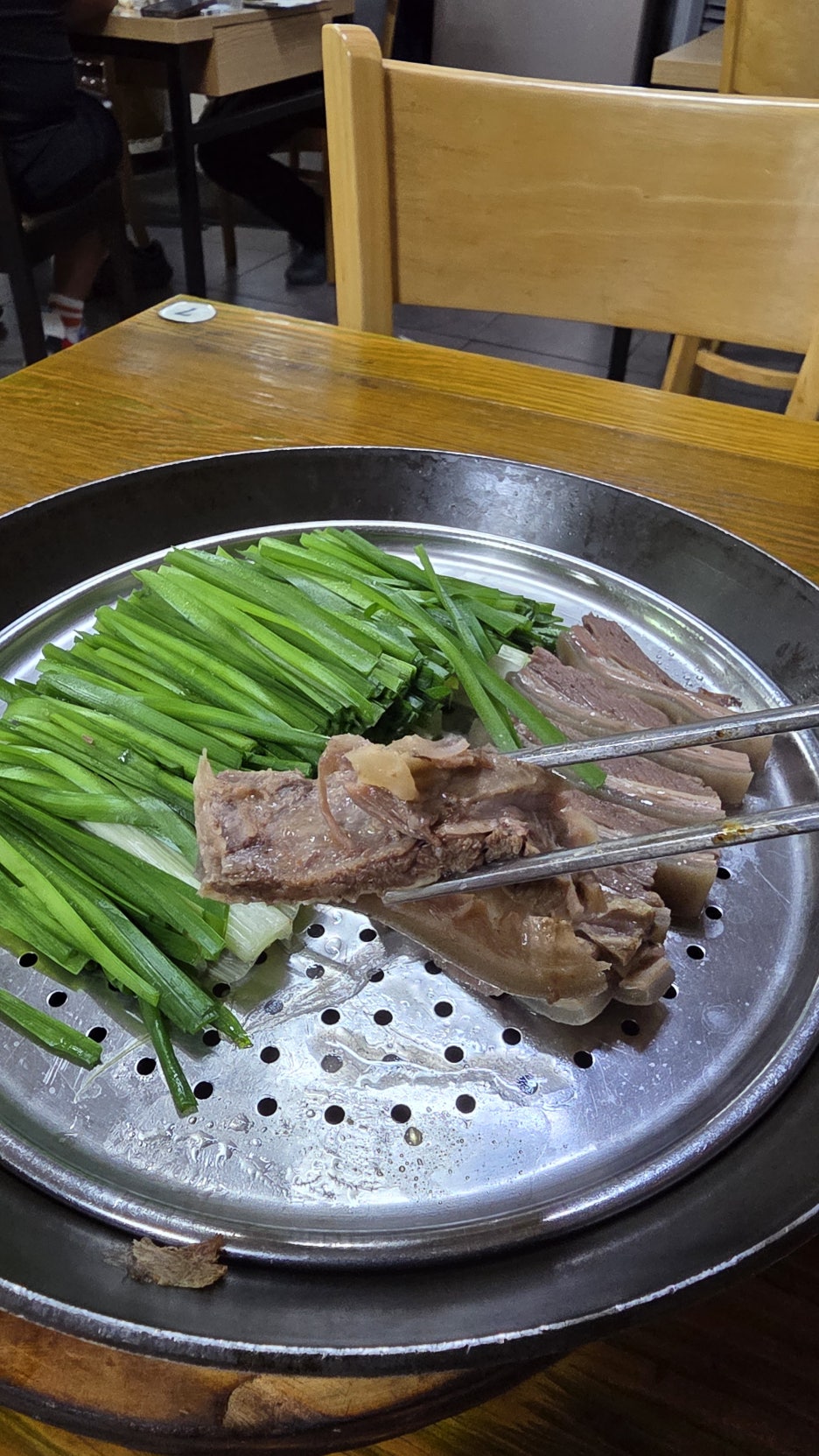
- Black goat suyuk with chives
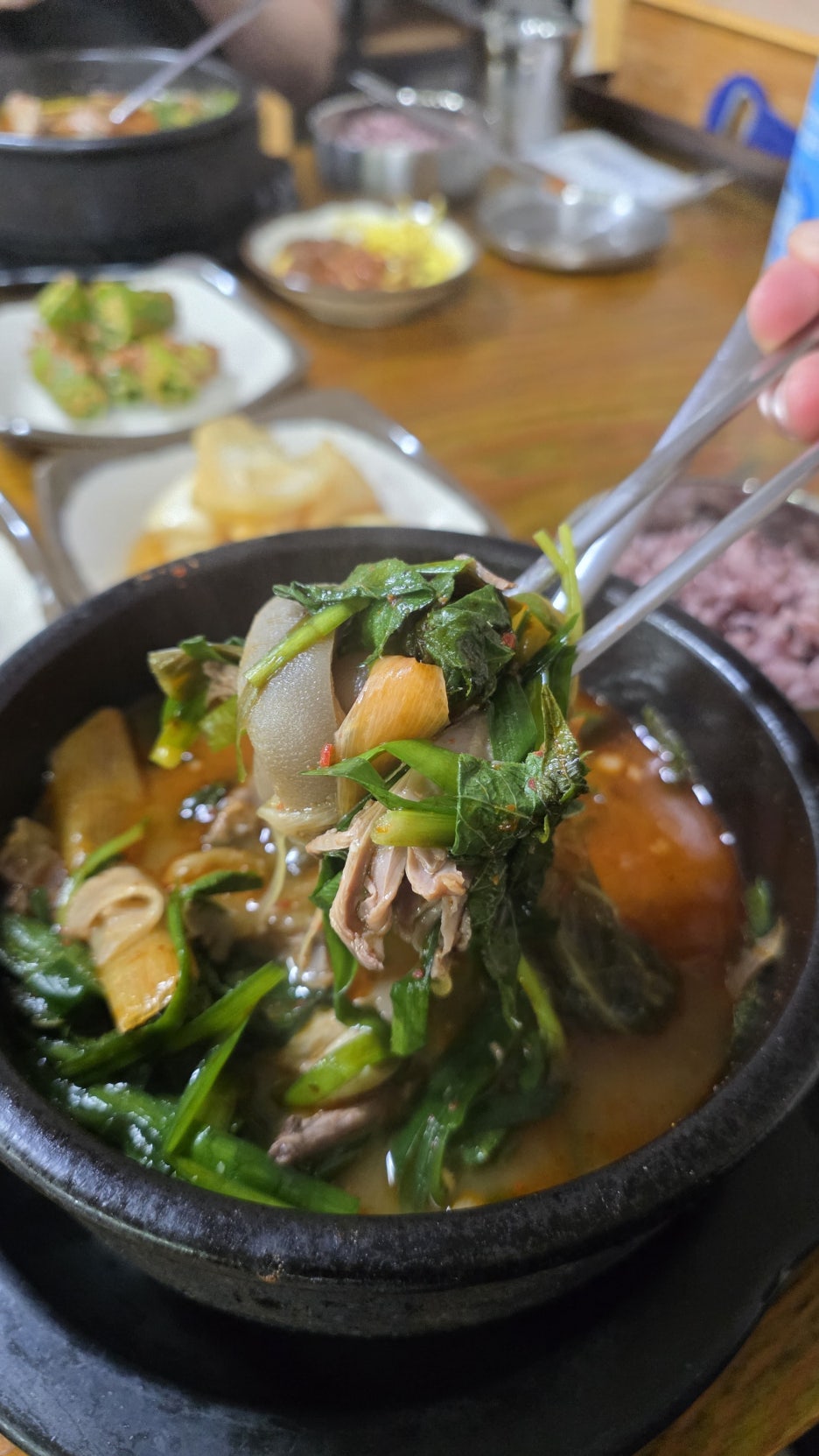
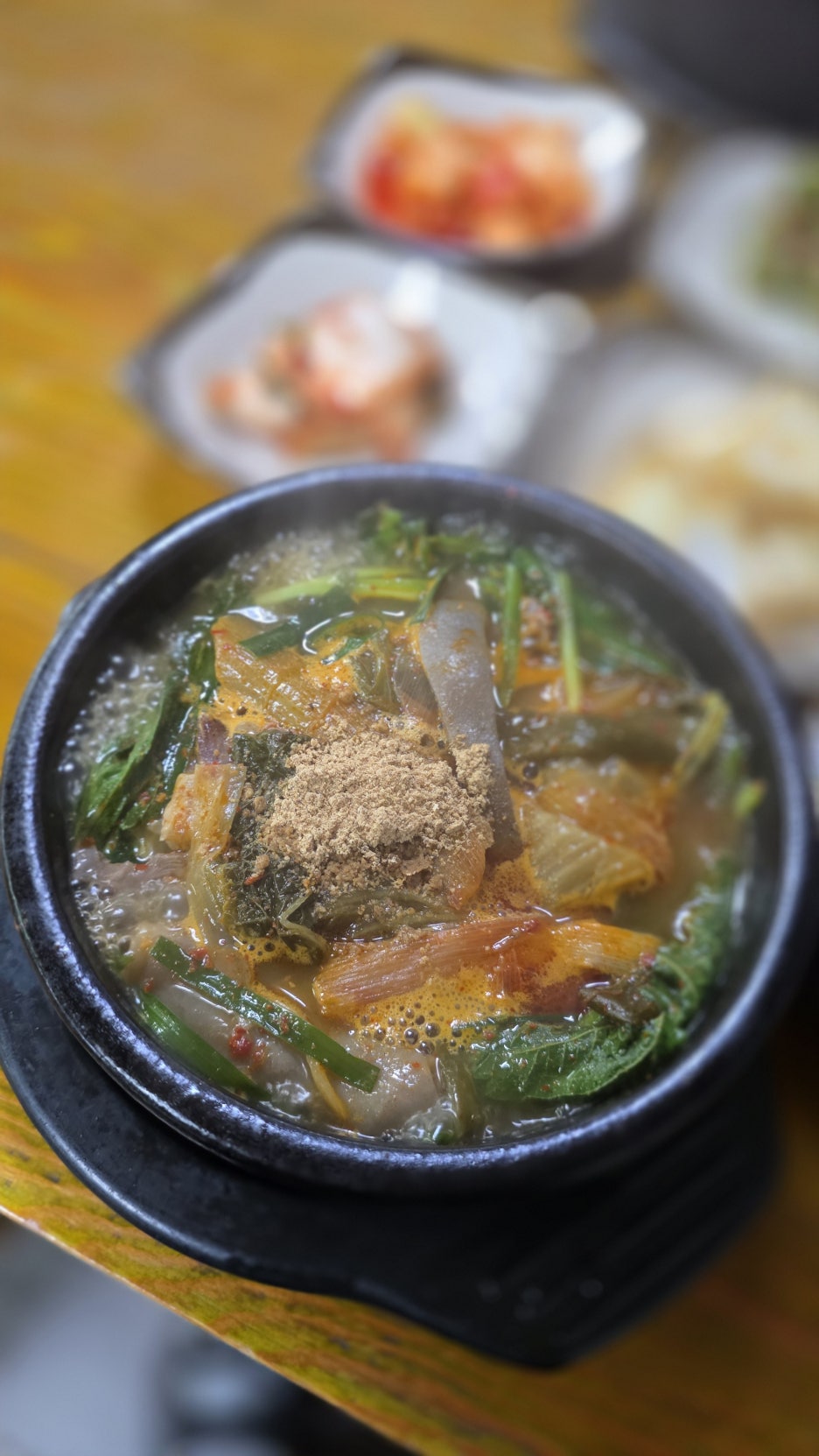
- Black goat soup served bubbling, finished by mixing in rice
- My takeaway on Namsan Sikdang
On a low-energy day, to the black goat alley at Moran Market
Lately I have had a lot of days when my body felt unusually heavy and my energy was low. On days like that, rather than spicy, punchy food, a warm, brothy boyangsik (Korean restorative food) comes to mind first. So this time, while walking near Moran Traditional Market in Seongnam, I stopped by Namsan Sikdang (남산식당), a restaurant specializing in black goat dishes.
Black goat divides people because of its distinctive smell, so honestly I was a little worried before going in. To cut to the chase, the smell was not as strong as I thought, and the broth was rich with a clean finish, so I left with a properly filling meal. Besides black goat soup, they also have boiled goat, hot pot and a seasoned goat salad, so it looked fine for a family meal out or for dining with your parents. It is a menu where coming alone for a bowl of soup or coming as a group to share a hot pot or boiled meat both feel natural.
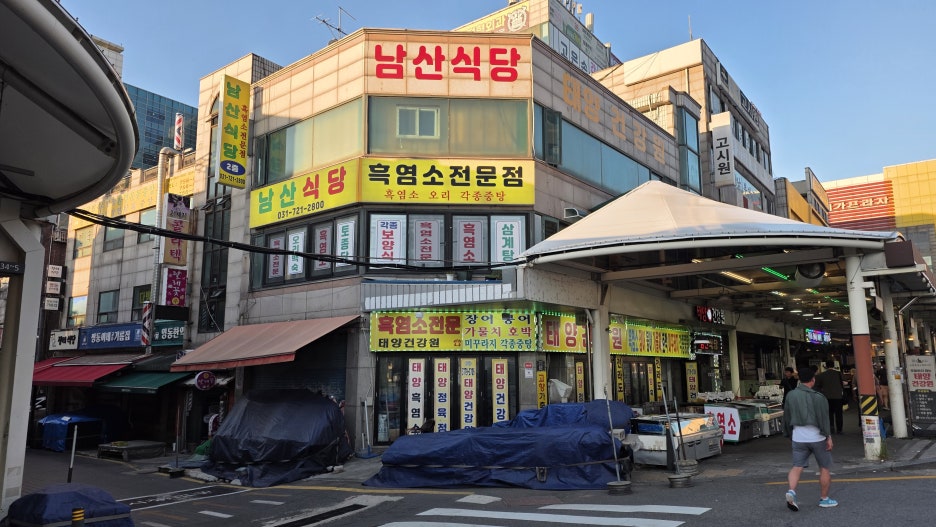
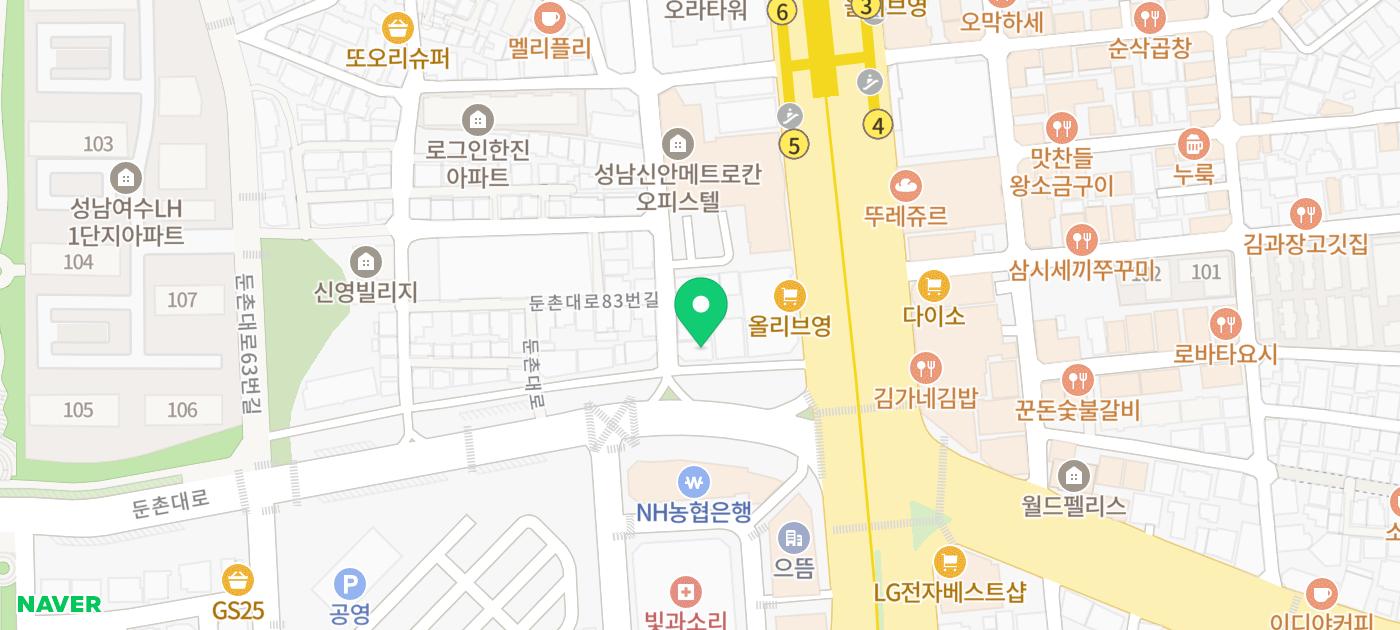
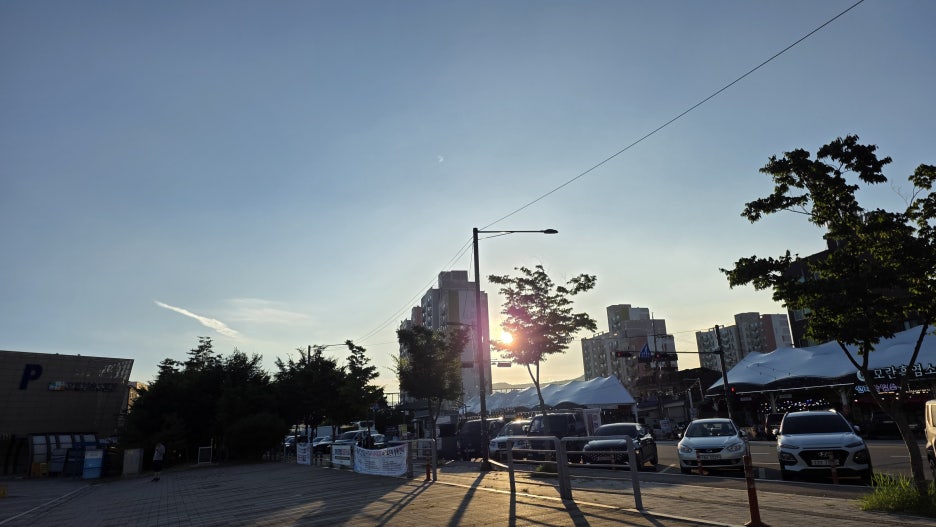
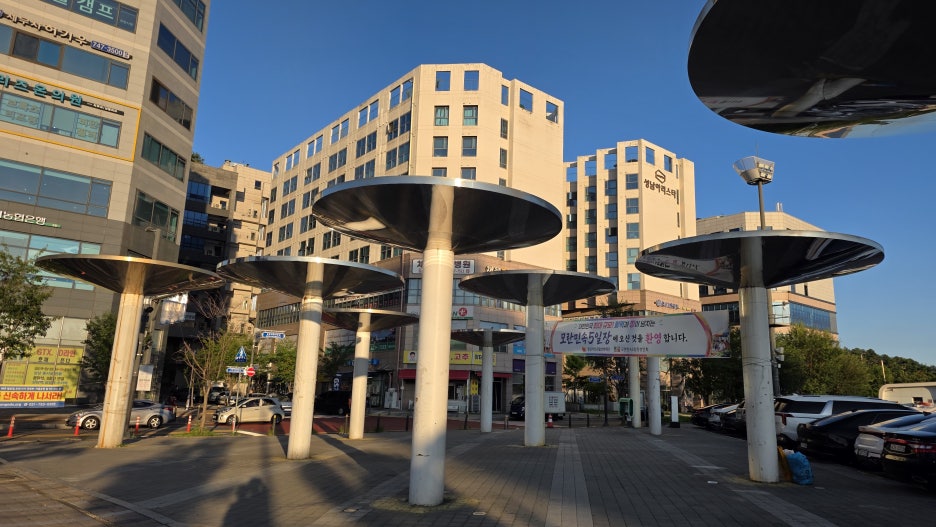
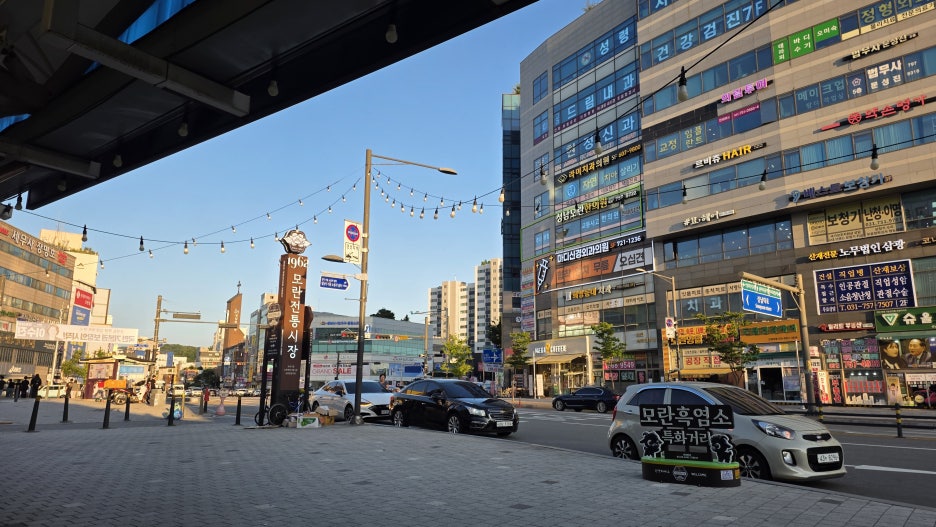
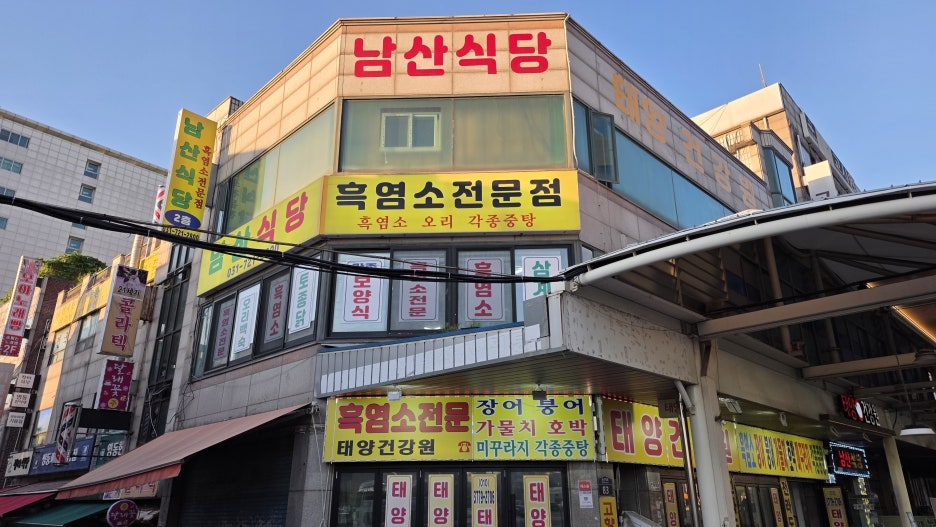
Namsan Sikdang is in the Moran Traditional Market area, on the second floor of the building at 83 Dunchon-daero, Jungwon-gu, Seongnam-si, Gyeonggi-do. This street is lined with black goat and restorative food specialists, so even a short walk brings several restaurants advertising black goat soup or boiled black goat into view. The lively market atmosphere filled the whole alley, and the long, slanting early-evening sunlight made the street scene stick in my memory.
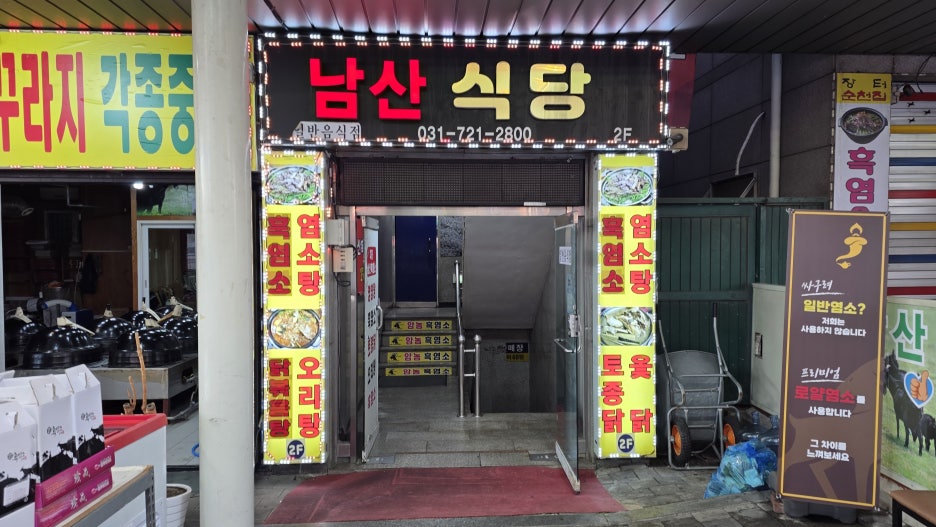
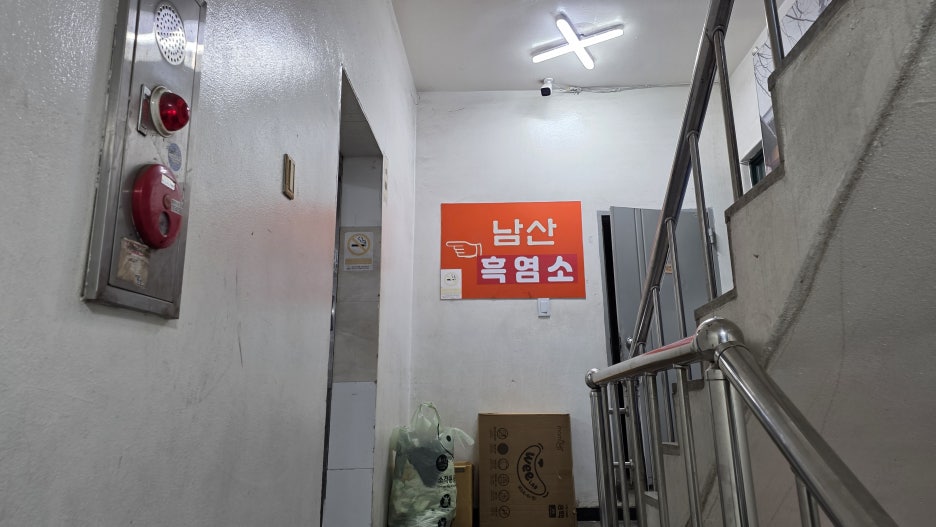
The restaurant is on the second floor of a building inside the market, so you just climb one flight of stairs to reach the entrance. If you are driving, I would suggest checking the parking situation around Moran Market before setting off. Walking slowly through the market alley and finding the Namsan Sikdang sign among all the similar ones felt like a fitting start for this neighborhood.
An exterior that greets you with a big sign and menu boards
At the building entrance there is a large sign reading 'Namsan Sikdang' along with notices that they serve black goat soup, native chicken, duck soup and more, so I did not get lost even on my first visit. Standing signs for black goat soup, native chicken and dakdoritang (spicy braised chicken stew) are set up on both sides of the entrance, so even from a distance you can tell at a glance what kind of food they make.
It does not have the neat, polished look of a newly opened restaurant. Instead, large signs and colorful menu boards are layered on top of each other, giving a strong impression of a market favorite that has been doing business in the same spot for a long time. This rough-around-the-edges exterior actually suited the market alley well.
Restaurants and shops of Moran Traditional Market line up around the building. It seemed convenient to head back down after eating and keep browsing the market. If you like a homey market atmosphere, walking the alleys to find the restaurant could be a small pleasure in itself.
White tiled walls and wooden tables, like a regulars' restorative food spot
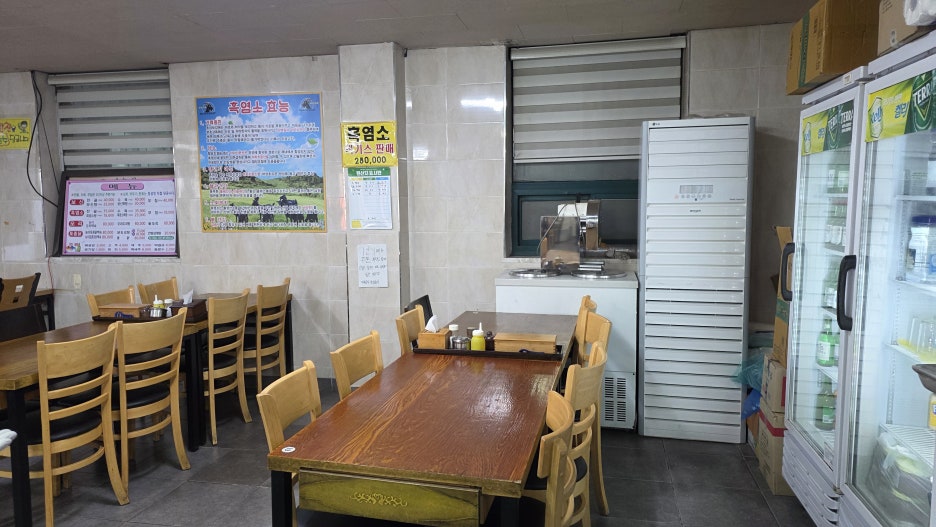
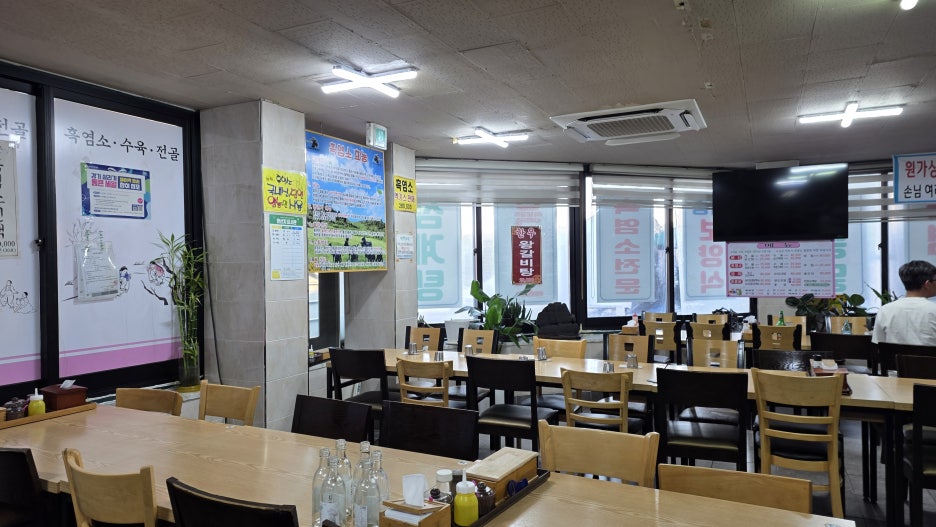
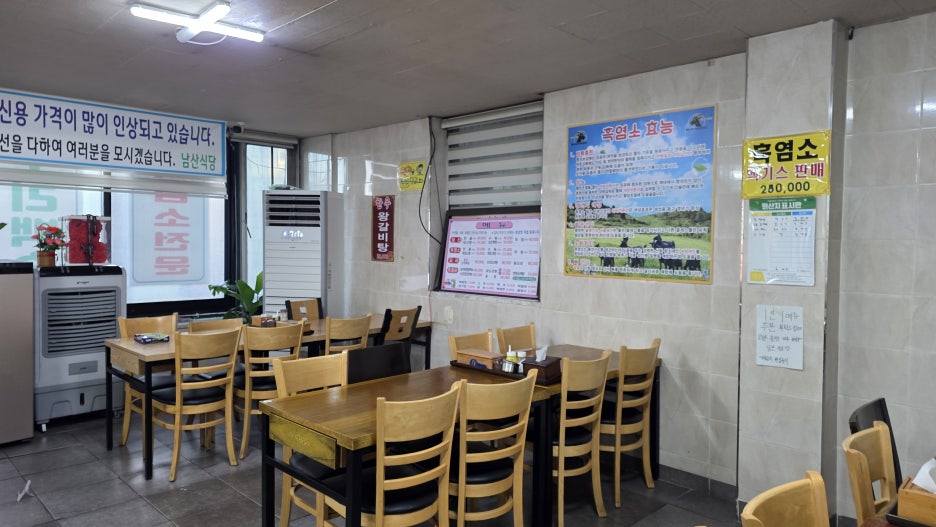
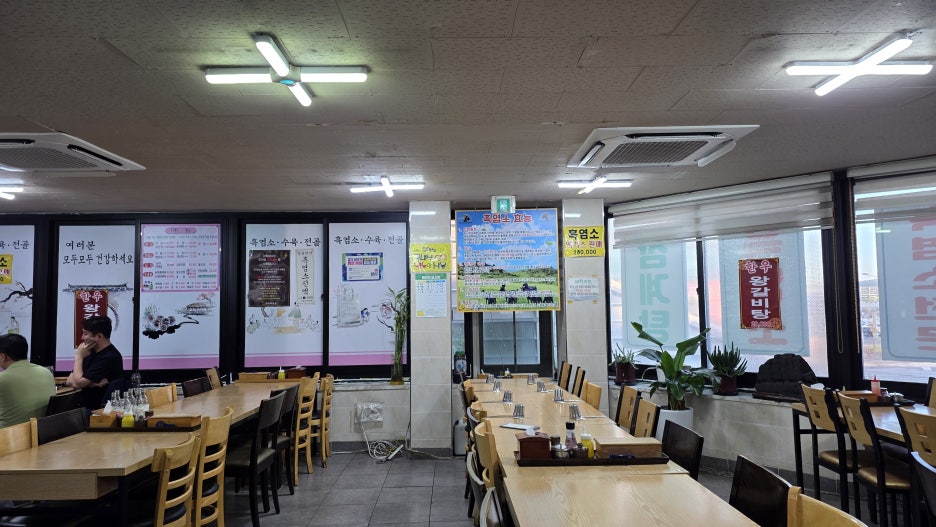
Inside, light-colored wooden tables and chairs are lined up neatly. The walls are finished in white tile, with menus and notices about black goat posted here and there. It is not a heavily decorated interior, but that makes for a comfortable atmosphere where you can focus on the food. It was a relaxed, market-restaurant kind of space where you would not feel awkward lingering over a bowl of soup.
The tables were mostly four-seaters, so pushing tables together for a larger group looked easy. When we went, there were already customers eating, most of them taking their time over steaming soups or hot pots. Overall, it strongly felt like a restorative food spot where neighborhood regulars drop in casually.
There was also a notice on the wall introducing the nutritional content and characteristics of black goat. I only skimmed it for reference, though; on this visit I decided to judge the food above all by how it actually tasted and whether the gaminess I had worried about was there.
Black goat, bosin, duck and native chicken dishes on the menu
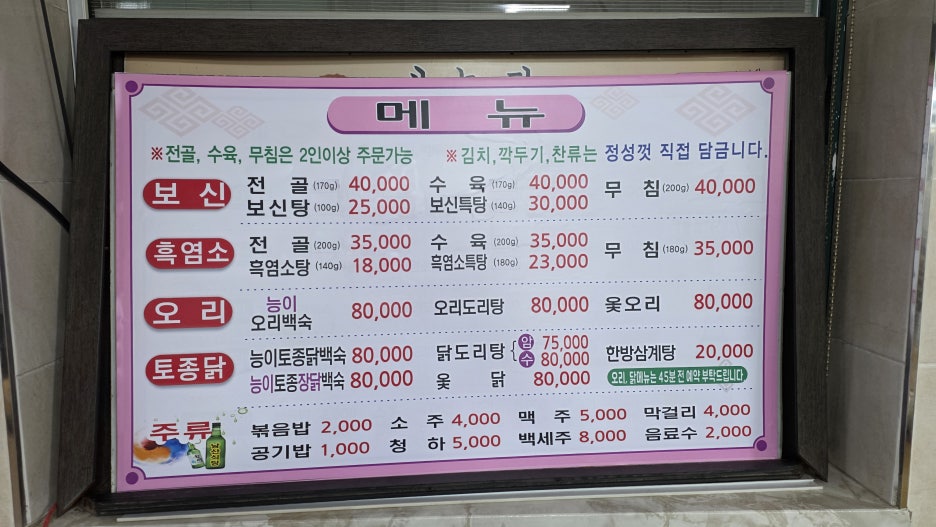
Namsan Sikdang has a fairly varied menu centered on black goat and bosin dishes. Going by the menu photos, black goat soup was 18,000 won and the special black goat soup was 23,000 won. Black goat hot pot, black goat suyuk (boiled sliced meat) and black goat muchim (seasoned salad) were listed at 35,000 won each. All prices are from the menu as of my visit and may change over time, so it is best to check again before you go.
Bosintang (a traditional Korean stamina soup) was 25,000 won and the special bosintang 30,000 won, and the bosin side also had its own hot pot, boiled meat and seasoned salad. Other dishes good for sharing around a table were on there too, such as duck baeksuk (whole boiled duck), duck doritang (spicy braised duck), ot-ori (duck with lacquer tree), native chicken baeksuk and dakdoritang.
The menu also noted separately that the hot pot, boiled meat and seasoned salad require an order for two or more. If you were planning to go alone and order the boiled meat, that is good to know in advance. We decided to center the meal on the warm black goat soup and add the black goat suyuk on the side. The idea was to taste the broth with a bowl of soup and check the flavor of the meat itself separately with the suyuk.
Basic side dishes: kimchi, kkakdugi and a perilla dipping sauce
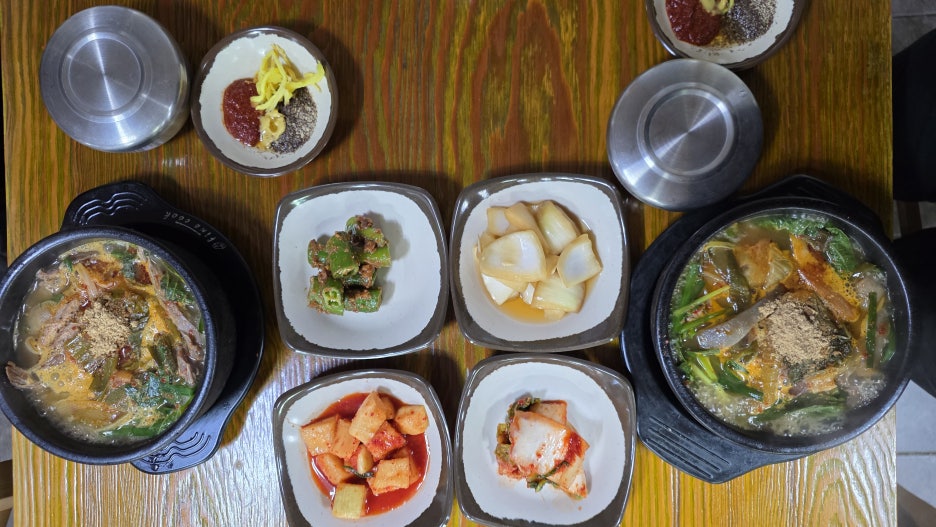
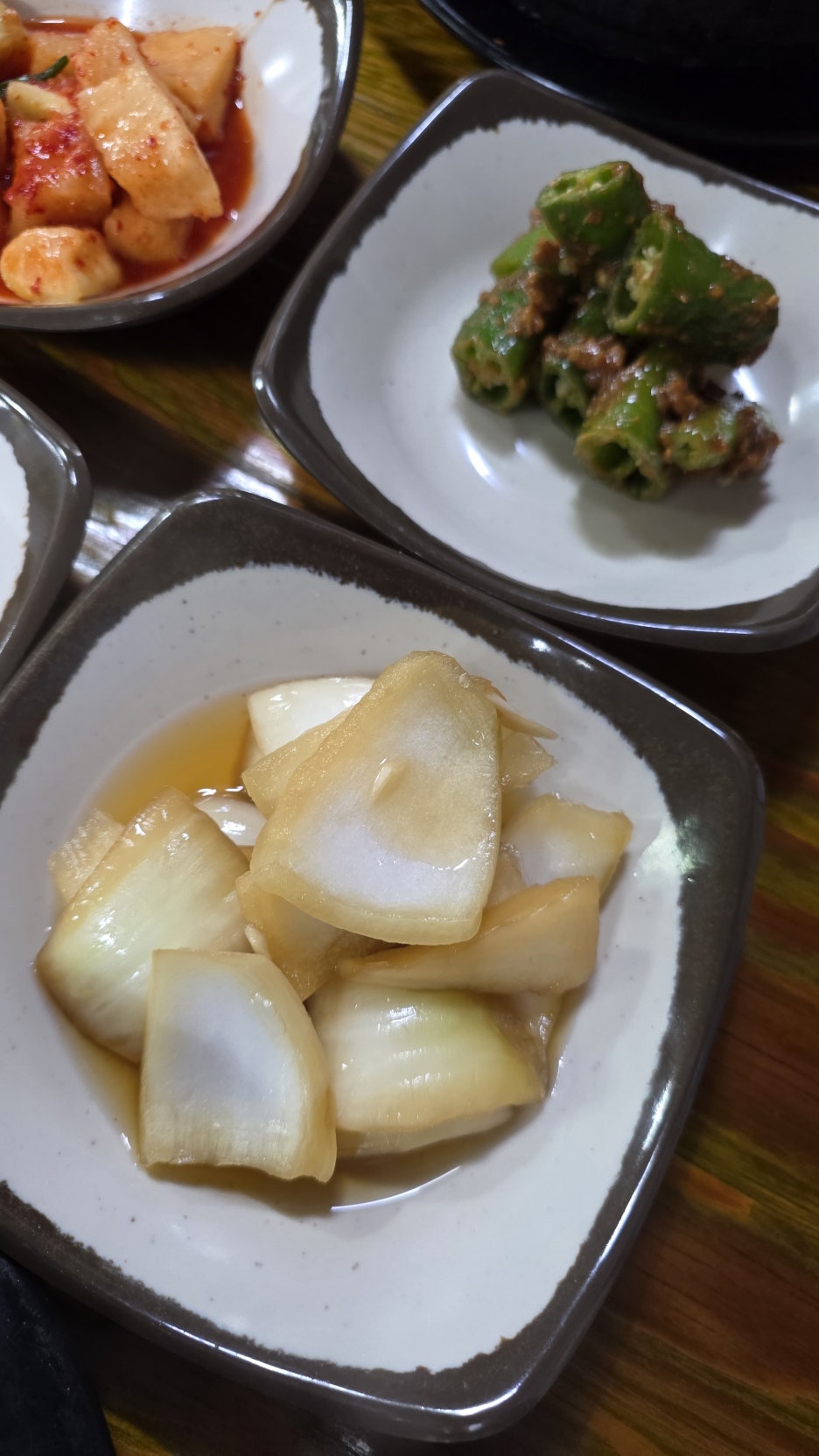
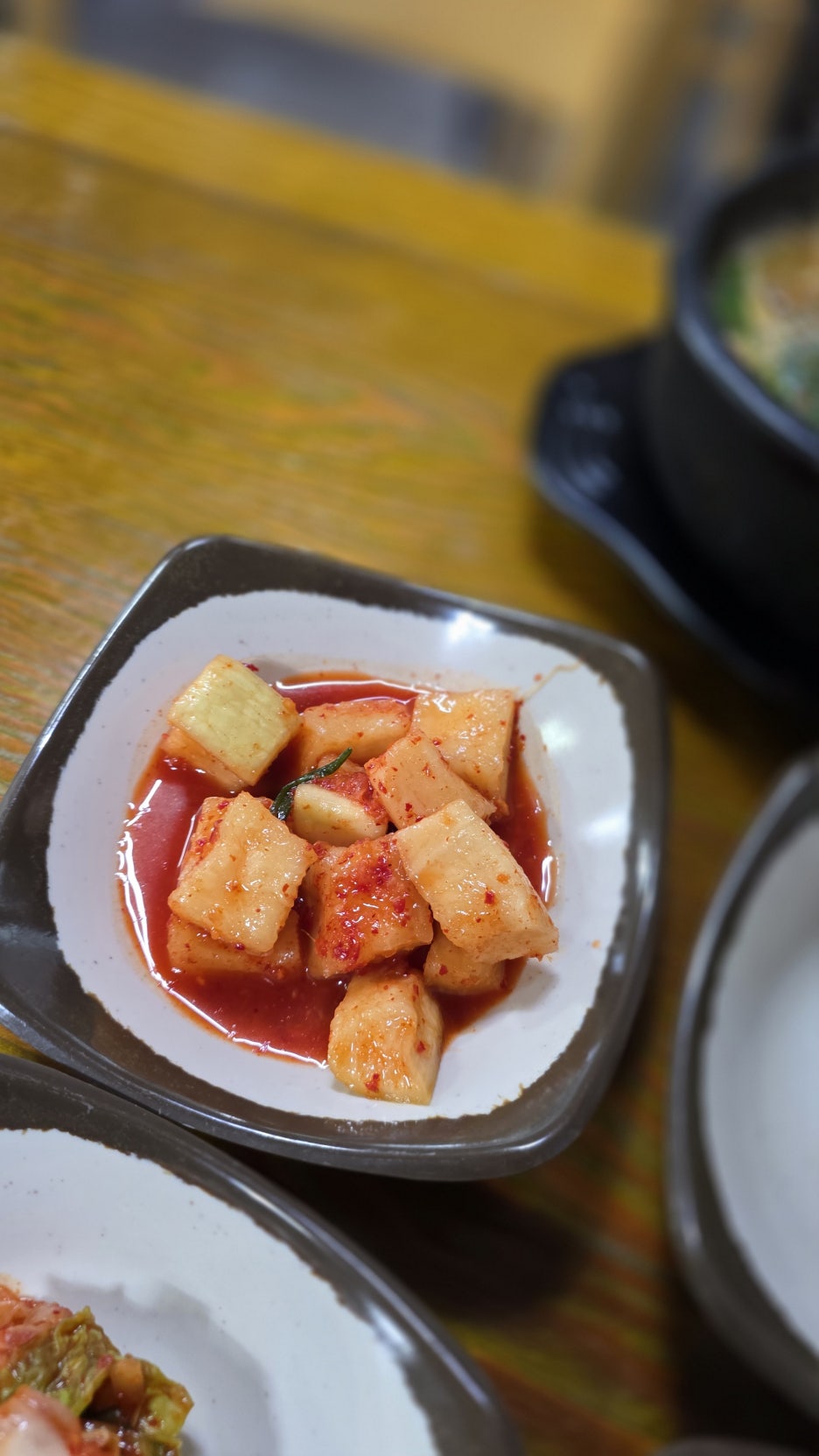
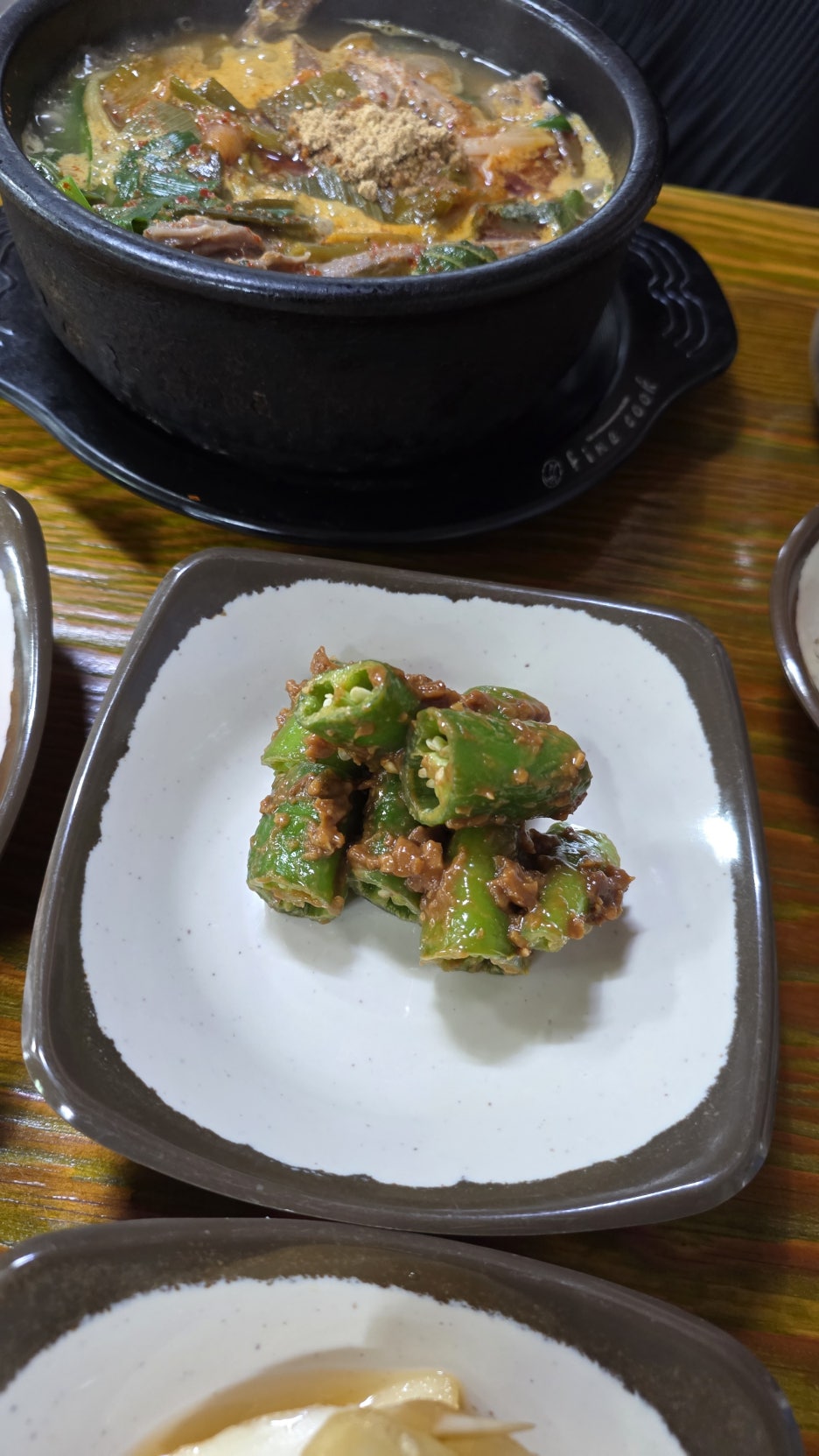
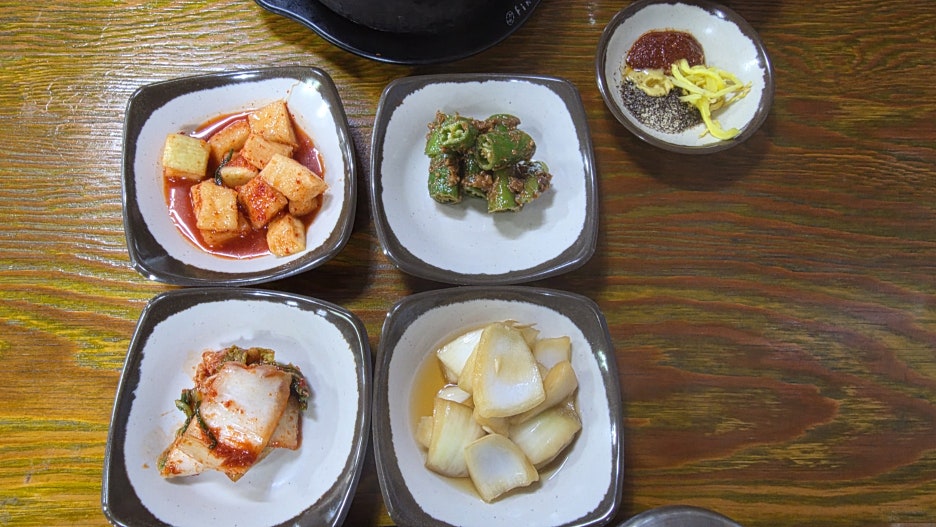
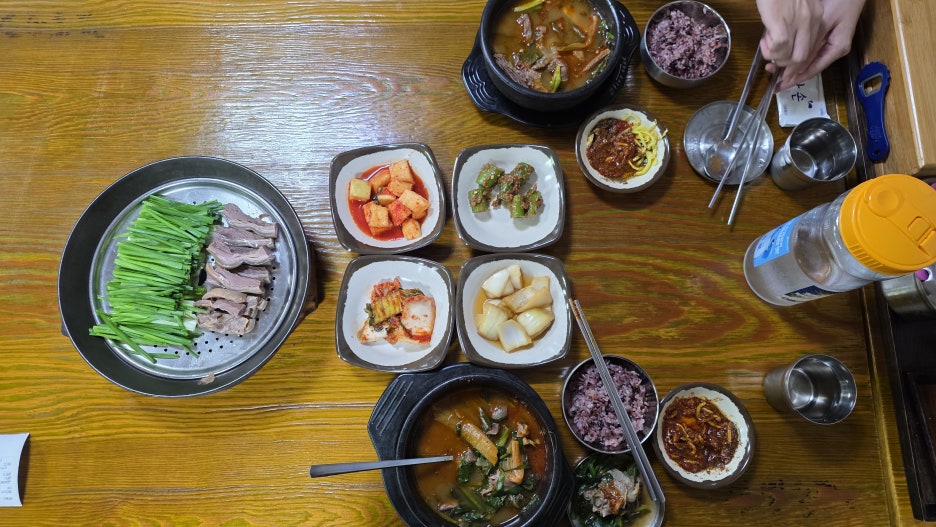
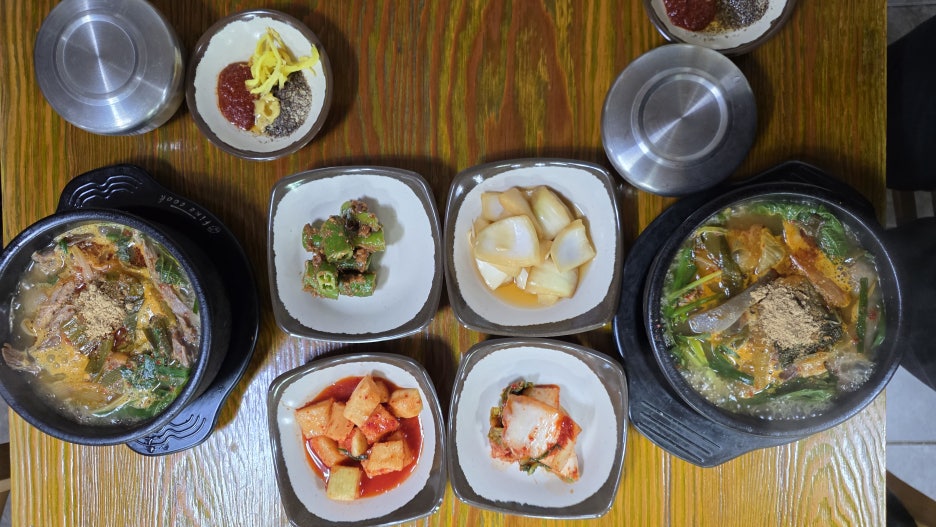
After ordering and waiting a little, kimchi, kkakdugi (cubed radish kimchi), pickled onions and cucumber peppers in doenjang (fermented soybean paste) were laid out as the basic banchan. There were not a huge number of them, but each was well suited to eating alongside the hot black goat soup, so it felt solid.
The kimchi kept the crunch of the napa cabbage and was fermented just enough to go perfectly with a soup dish. The kkakdugi was refreshing and tangy, cleaning up my palate after a few spoonfuls of the rich broth. The pickled onions were pleasantly sweet and salty, a good match with the meat.
The cucumber peppers in doenjang had a savory bean paste flavor plus a crunchy texture, so I kept reaching for them throughout the meal. None of the side dishes stood out on their own; they were more about supporting the main dish.
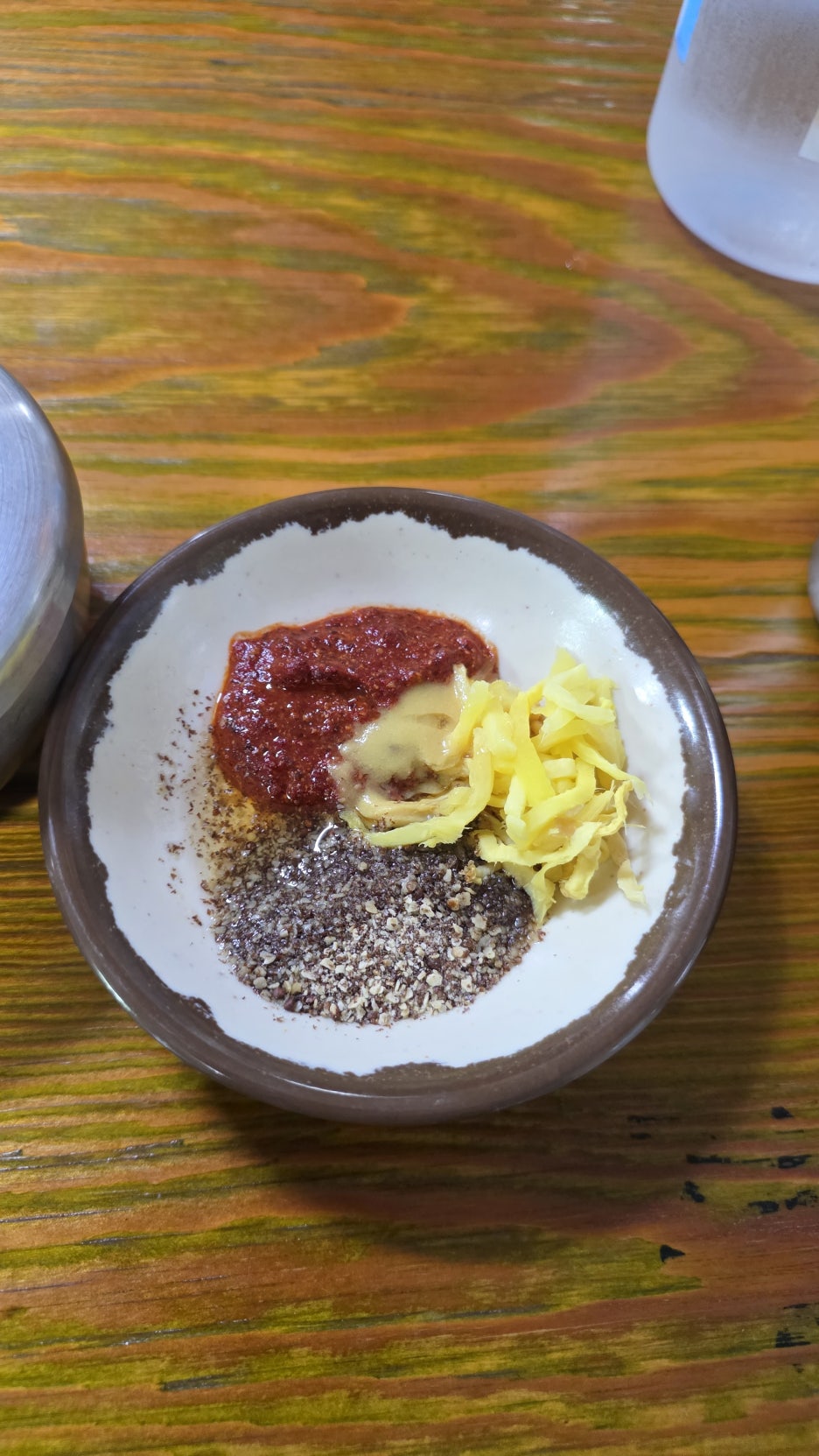
A separate sauce bowl held perilla seed powder, mustard and minced seasoning together. You mix them to taste and dip the meat, so even people trying black goat for the first time could adjust the flavor without much pressure. Whether to lead with the nuttiness of perilla or play up the sharp kick of mustard is up to you, depending on how you mix it.
Black goat suyuk with chives: the texture of lean meat and skin
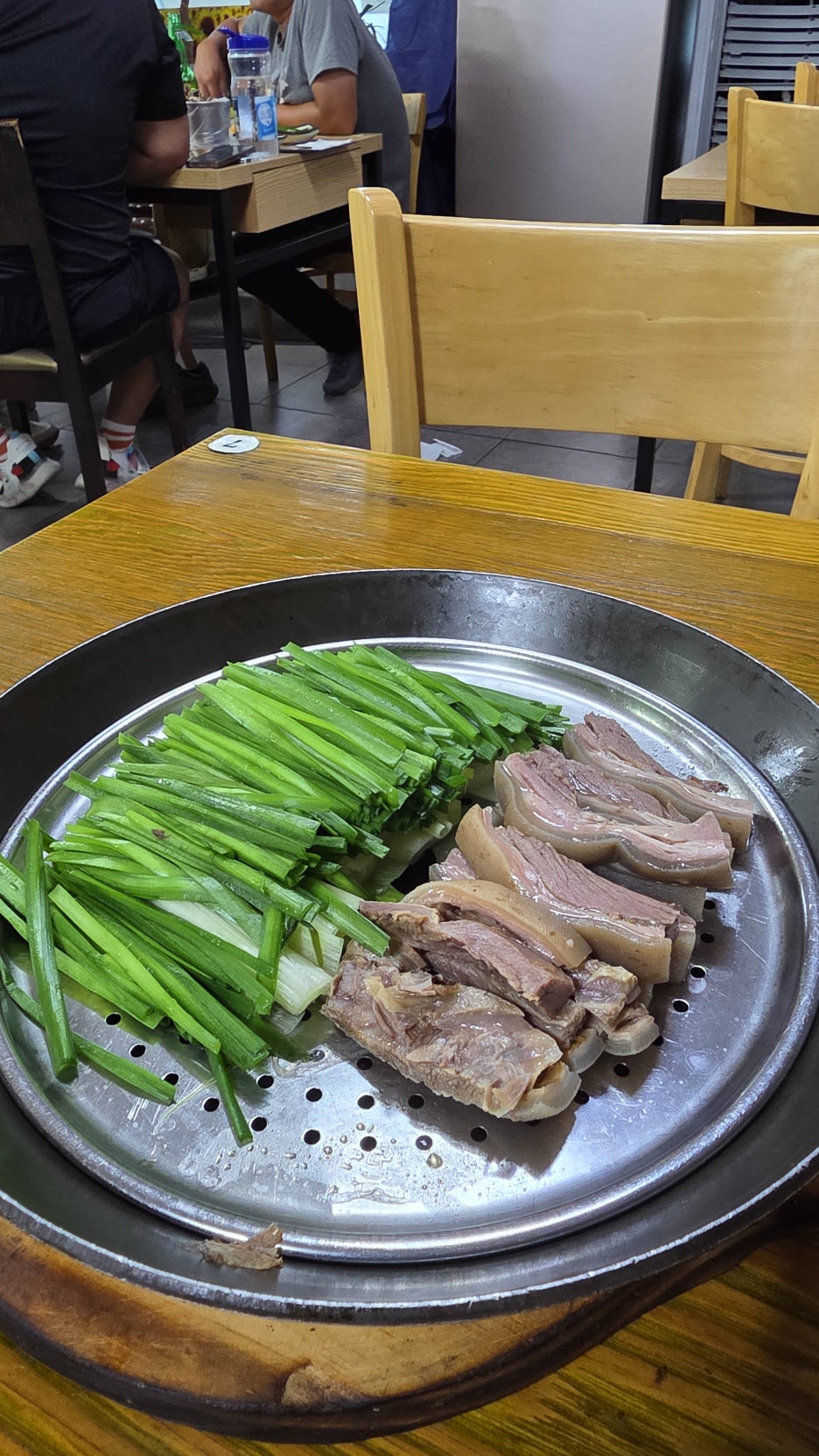
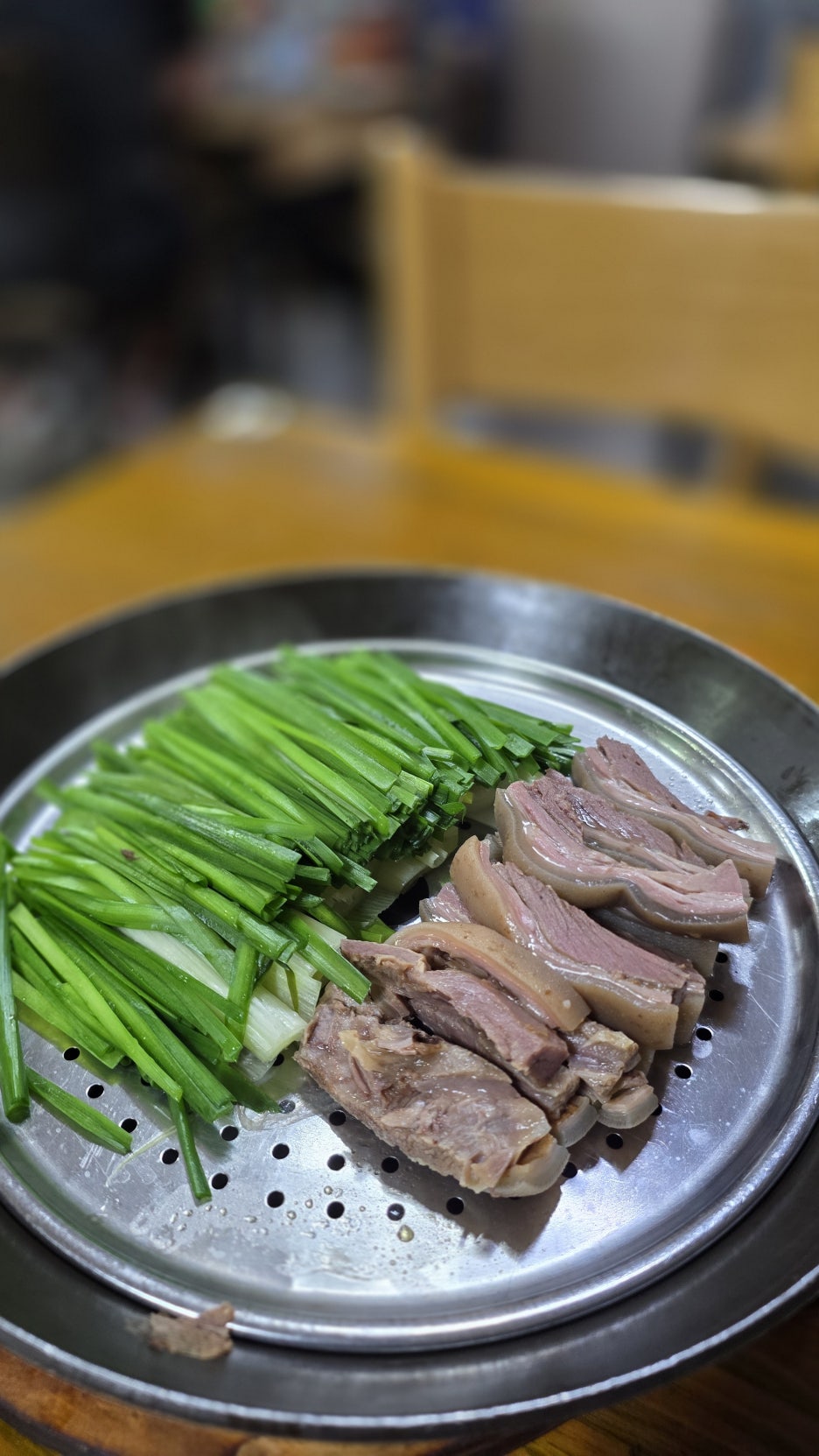
The first thing to arrive was the black goat suyuk. Black goat meat cut into bite-size pieces came on a wide plate with chives. At first I was a little tense that the distinctive black goat smell might come on strong, but even up close there was hardly any off-putting odor, just a mild, clean meaty aroma.
The meat had lean parts and skin attached in good proportion, so you got two textures in one piece. The lean meat was moist rather than dry, and the skin was soft with a slight chewiness. The more I chewed, the clearer the difference between the two became, so it never felt monotonous. I picked up the first piece carefully because of my worry about gaminess, but from the second piece on my chopsticks moved much more easily.
Picking up a strand of chives with each piece added a fragrant note that brought out the clean flavor of the meat even more. Topping it with pickled onion added a sweet-and-sour taste, and dipping it lightly in the sauce of mixed perilla and mustard added a nutty flavor with a sharp kick to the nose.
Eaten on its own, the boiled meat could feel a bit plain after a while, but alternating it with chives, pickles and the dipping sauce kept it from getting old right down to the last piece. It was a rustic yet generous plate, true to a market restorative food spot, and it seemed like it would work well both as a drinking snack and as a dish for sharing.
Black goat soup served bubbling, finished by mixing in rice
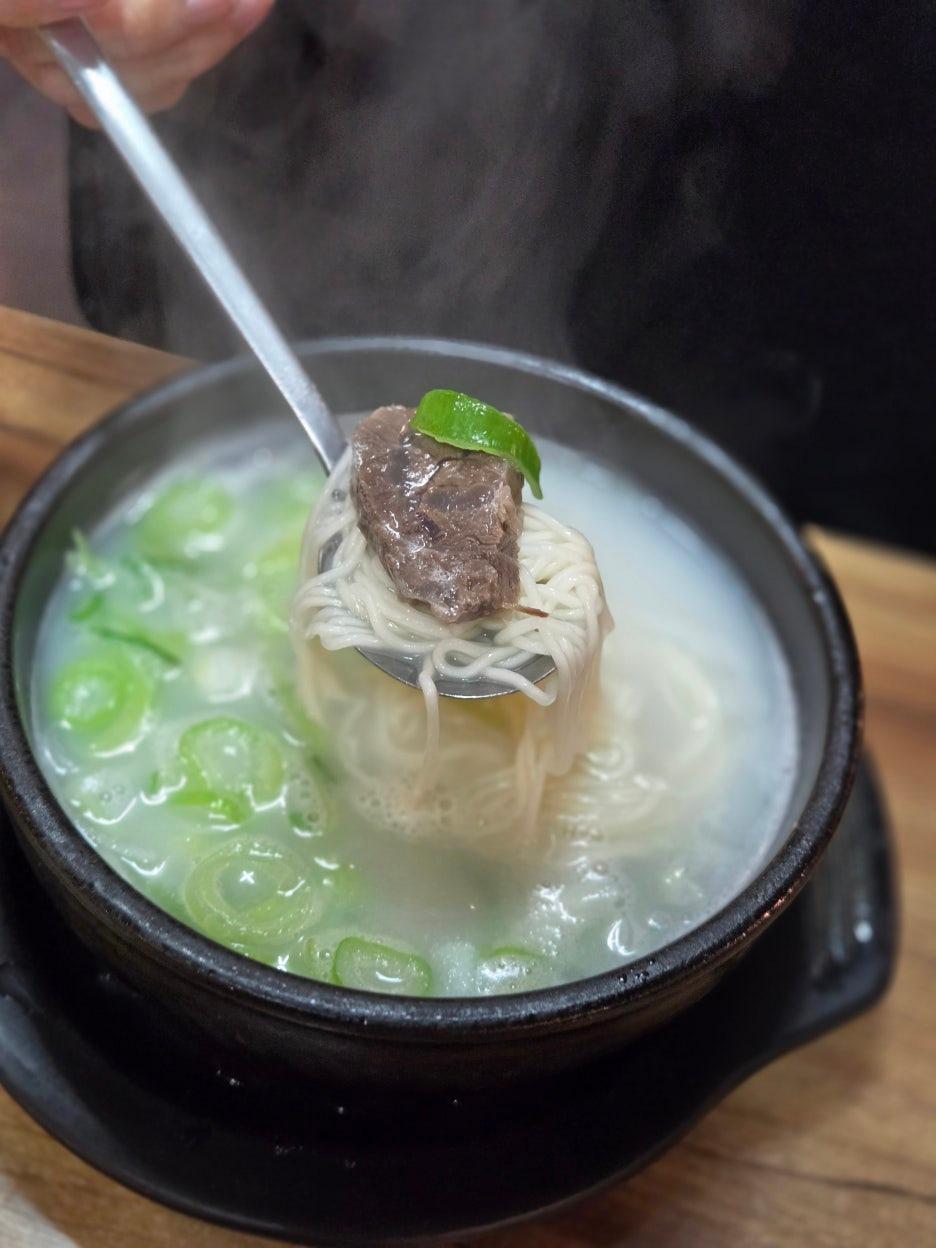
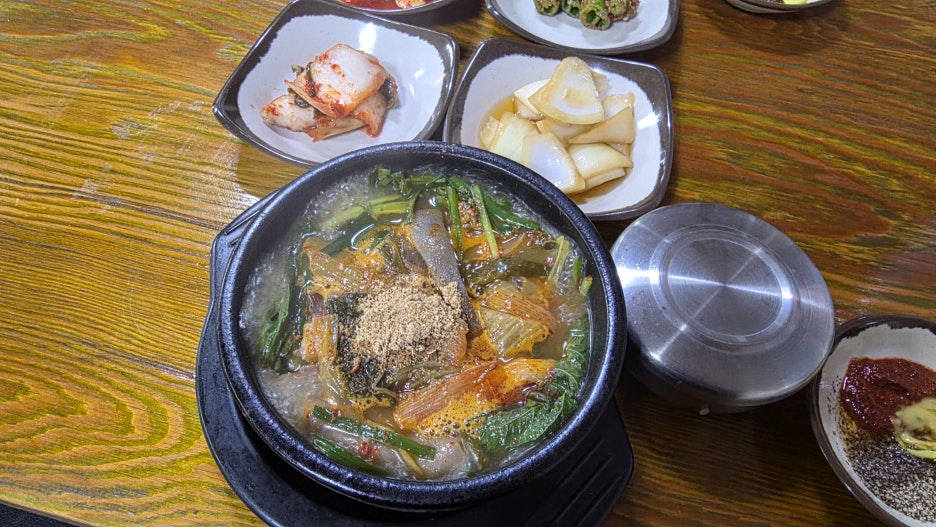
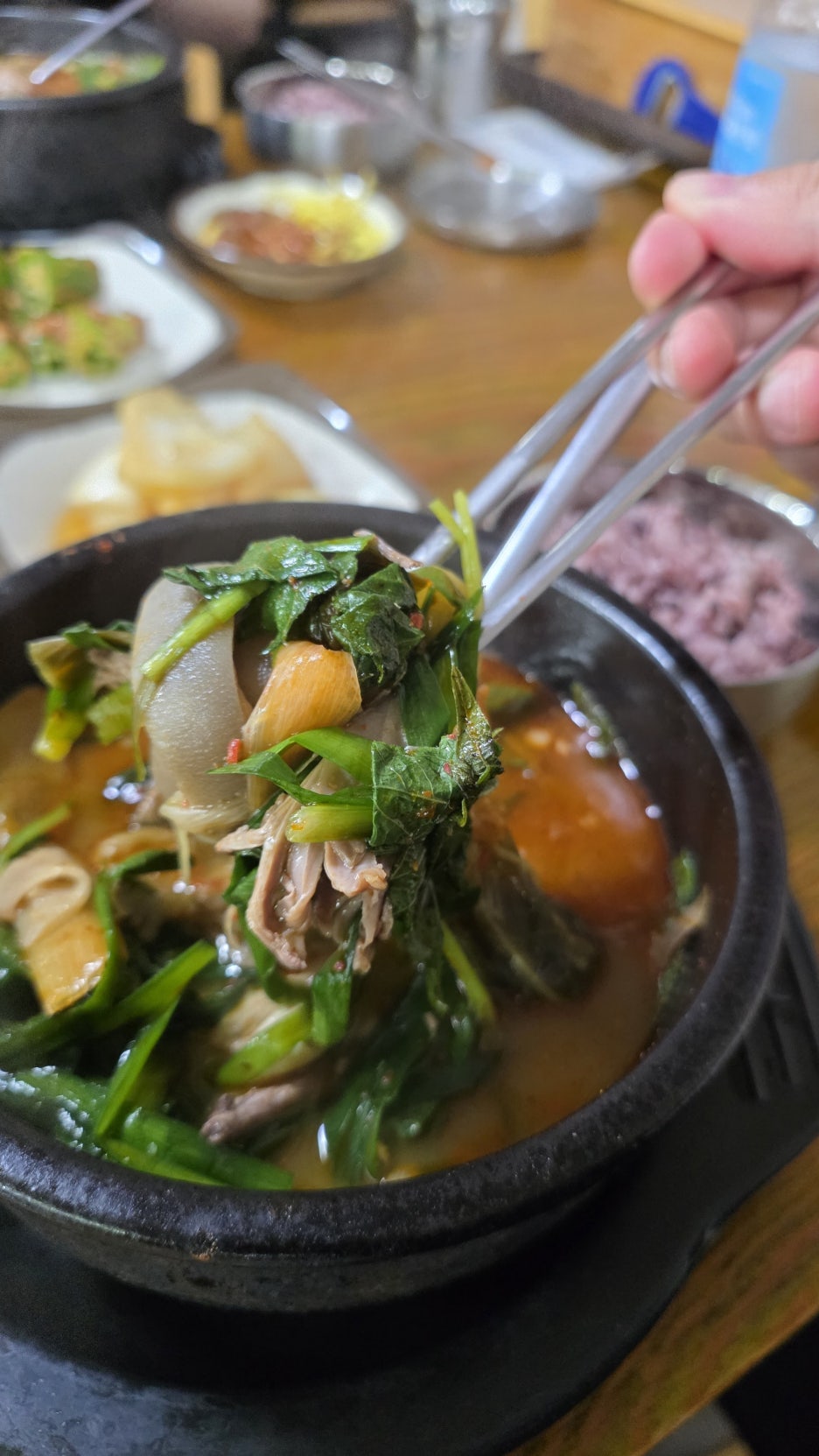
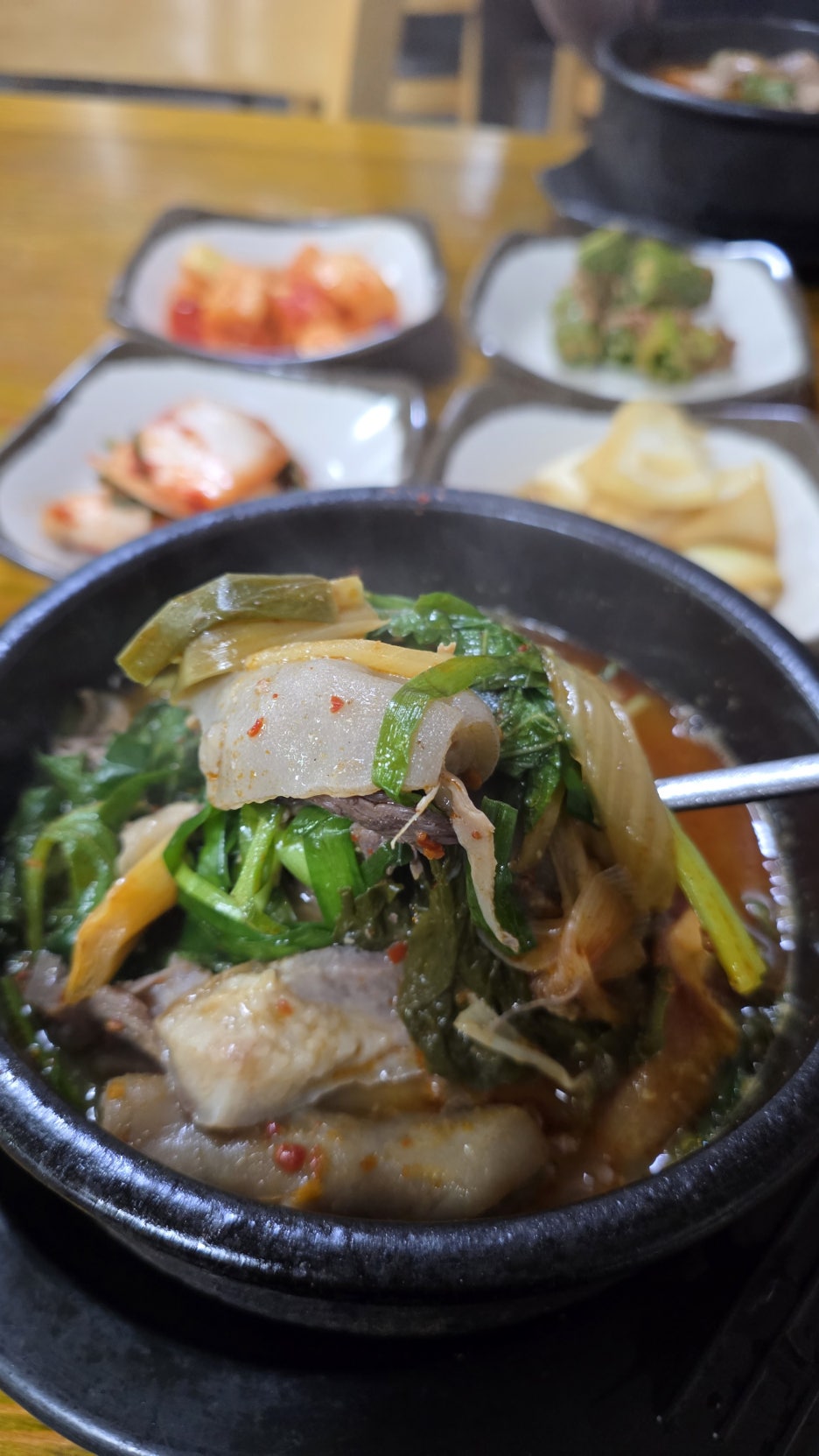
The black goat soup came out bubbling in its ttukbaegi (earthenware pot). Even after being set on the table, the broth kept boiling for a while, and just looking at it made me feel warm. The surface was generously covered in perilla powder, and underneath there was plenty of black goat meat, chives, perilla leaves, green onion and dangmyeon (glass noodles).
At first I tasted a spoonful of broth without mixing in much of the perilla powder. With nothing spicy or harsh, what came through first was a deep flavor, as if the meat had been simmered for a long time. Then, once I stirred the perilla powder in, the broth got a little thicker and the nutty aroma grew stronger. The scent of perilla leaves and chives had also naturally soaked into the broth, which seemed to gently tone down black goat's distinctive smell.
There was more meat than I expected, too. Each ladleful brought up tender black goat meat along with vegetables, and since it was cut into decent-size pieces rather than shredded too finely, it had a good bite. The meat was not tough, pulling apart softly along the grain, and having simmered in the pot for a long time, it had soaked up plenty of the broth's flavor. Eaten with perilla leaves or chives, it was fragrant yet clean.
The glass noodles had absorbed the broth and were well seasoned. The name black goat soup might sound unfamiliar at first, but the actual taste is close to a rich meat soup or restorative soup with perilla, so it was easier to get into than I expected. With every spoonful, the perilla and vegetable aromas came up first and the meaty flavor backed them up, so the sense of distance the name black goat gives quickly disappeared.
As expected, the black goat soup was most filling with rice. At first I dipped the rice into the broth a little at a time, then after fishing out a good amount of the meat and vegetables, I tipped the rest of the rice into the soup. As the broth seeped between the grains of rice, the nuttiness of the perilla, the vegetable aromas and the rich flavor drawn from the meat all came together, and it felt like a waste to leave even a drop.
Adding a piece of kkakdugi or kimchi on top brought in a refreshing note that made it go down easily. The broth itself is not salty or harsh, so the seasoning balanced out naturally when eaten with the side dishes. I did feel like I had come for restorative food, but more than that, it had the comfort of an easygoing gukbap (soup with rice) meal. On a chilly day or a day when you are low on energy, it seems like it would fill you up with warmth.
My takeaway on Namsan Sikdang
Namsan Sikdang is not a place to go expecting a stylish mood or a trendy interior. Instead, it was a good place for a filling meal of warm broth and generous meat, and being able to eat black goat soup in the homey atmosphere unique to Moran Traditional Market stuck with me too.
Above all, the gaminess I had worried about because it was black goat was not as strong as I had thought. Thanks to the broth with perilla, perilla leaves and chives, the aroma was smoothed out and the meat was not tough, so even first-timers could probably eat it fairly comfortably. The suyuk had a nice moist, chewy texture, and the black goat soup's appeal was its hot, nutty broth.
If black goat dishes are still unfamiliar to you, I would suggest starting light with a bowl of black goat soup. If you are going as a group, add the black goat suyuk or hot pot; if you are alone or with one other person, a hot bowl of black goat soup makes a filling meal. Just remember that the hot pot, boiled meat and seasoned salad require two or more people, and choosing to fit your group is easy.
It is a place I would think of again when I am craving warm restorative food in a homey, if unflashy, market atmosphere, when looking for a nourishing meal to share with my parents, or when a rich soup comes to mind at Moran Market in Seongnam. I went in because I wanted a warm bowl of soup on a day my body felt heavy, and by the time I had emptied the pot and walked back down the stairs, I felt full and warm inside.
Check opening hours and closing days on the map before you go.
This box contains affiliate links. If you book through them, Mudung may earn a commission at no extra cost to you.
 Read nextSame neighborhoodSeongnam Beef Tendon Soup and Spicy Pork near Yatap₩26,000Read →
 Read nextSame neighborhoodSeongnam Salt Bread Bakery: Lotus Bakery Revisit in Bokjeong₩4,200Read →