A second visit to Yanggyeok near Yangjae Station for a small dakhanmari, followed by kalguksu noodles and vegetable porridge in the same broth. Here are the clear broth, the chive sauce, the prices and the order to eat it in.
In this article Show
- Back at Yanggyeok near Yangjae Station for that clean broth
- Rough walls and round steel tables inside
- From dakhanmari to dakgalbi
- A clear dakhanmari simmered with plenty of leeks
- The chive sauce, how to eat it, and keeping enough broth
- Kalguksu noodles soaked in chicken broth
- Vegetable porridge topped with seaweed flakes and chives
- A filling meal on the second visit, too
Back at Yanggyeok near Yangjae Station for that clean broth
Even on hot days, there are times when you crave a warm, soothing soup. The last time I came to Yanggyeok (양계옥), I really liked the combination of tender chicken and rich broth, and that taste kept coming back to me, so I returned to the same place. This post is the record of that second visit.
Yanggyeok's dakhanmari (whole chicken simmered in broth, shared from one pot) is not a flashy or punchy dish; it is chicken and leeks boiled together in a big pot. That makes it an easy pick for lunch. You start with the chicken, move on to kalguksu (knife-cut noodles), and finish with vegetable porridge, so it turned into a much more filling meal than I expected.
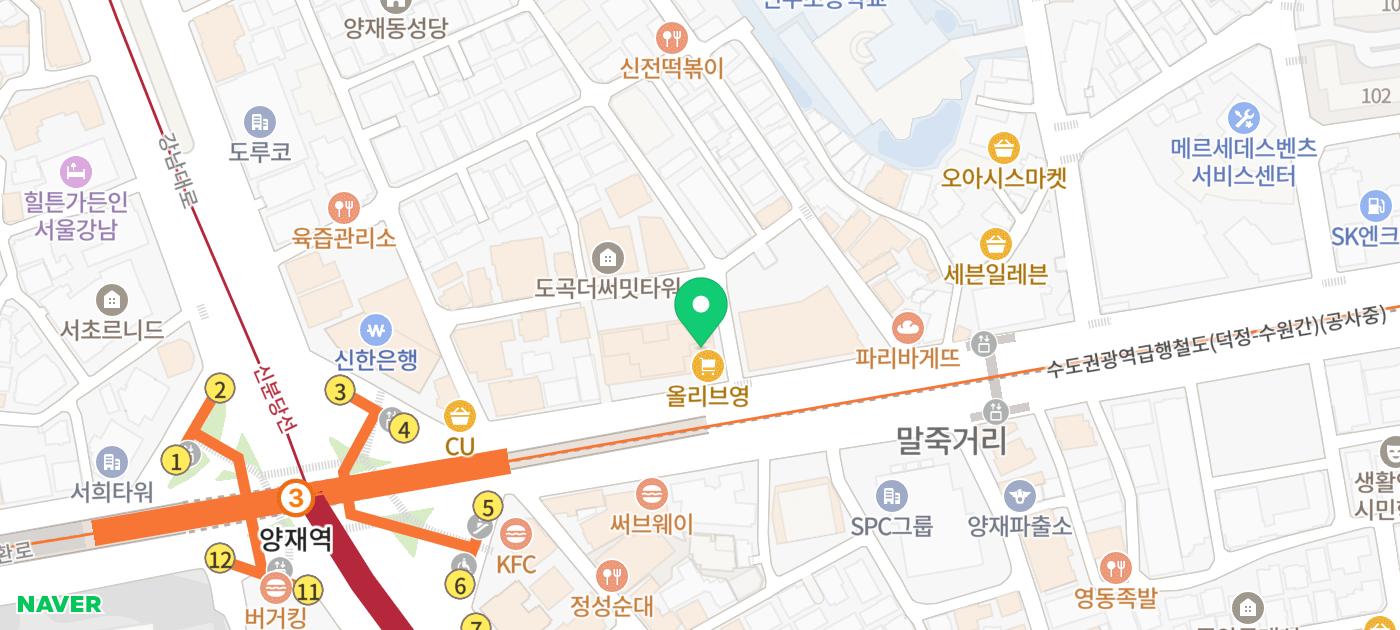
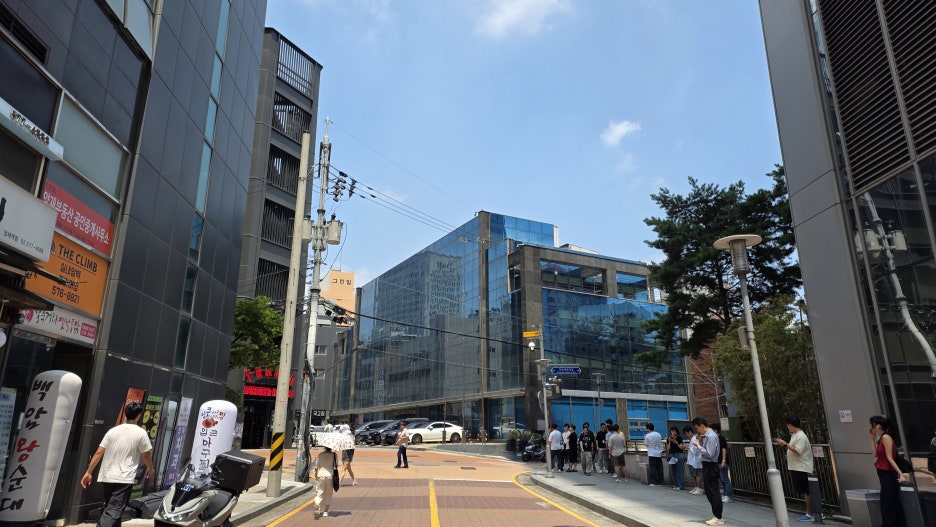
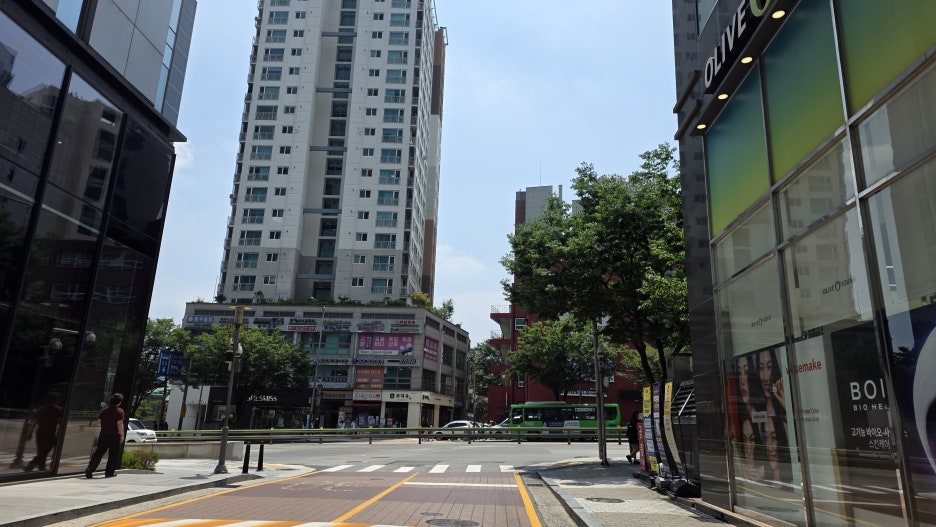
The address is Units 109 and 110, 1st floor, 2615 Nambusunhwan-ro, Gangnam-gu, Seoul. It is close to Yangjae Station, so it was easy to reach by public transport, and according to the store information online it is about a one-minute walk from the station exit. At lunchtime there were lots of office workers around the restaurant heading out to eat. Being so near the station, it is a handy option when you are looking for lunch at Yangjae Station or a dakhanmari place on the Seocho side.
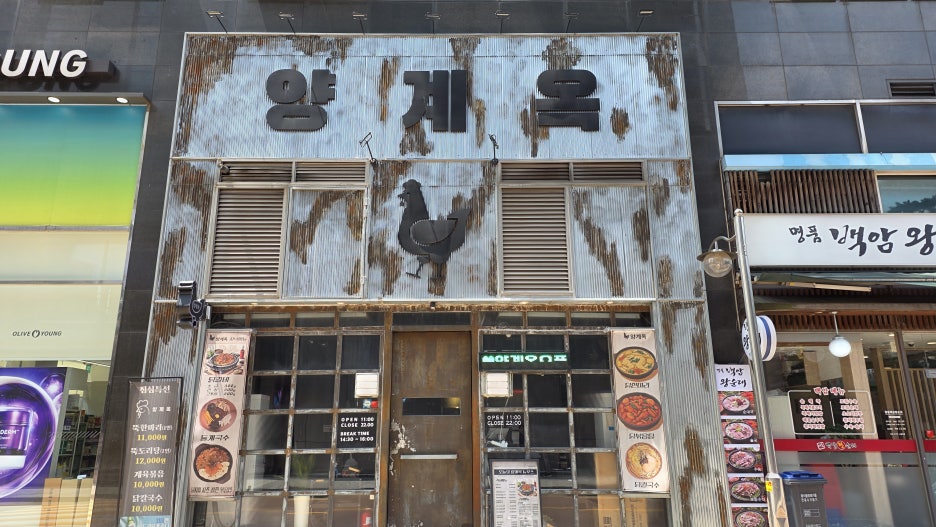
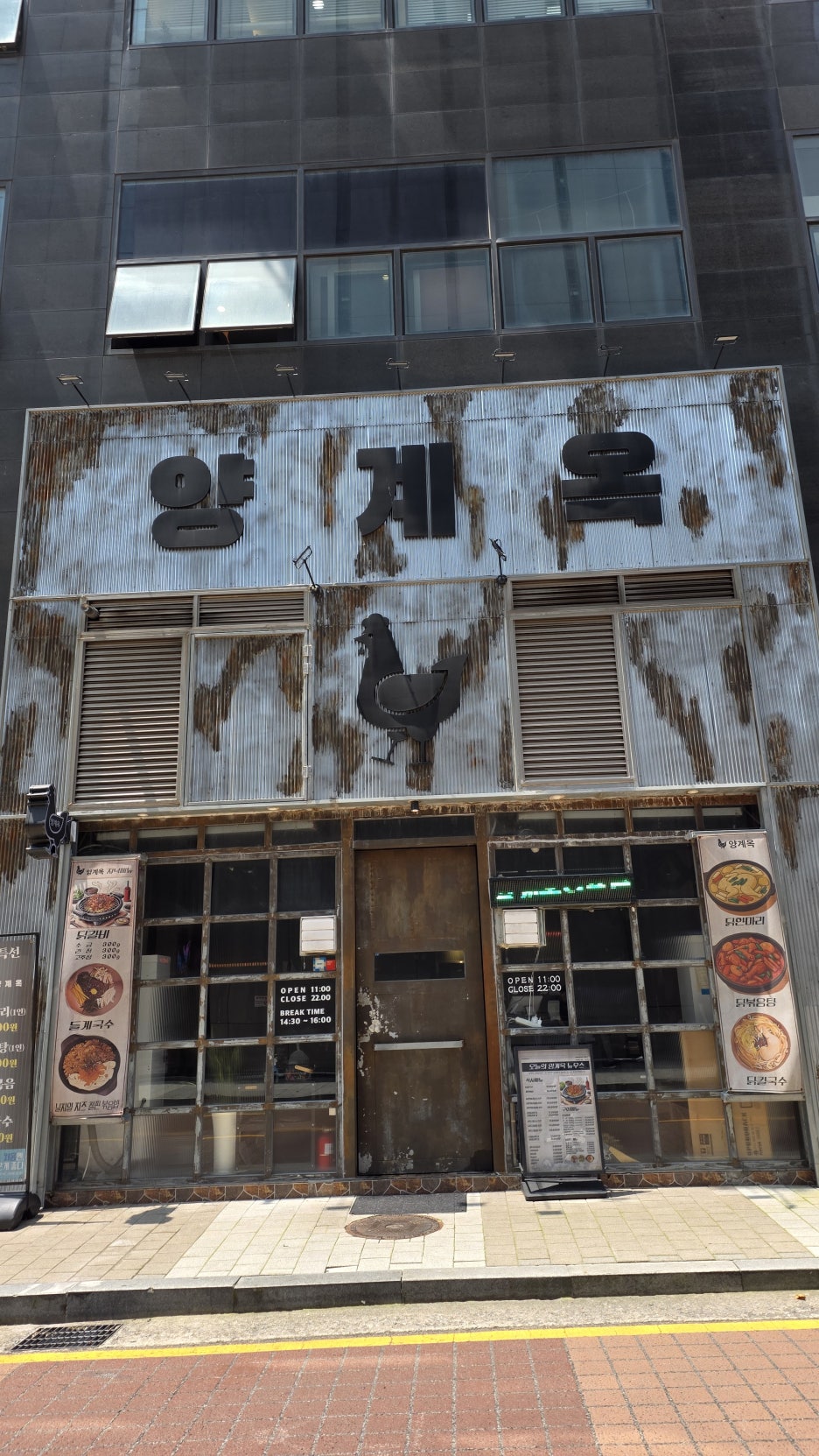
Rather than a shiny new building, the exterior has an industrial look, as if deliberately styled like an old factory. Large Yanggyeok letters and a chicken logo are fixed to the steel facade, so it catches your eye from a distance. The worn-looking metal panels and heavy front door give it a character that is a bit different from the chicken restaurants you usually picture.
Rough walls and round steel tables inside
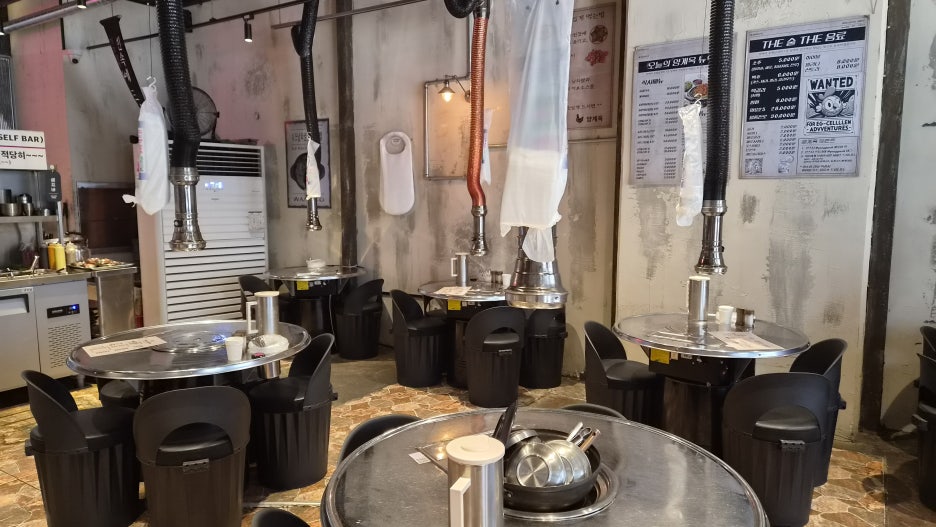
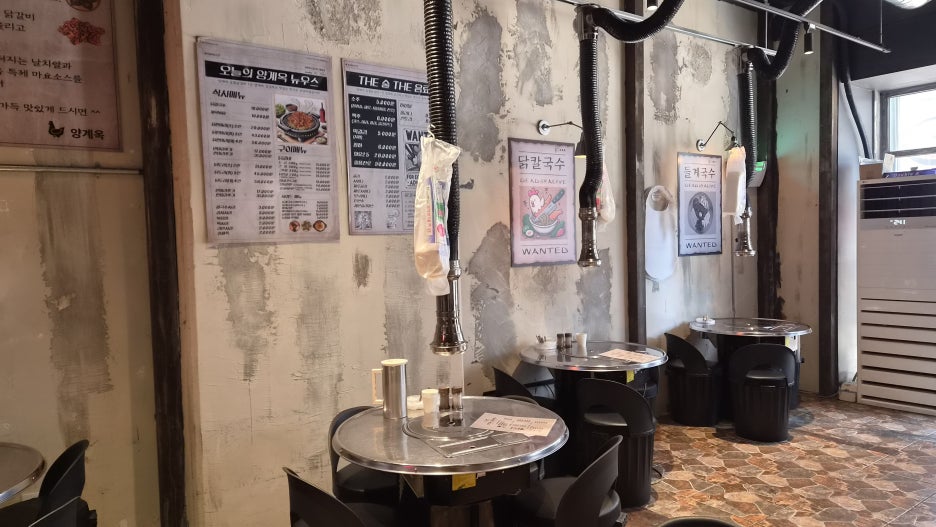
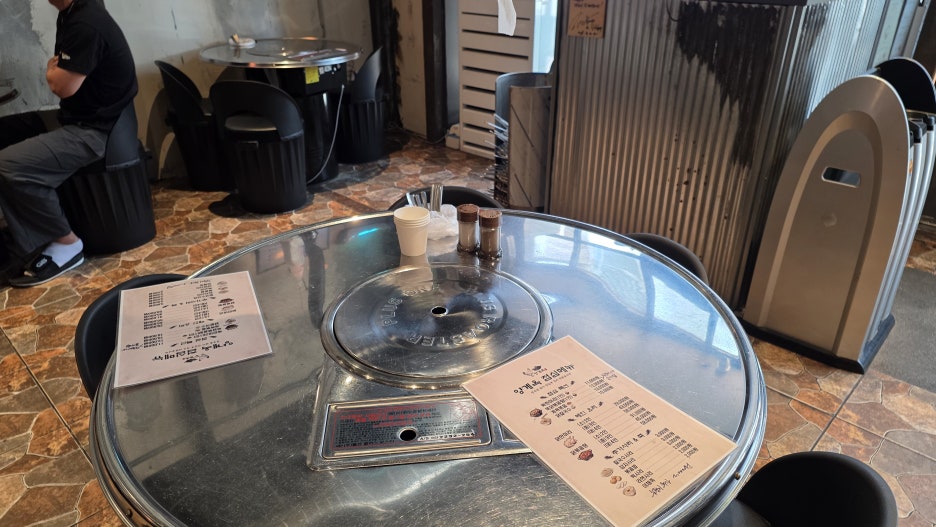
Inside, the impression from the exterior carries straight through. Round steel tables and black chairs sit against rough gray walls, so the whole space feels rugged yet tidy.
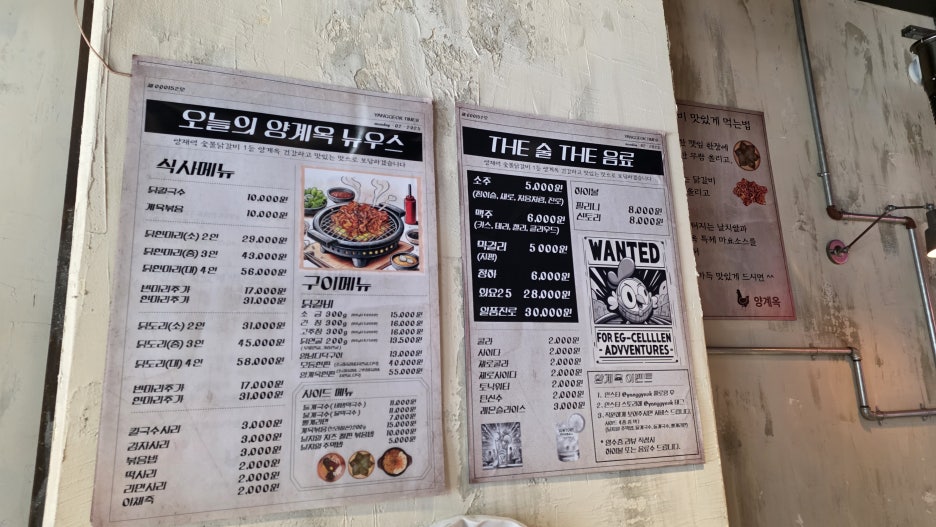
Every table has an extractor hood that pulls up the smoke right away. It looks well suited to dishes you grill or simmer at the table, like dakgalbi or dakdori. On the walls were posters of dakgalbi and chicken kalguksu designed like old newspapers or wanted posters, which amused me enough that I studied them for a while. Having something to look at while waiting for the food was a small pleasure too.
The tables are not spaced especially generously. Still, sitting around a round table and sharing a pot in the middle was no trouble. At lunchtime the place fills up quickly, so if you want to eat at a relaxed pace, avoiding the busiest window a little is one way to go.
From dakhanmari to dakgalbi: menu and prices
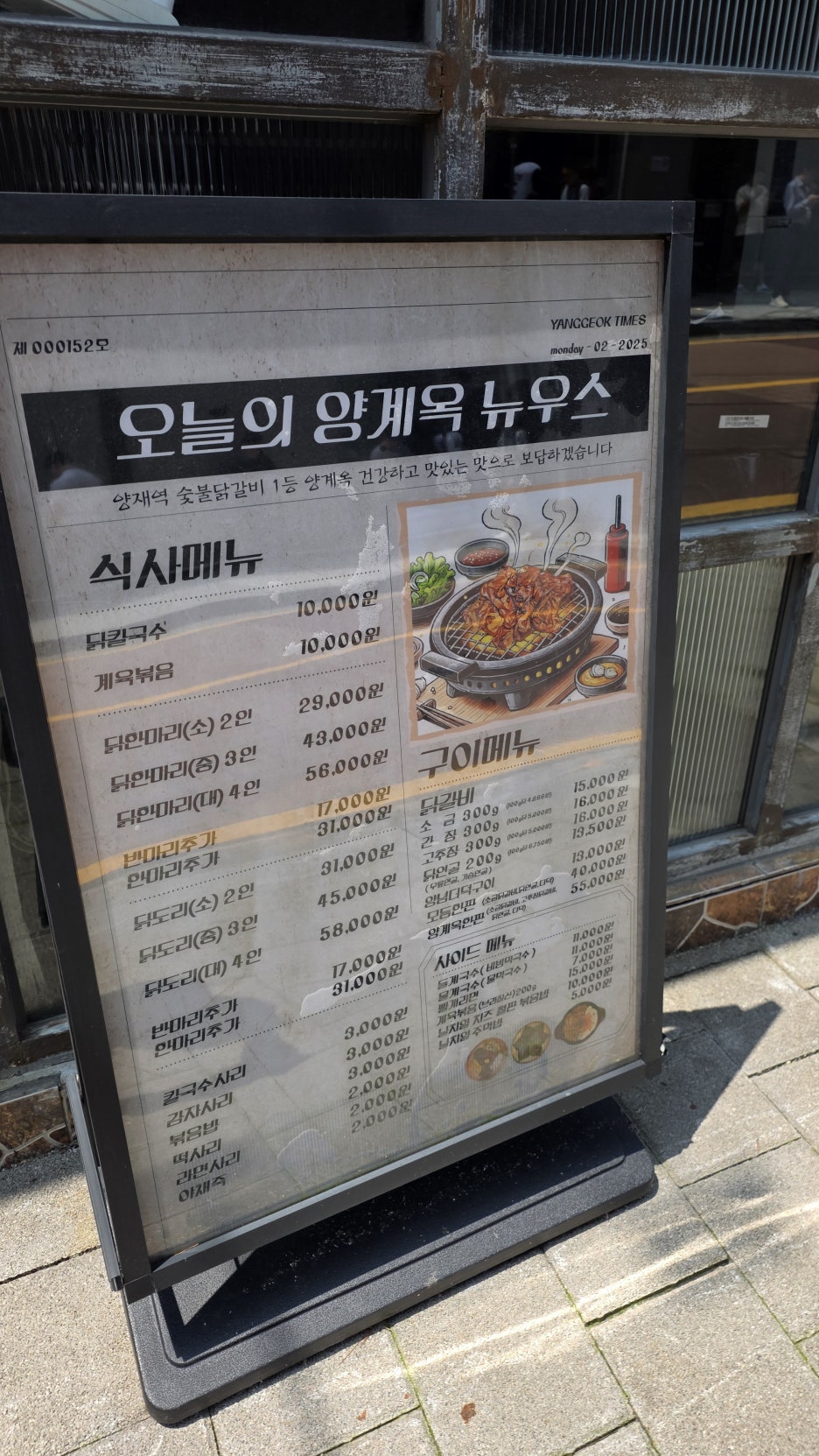
The menu is broadly divided into dakhanmari, dakdori (spicy braised chicken stew), dakgalbi (stir-fried or grilled chicken) and meal dishes. All prices below are as of my visit.
Dakhanmari is 29,000 won for a small (serves two), 43,000 won for a medium (serves three) and 56,000 won for a large (serves four). Dakdori is 31,000 won small, 45,000 won medium and 58,000 won large, priced 2,000 won above dakhanmari at each size. For grilled dishes there are salt, soy and gochujang dakgalbi, chicken cartilage, seasoned grilled deodeok root and a mixed platter.
Chicken kalguksu and jeyuk-bokkeum (spicy stir-fried pork) are 10,000 won each, so it also looked fine for a light lunch alone or with one other person. Sides include perilla noodles, mulme-guksu, ppalgye ramyeon and jeyuk-bokkeum, and you can separately order kalguksu noodles, fried rice and vegetable porridge to add to the pot.
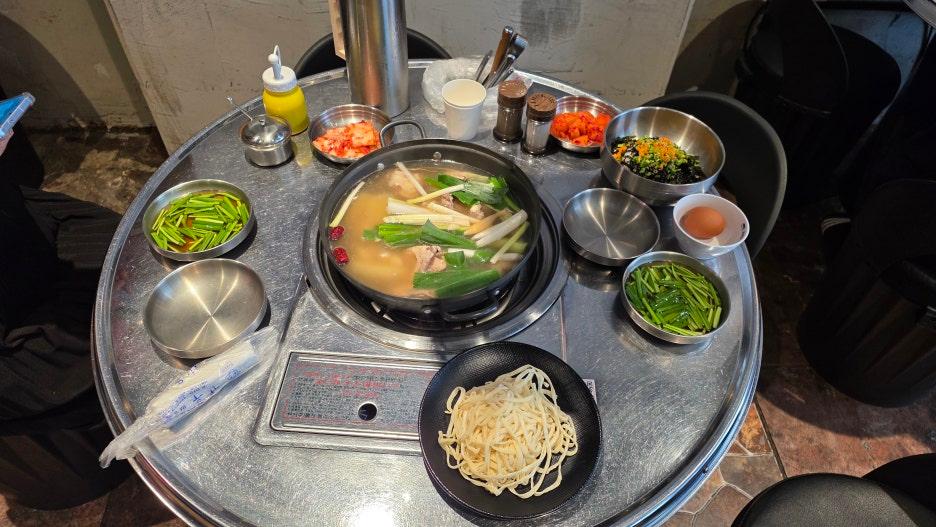
This time there were two of us, and we ordered a small dakhanmari along with kalguksu noodles and vegetable porridge. Rather than eating only the chicken and stopping there, I think the real appeal of Yanggyeok's dakhanmari is the flow of adding noodles and then porridge to the same broth. I liked that flow last time, so there was no need to think twice about the order.
A clear dakhanmari simmered with plenty of leeks
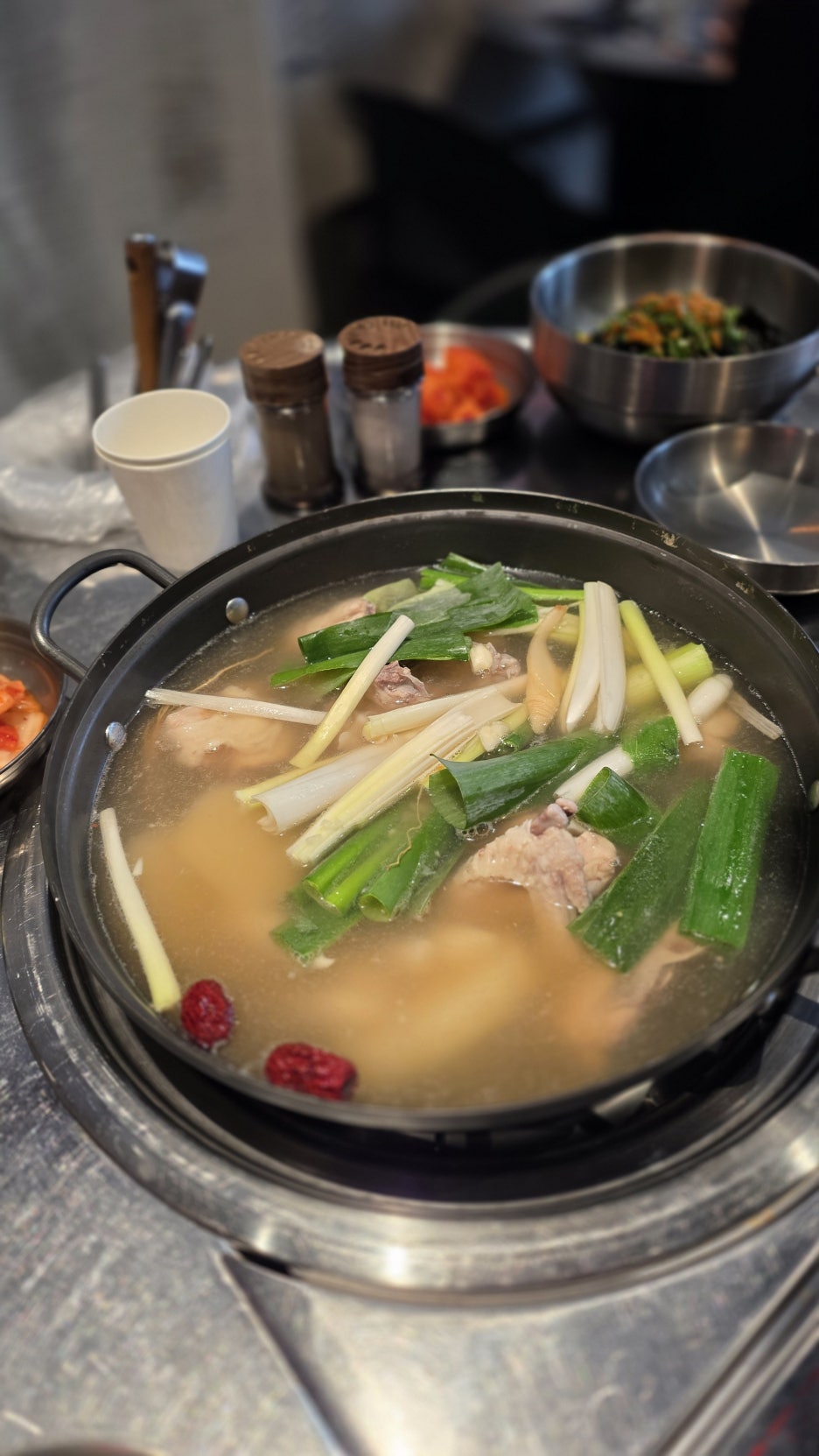
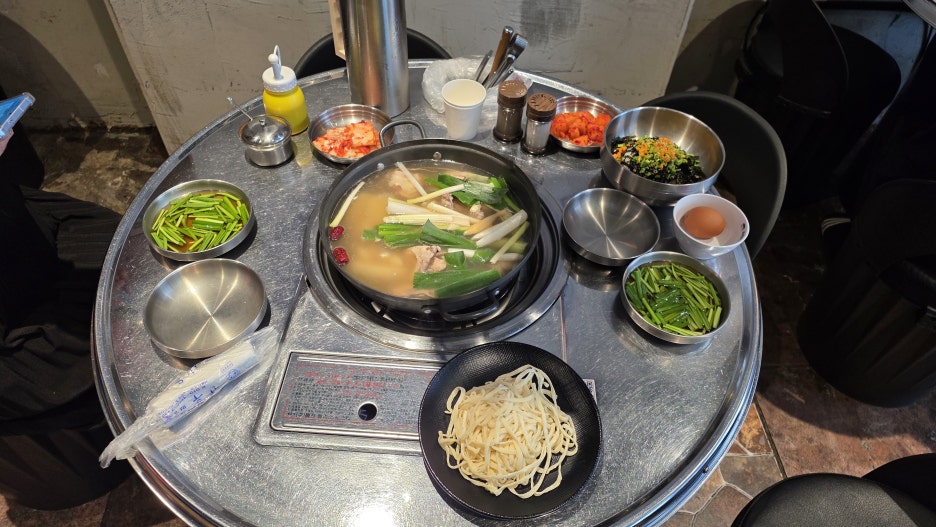
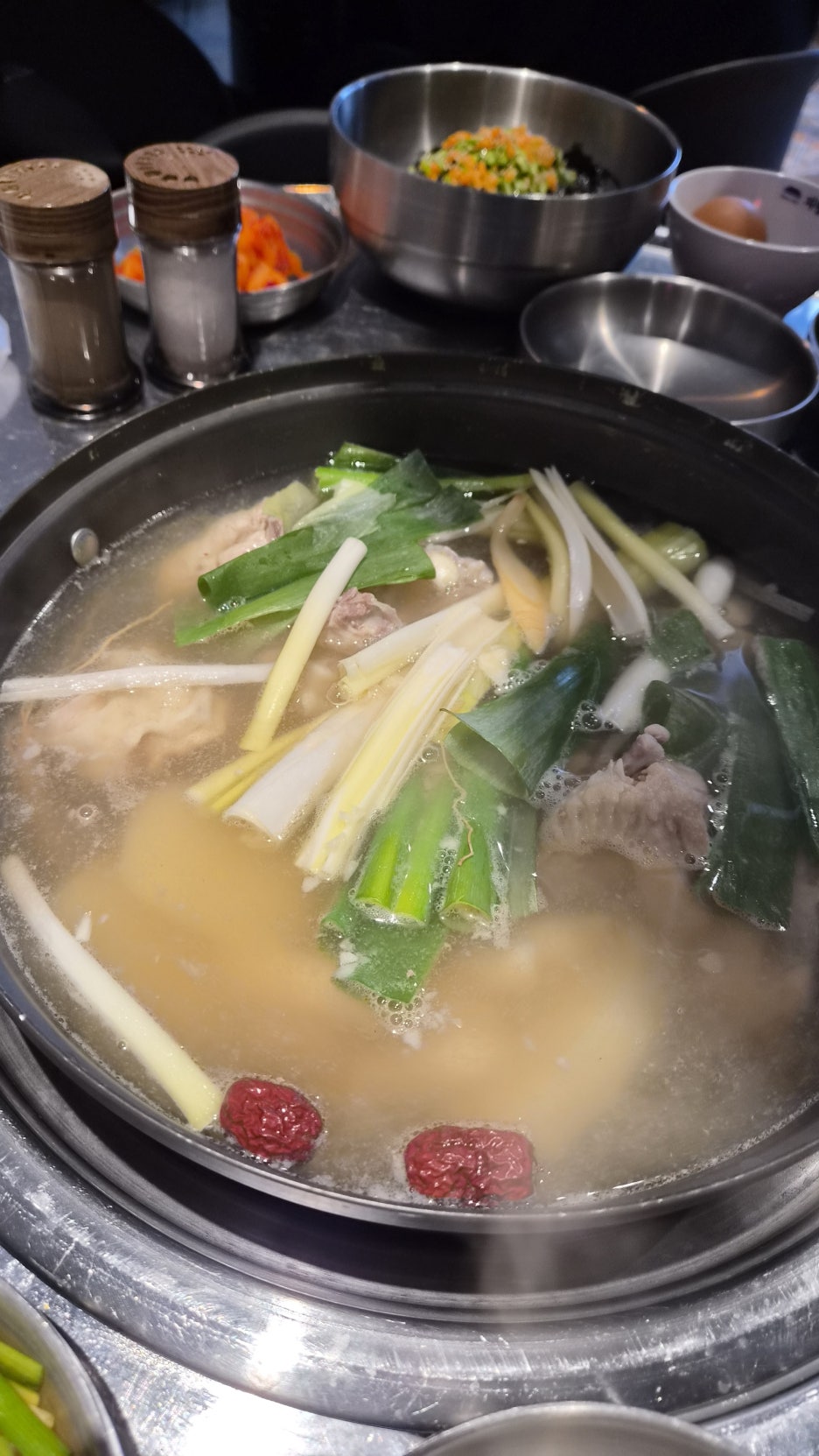
Soon a big pot was set in the middle of the table. In the clear broth were neatly cut pieces of chicken and generous chunks of thickly sliced leek. There were jujubes in it too, so at first I expected a thick, heavy broth like samgyetang, but when I tasted it, it was much cleaner and lighter than that.
As the pot came to a boil, the sweet smell of leeks and the savory smell of chicken slowly spread through the broth. The first spoonful was mild and clear, but the longer it simmered, the deeper the savory flavor from the chicken became. It is fun to notice the same broth changing as time goes on.
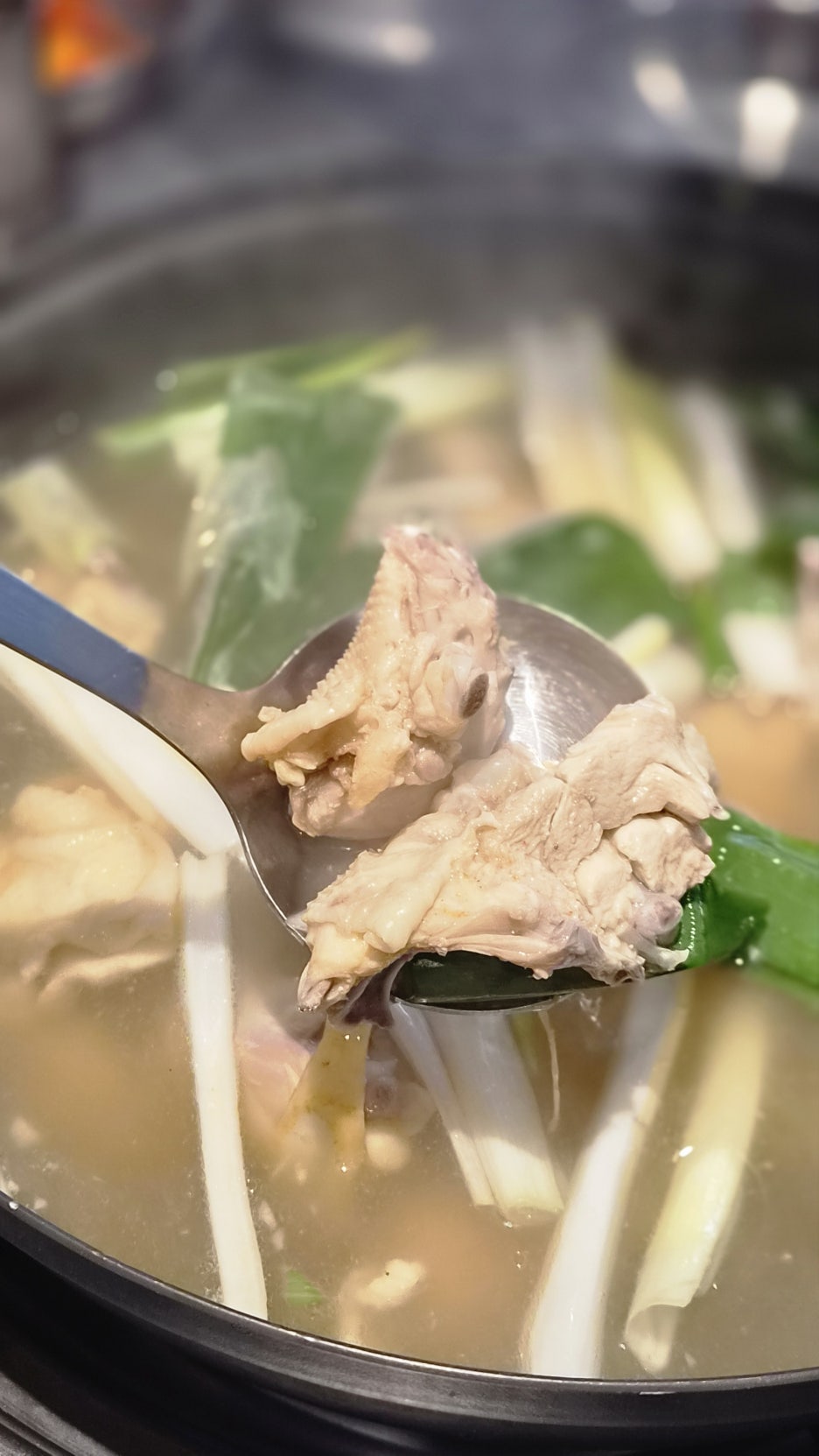
When I moved the cooked chicken onto a small plate and tried it, the meat was not dry at all; it was moist and pulled apart along the grain. There was almost none of the gamey smell chicken can have, so even with just a dab of salt it tasted clean and delicious. The very thing I liked on my last visit was the same this time.
It is not food that grabs you with strong flavors; it slowly draws out the taste of the ingredients themselves, so I naturally ate at a slower pace. Even at lunch on a hot day I kept going back for spoonfuls of hot broth, and that was because the broth was so clean.
The chive sauce, how to eat it, and keeping enough broth
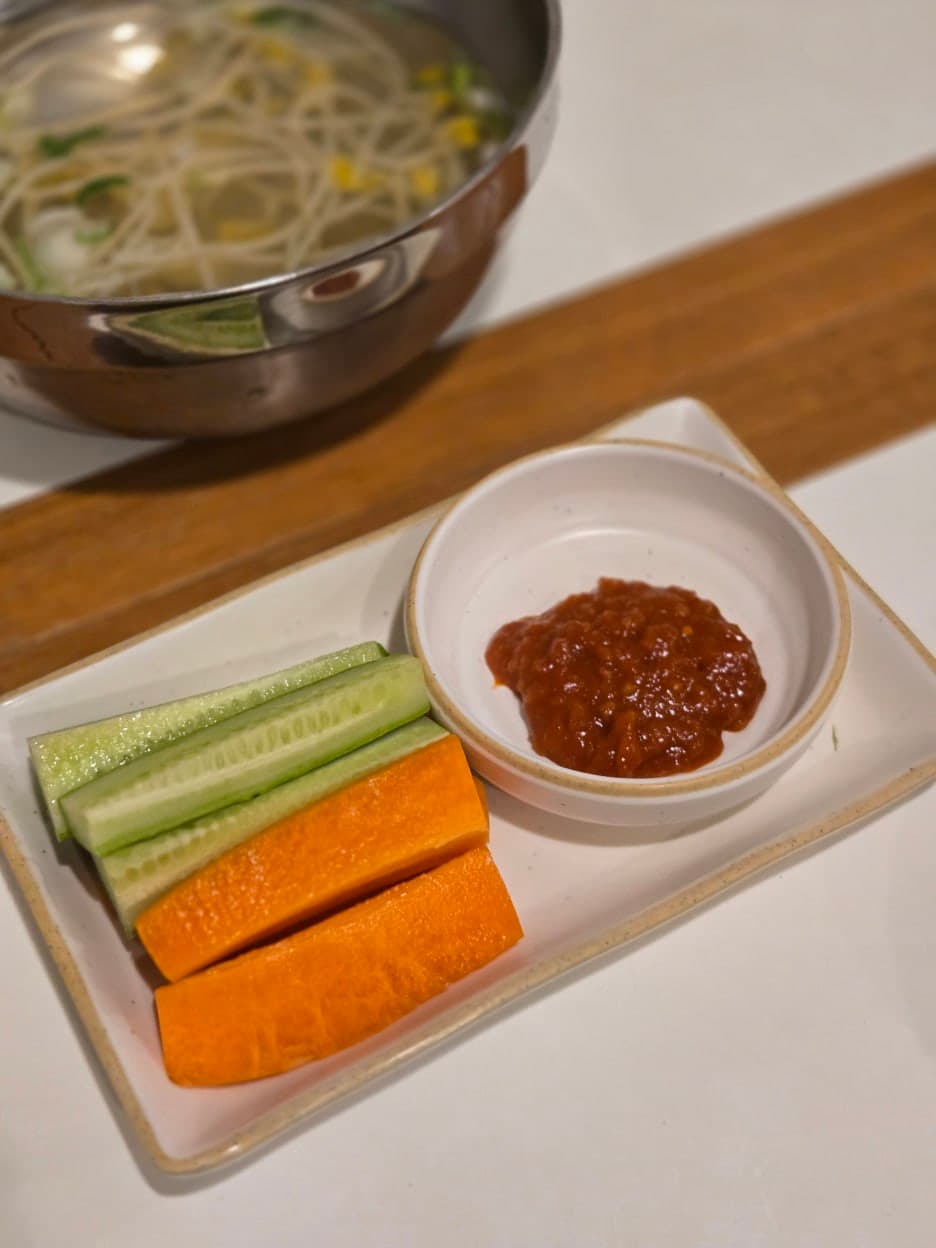
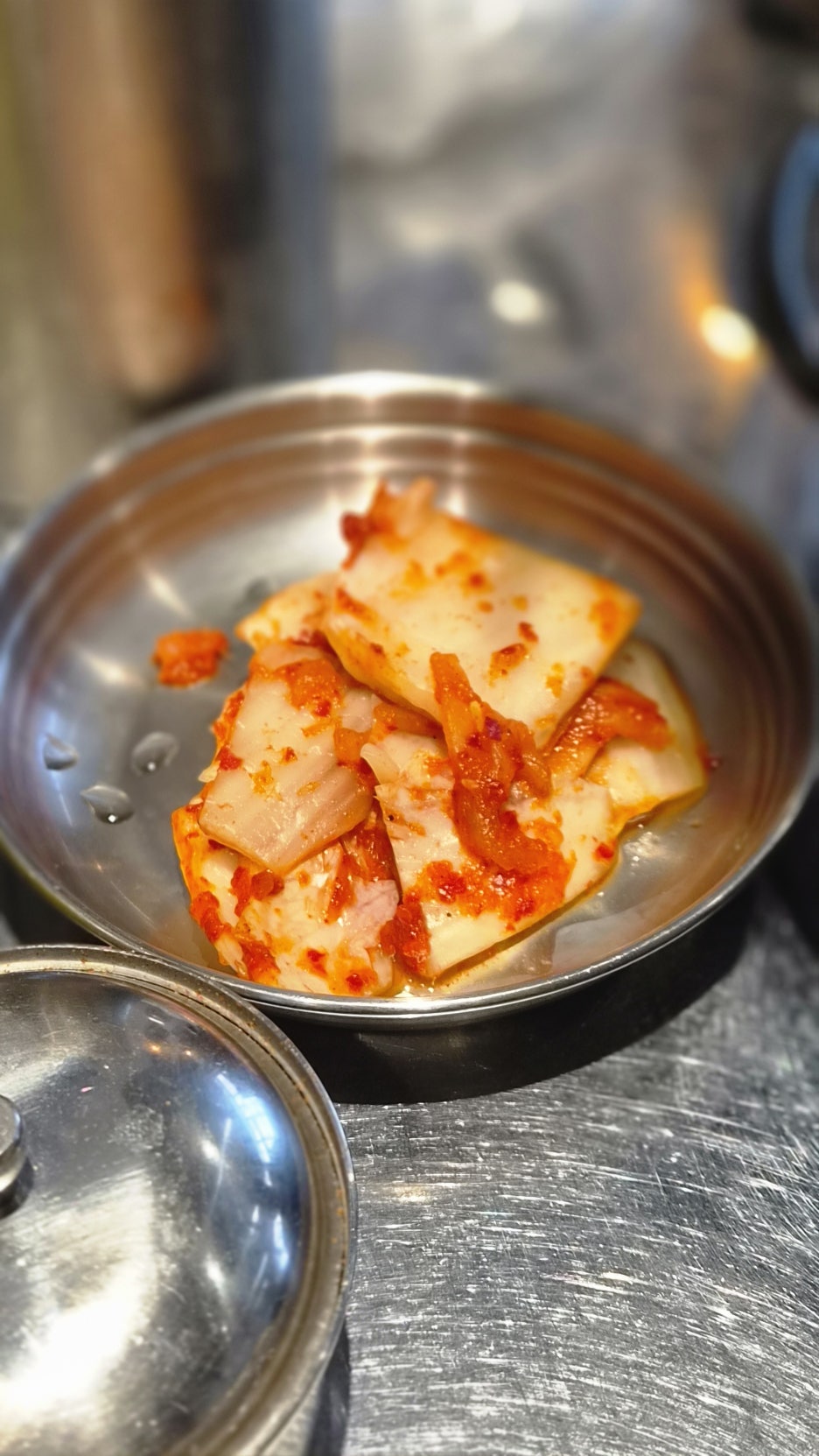
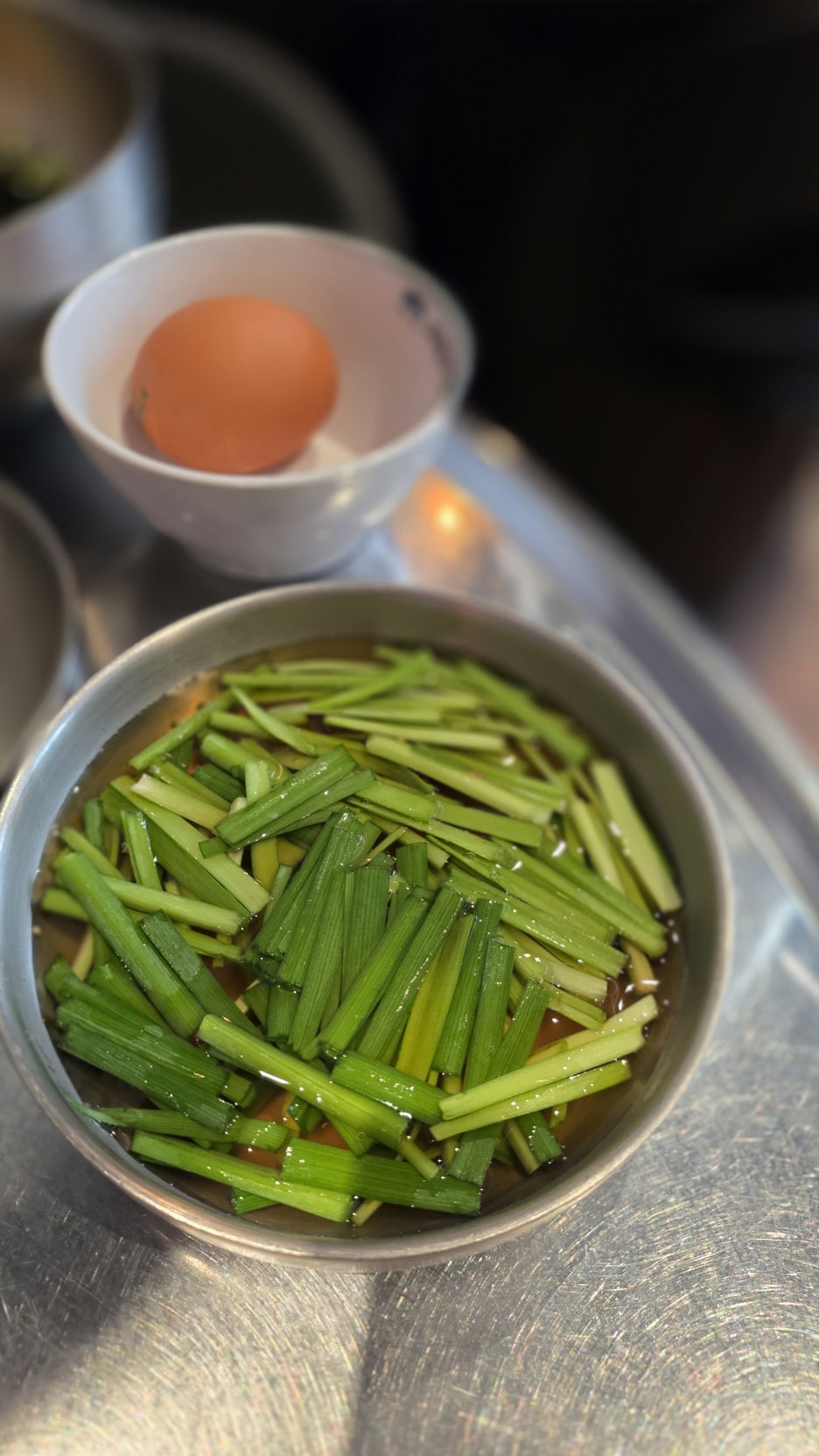
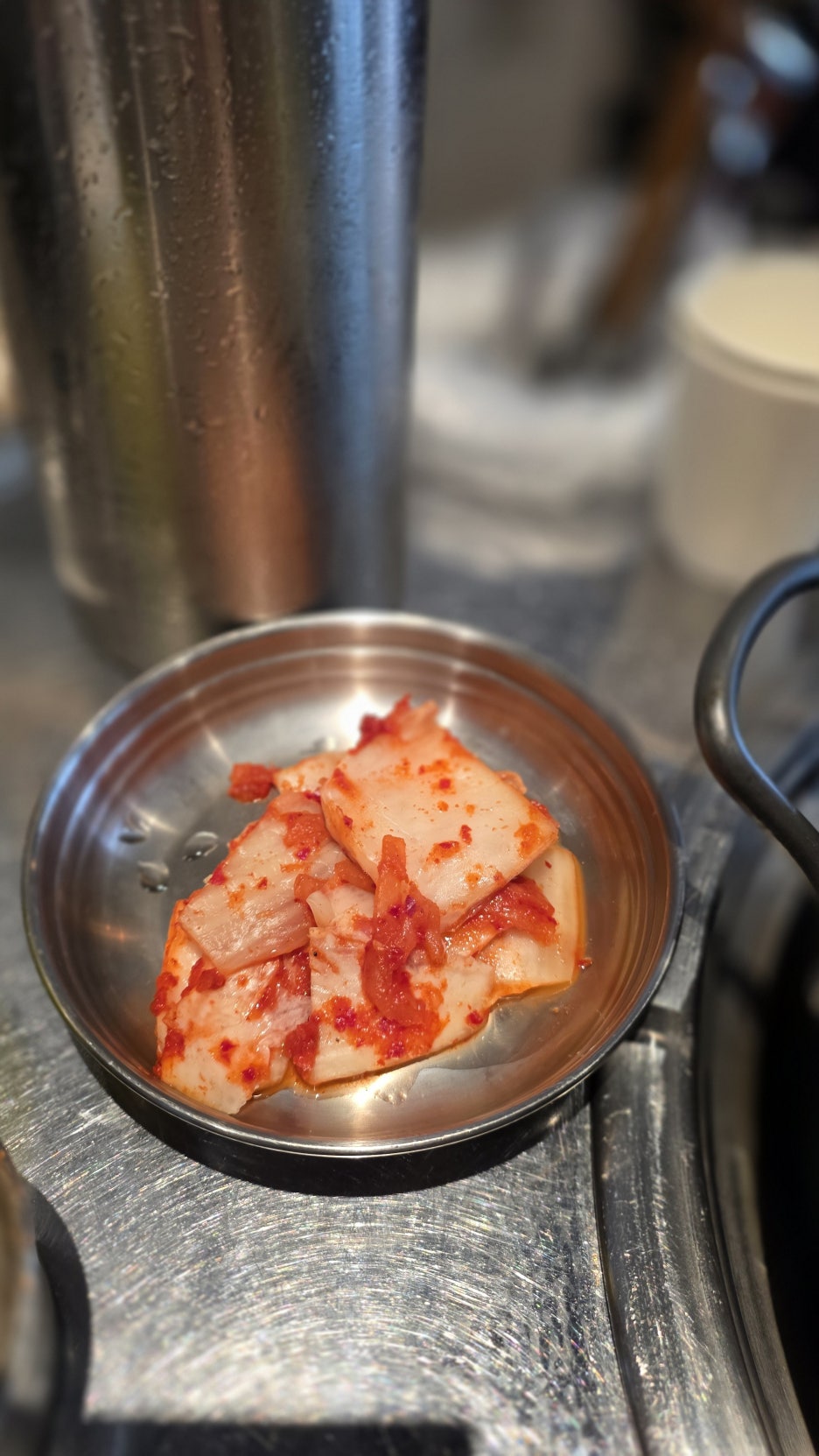
The basic side dishes are kimchi, kkakdugi (cubed radish kimchi) and a sauce with finely chopped chives. The chicken is good on its own, but topping it with the chive sauce made the flavor sharper. The salty, slightly tangy sauce soaked into the lean meat and kept me reaching for more.
The leeks, cooked a long time in the broth, turned very soft and were nice to pick up together with the chicken. With no red, spicy seasoning in this dish, it felt light the whole way through, and with the hot broth alongside it, I felt comfortably full right down to my stomach.
One tip worth noting: while you are eating the chicken, do not turn the heat up too high; let it simmer gently, almost reducing. That way you keep enough broth for the kalguksu and the vegetable porridge that come later.
Kalguksu noodles soaked in chicken broth
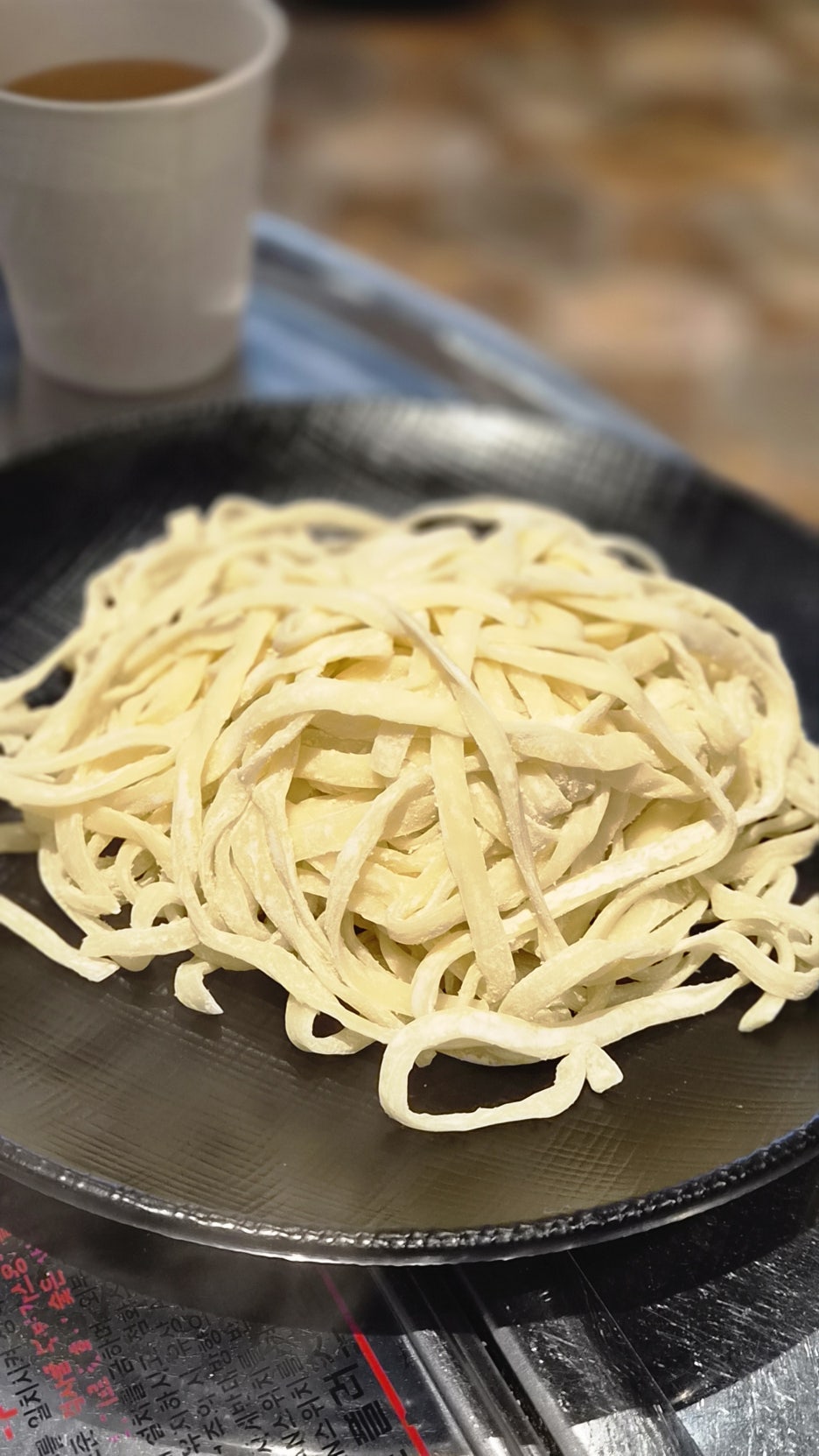
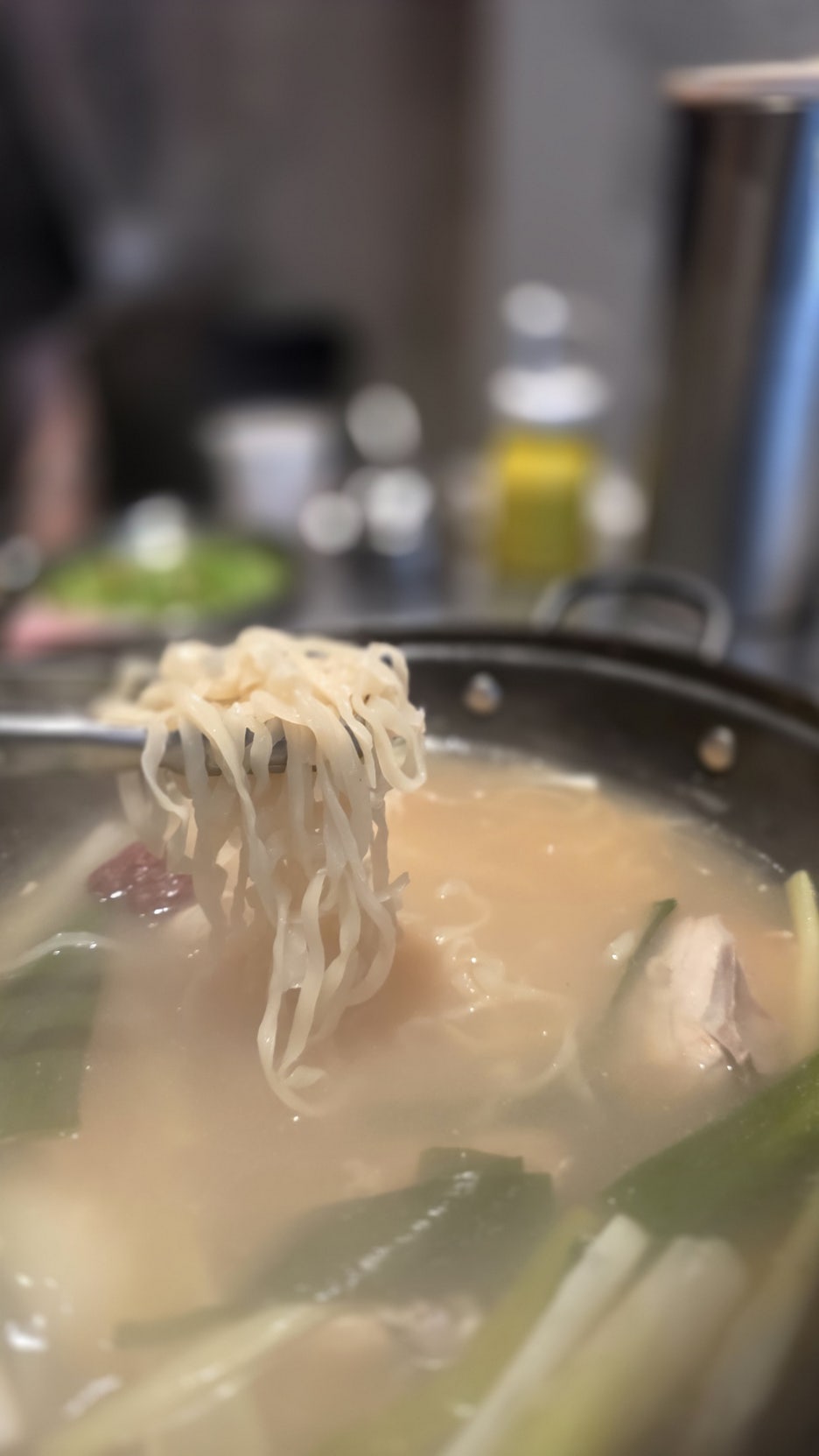
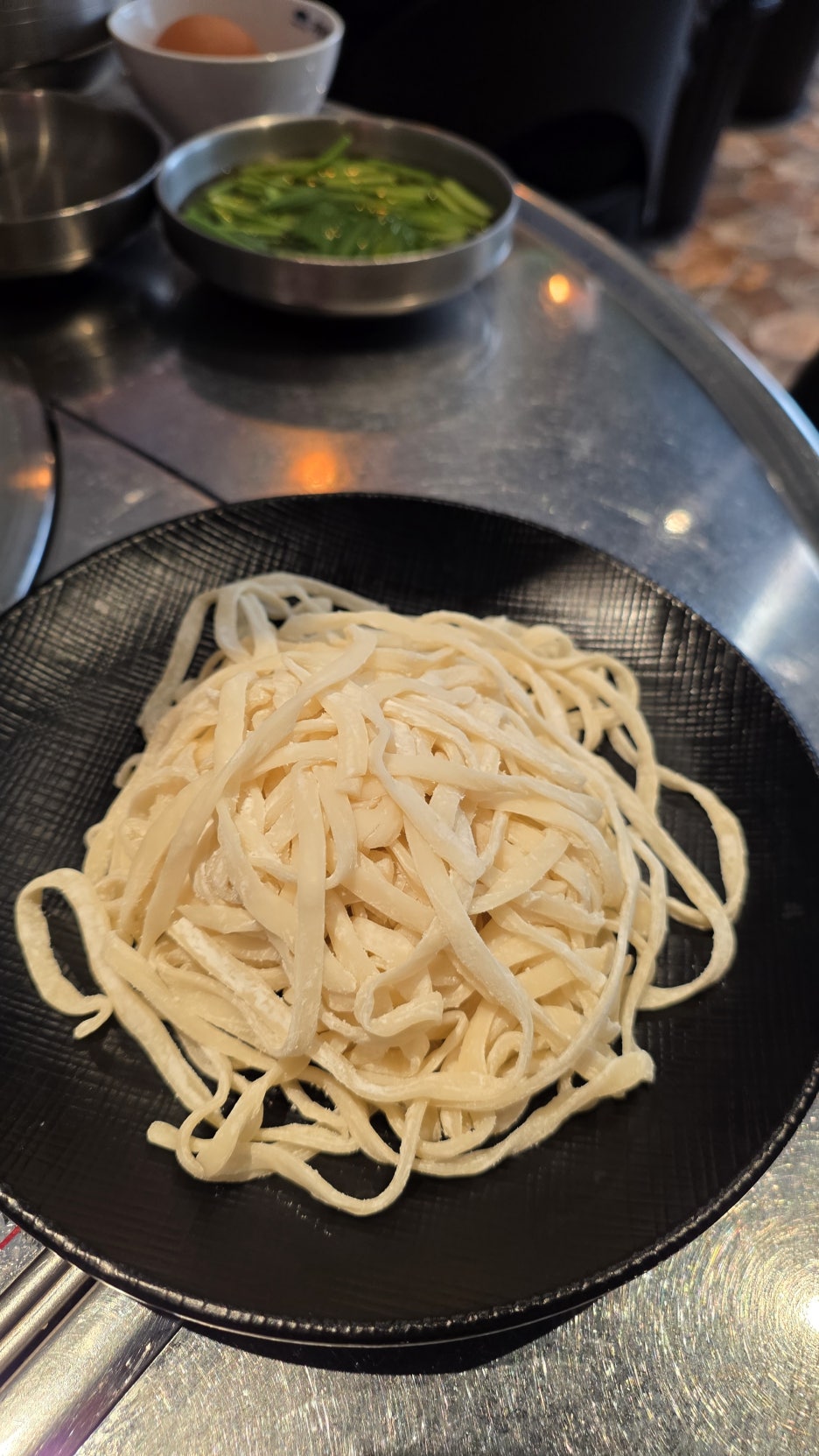
After eating a fair amount of the chicken, we added the kalguksu noodles we had ordered in advance. The wide, thin noodles soaked up the chicken broth and gradually softened as they cooked. I also noticed the broth, clear and light at first, getting a little thicker from the starch released by the noodles.
It is best to fish the noodles out before they get too soft. Eaten that way, they were tender but still chewy. The deeply flavored chicken broth had seeped between the strands, so they had plenty of savory taste without any extra seasoning.
I was already fairly full from the chicken, yet once the warm noodles went in, my chopsticks kept moving on their own. If you order dakhanmari, adding the kalguksu noodles seems like the more satisfying choice. The noodles clearly make up for the fullness that the chicken and broth alone might leave a little short.
Vegetable porridge topped with seaweed flakes and chives
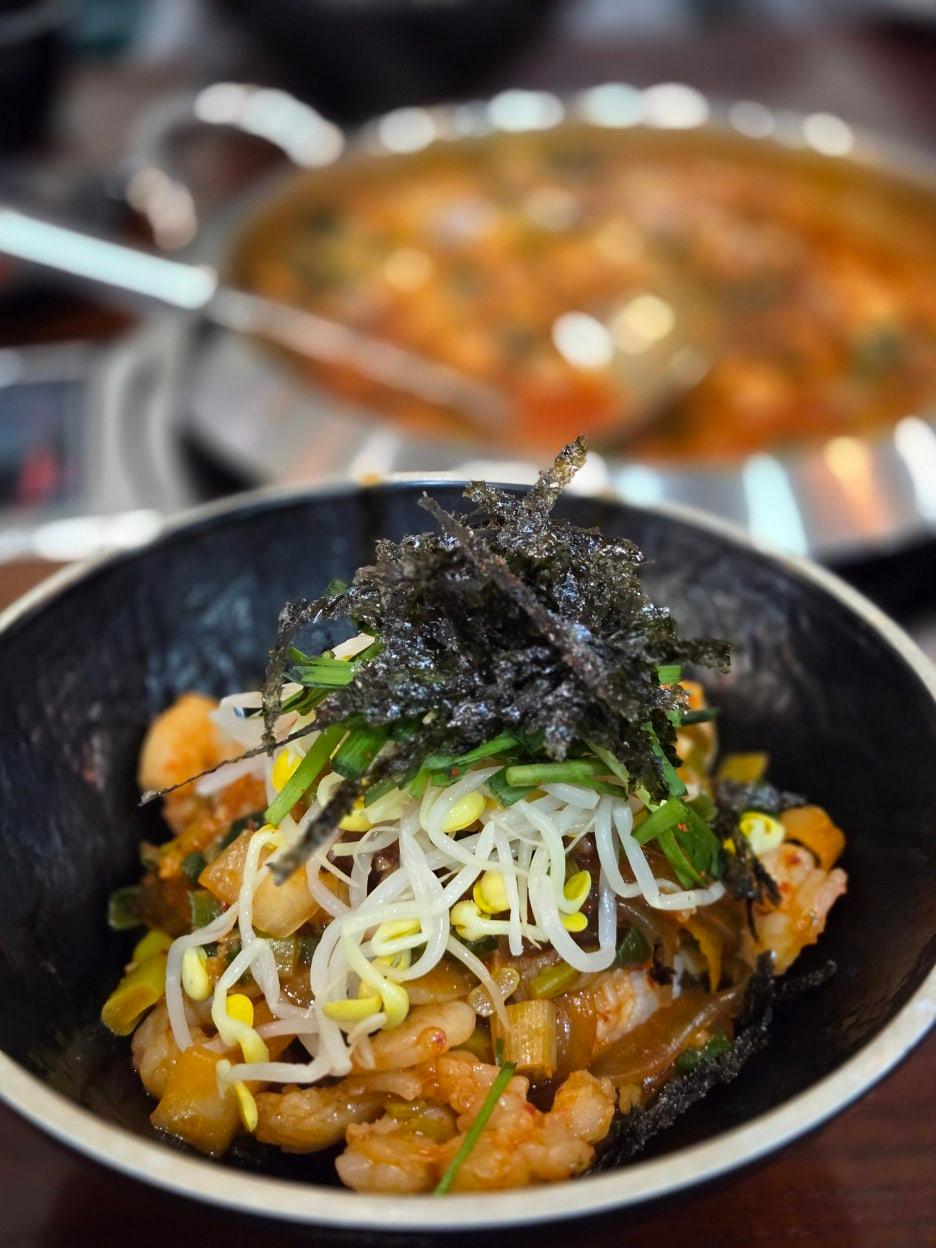
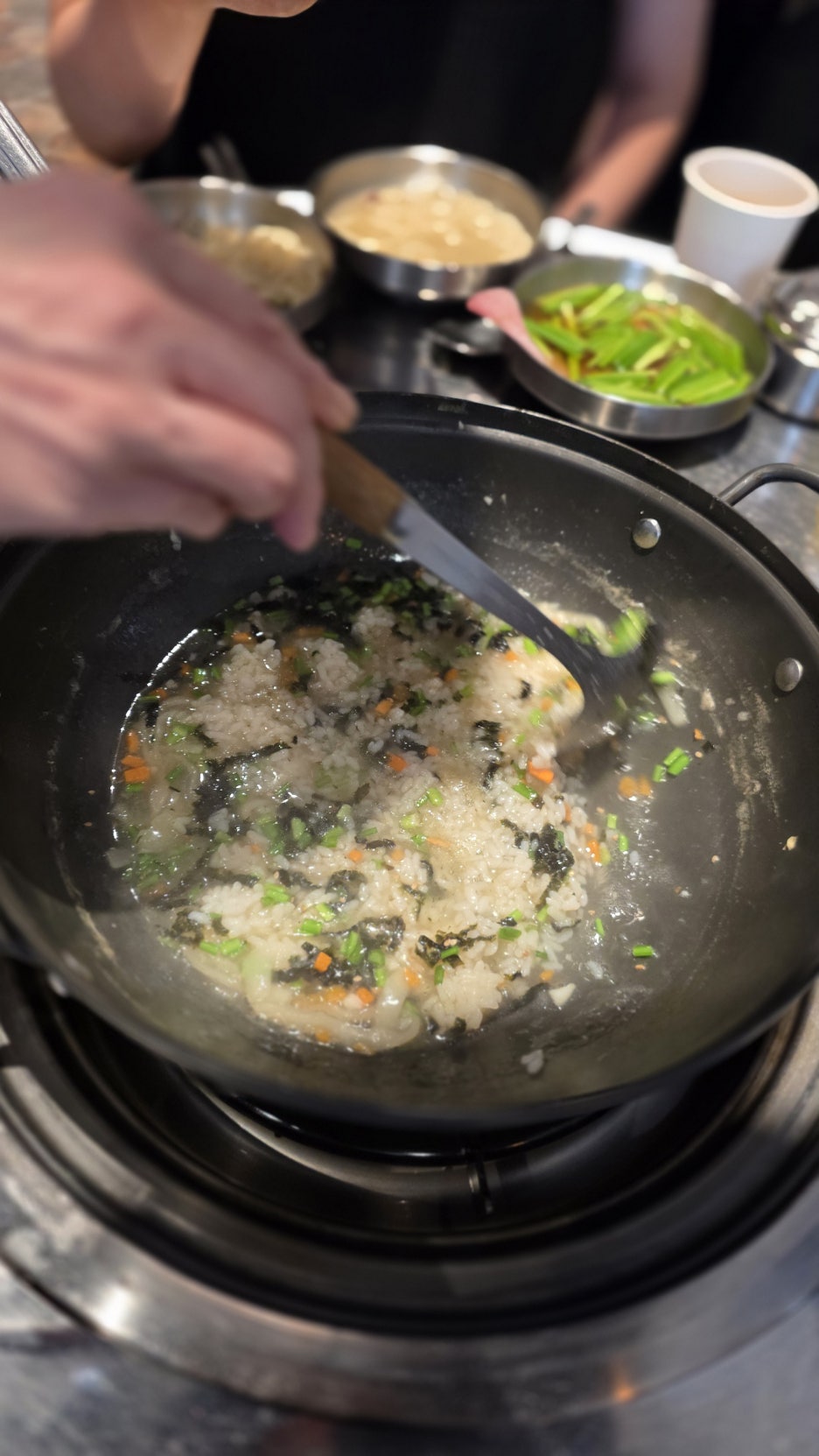
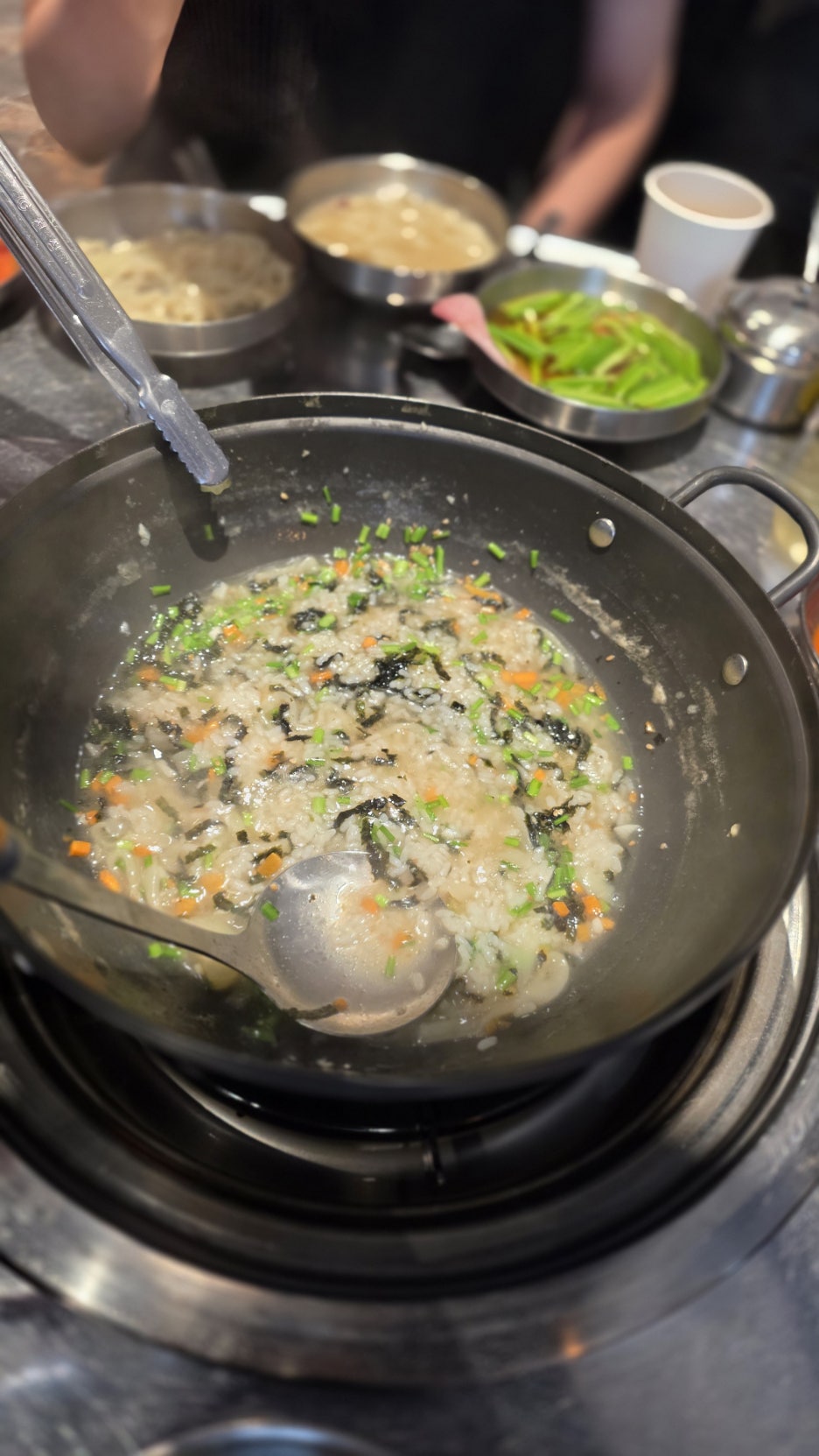
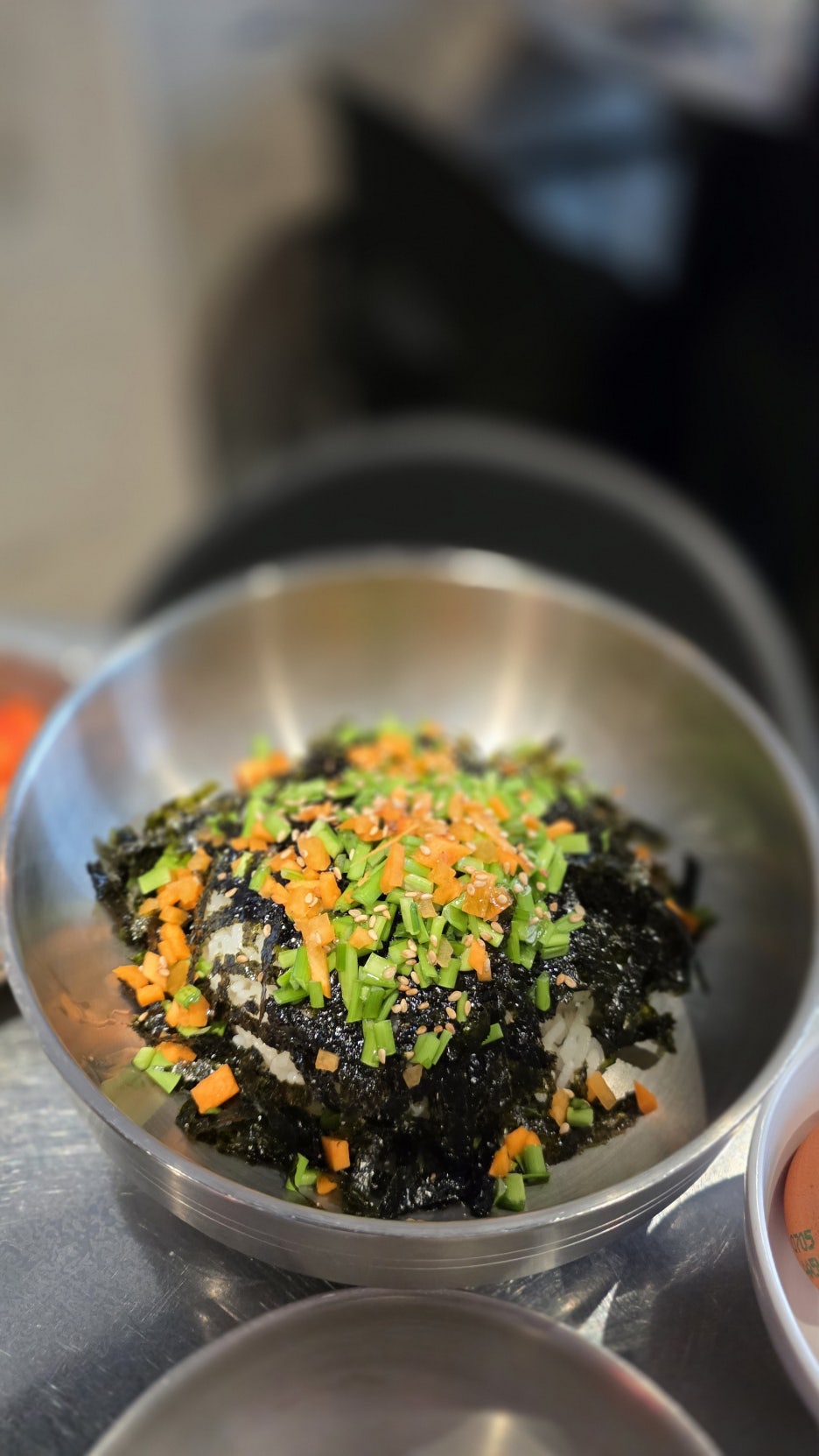
After the noodles, we finally made the vegetable porridge. The rice came topped with plenty of seaweed flakes, finely chopped chives and carrot. We added the rice and vegetables to the remaining broth and kept stirring as it cooked, and as the broth slowly reduced it turned into a moist porridge.
The nuttiness of the seaweed flakes and the rich chicken broth coated every grain of rice evenly, making it a fitting way to finish. Just note that if too much broth is left, it ends up more like gukbap (rice in soup) than porridge, so it is best to cook it with only a moderate amount remaining.
Cooking it until it stuck slightly to the bottom let us enjoy both the soft parts and the toasty, crusty bits. Even after finishing the dakhanmari and the noodles, we left almost none of the porridge, which shows how satisfying it was to the very end. The three stages of chicken, noodles and porridge all wrapping up in one pot is what makes me choose this dish again.
A filling meal on the second visit, too
Yanggyeok is a good place for days when you need a hearty meal, since you can have chicken, broth, kalguksu and vegetable porridge all in one go. The clear chicken broth started out light and grew deeper the more it simmered, and the tender chicken went well with the chive sauce.
Above all, eating the noodles and then the porridge in sequence was fun, and it made the meal feel much fuller than getting up after only the chicken. As on my last visit, I was comfortably satisfied with both the taste and the portions this time.
If you are looking for a warm soup dish near Yangjae Station, or a dakhanmari to share with a group, it is worth a stop. Next time I plan to come back for the dakdori or dakgalbi, which have a different feel from dakhanmari.
Check opening hours and closing days on the map before you go.
Contains affiliate links. Your price stays the same.
This box contains affiliate links. If you book through them, Mudung may earn a commission at no extra cost to you.
 Read nextSame neighborhoodGangnam Station Dessert Cafe: Mango Sherbet Latte, 3 Floors₩8,500Read →
 Read nextSame neighborhoodGangnam Station Lash Lift: A Natural C-Curl with No WaitRead →